

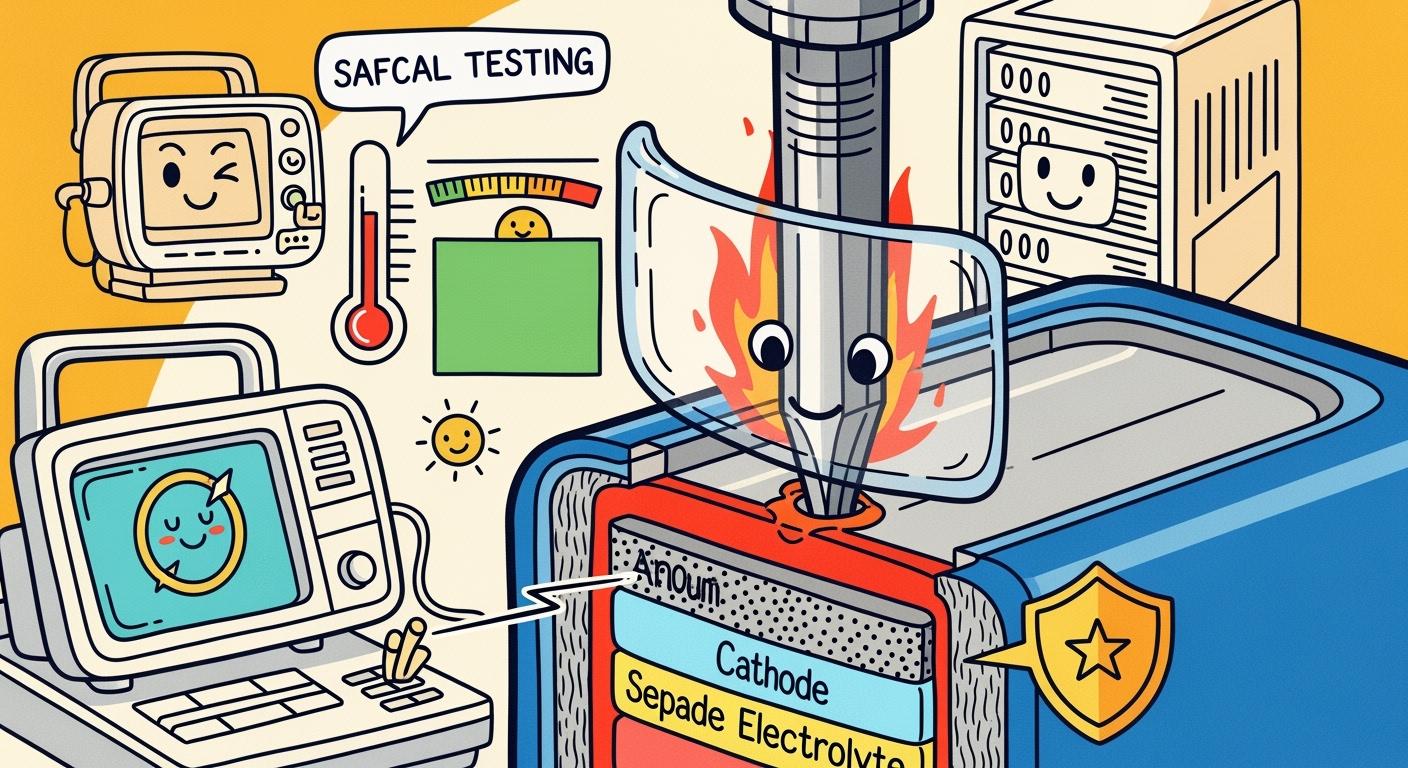
You face real risks when using lithium battery packs in mission-critical equipment. Nail Penetration Tested Lithium Cells help you reduce those risks by identifying vulnerabilities that can lead to thermal events.
Key Findings | Description |
|---|---|
Thermal Runaway Propagation (TRP) Mitigation | Using thermal barriers with low diffusivity significantly reduces TRP. |
Impact of Thermal Insulation | Effective insulation prevents heat transfer to adjacent cells, lowering thermal risk. |
Sidewall Rupture Risk | Battery vent damage raises rupture risk, highlighting the need for robust thermal design. |
Comprehensive safety testing, such as vibration and destructive analysis, ensures your systems stay reliable and protected in demanding environments.
Key Takeaways
Nail Penetration Testing identifies vulnerabilities in lithium cells, helping prevent thermal events like fires and explosions.
Using thermal barriers and effective insulation significantly reduces the risk of thermal runaway in battery packs.
Regular testing and adherence to industry standards ensure lithium batteries meet safety requirements for critical applications.
Implementing advanced battery management systems and thermal management strategies enhances the safety and reliability of lithium battery packs.
Choosing Nail Penetration Tested Lithium Cells improves performance and reduces risks, ensuring safe operation in demanding environments.
Part1: Nail Penetration Tested Lithium Cells Overview
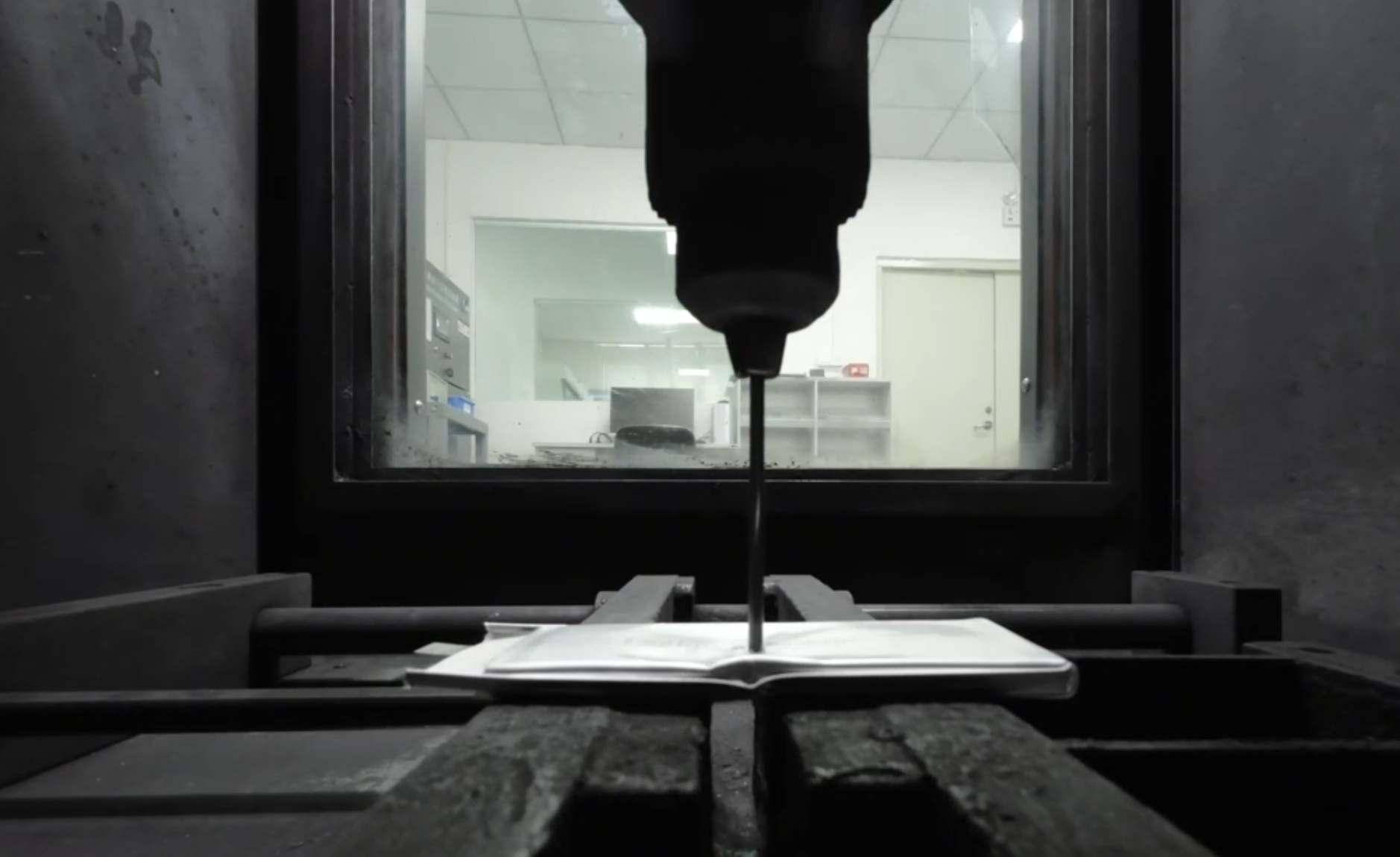
1.1 What Is Nail Penetration Testing
You need to understand nail penetration testing if you work with lithium battery packs in critical equipment. This test simulates mechanical abuse by puncturing the cell with a steel needle. The process helps you identify how batteries respond to internal short circuits and extreme conditions. Here is how the standard nail penetration test works:
You use a high-temperature resistant steel needle (5–8 mm diameter).
Insert the needle at a speed of about 25 mm/s, perpendicular to the battery electrode plate.
Target the geometric center of the cell for penetration.
Keep the needle inside the battery to trigger an internal short circuit.
Observe the battery for fire, smoke, or explosion.
You may also encounter advanced methods like small, slow, and in situ sensing (3S) nail penetration testing. This approach uses a smaller nail and slower speed, with a micro temperature sensor at the tip. It gives you more accurate data about temperature changes during internal short circuits.
Internal short circuits can occur between different battery components, such as positive and negative current collectors, electrodes, and foils. These events help you evaluate the safety and reliability of Nail Penetration Tested Lithium Cells.
1.2 Importance for Lithium Battery Packs
Nail Penetration Tested Lithium Cells play a vital role in protecting your equipment. The test addresses several failure modes and safety concerns. You can see the main reasons for testing in the table below:
Reason for Testing | Explanation |
|---|---|
Internal Short Circuits | Nail penetration can cause internal short circuits, leading to potential battery failure. |
Thermal Runaway | The test assesses the risk of thermal runaway, a critical safety hazard in lithium batteries. |
Mechanical Abuse Simulation | It simulates real-world scenarios where batteries may be punctured, ensuring safety under stress. |
Safety Performance Assessment | Evaluates how batteries perform under extreme conditions, crucial for critical electronic equipment. |
You need to know about failure modes like Mode A and Mode B. Mode A creates a larger contact area and can lead to more severe thermal events. Mode B has a smaller contact area and usually results in less damage. Punch tests help you evaluate separator performance and mechanical integrity.
1.3 Industry Testing Standards
You must follow industry standards to ensure your lithium battery packs meet safety requirements. Standards differ across regions and applications. The table below shows the main standards:
Region | Standards |
|---|---|
European Union | IEC standards with additional CE marking requirements |
United States | UL 1642 and UL 2054 standards |
China | GB 31241 and GB/T 36972 standards for lithium batteries, with case-by-case evaluations for aqueous aluminum systems |
You also need to consider global standards like UN/DOT 38.3, IEC 62133-2:2017, and UL 2054 2nd Edition. Manufacturers must comply with these regulations to guarantee safety and access international markets. Nail Penetration Tested Lithium Cells help you meet these requirements and ensure your products are safe for use in medical, robotics, security, infrastructure, consumer electronics, and industrial sectors.
Part2: Thermal Risks in Critical Equipment
2.1 Types of Thermal Events
You face several types of thermal events when working with lithium battery packs in critical electronic equipment. These events can threaten the safety and reliability of your systems. The most common causes include short circuits from water ingress, coolant leakage, and mechanical or electrical abuse. Each of these can lead to dangerous outcomes such as fire or explosion.
Type of Thermal Event | Description |
|---|---|
Thermal Runaway | A state where the battery undergoes exothermic reactions, causing rapid temperature rise and possible rupture or explosion. |
Mechanical Abuse | Physical damage to the battery structure that can trigger internal short circuits. |
Electrical Abuse | Failures like short circuits or overcharging that result in overheating. |
Thermal Abuse | Exposure to high temperatures that can initiate thermal runaway. |
The response of different cylindrical cell designs to abuse mechanisms, such as thermal and internal short circuiting, shows unique characteristics of thermal runaway. You need to understand these differences to manage risks effectively.
Thermal runaway in lithium-ion batteries involves complex reactions. The electrolyte decomposes, and oxygen releases from the positive electrode. These reactions can rapidly increase temperature, raising the risk of rupture and explosion.
2.2 Impact on System Safety
Thermal events can have a severe impact on system safety and operational reliability. When a thermal event occurs, you may see cascading failures that affect the entire electrical system. Delaying maintenance can make these problems worse, leading to more extensive damage.
Thermal stress can cause component failure, which directly affects safety and reliability.
Power quality issues, such as voltage fluctuations and poor thermal management, can lead to equipment malfunctions.
Overheating can reduce the lifespan of your assets and increase maintenance costs.
Proper airflow and cooling are essential to prevent overheating. You must ensure that your systems remain stable and that data integrity is not compromised during thermal events.
2.3 Need for Risk Mitigation
You need to take proactive steps to reduce thermal risks in your equipment. Nail Penetration Tested Lithium Cells help you identify vulnerabilities before they become critical issues. You can use several strategies to manage and mitigate these risks:
Install sophisticated battery management systems to monitor and control battery parameters.
Use algorithms that detect early warning signs of potential thermal events.
Include safety devices such as protection vents, current fuses, and additives in cell materials.
Implement thermal management systems, including air cooling, liquid cooling, and phase change materials.
Add temperature monitoring devices to detect abnormal temperature increases.
Use pressure relief valves and thermal fuses that activate during abnormal conditions.
Establish safe zones and conduct regular training for emergency response teams.
By using Nail Penetration Tested Lithium Cells and these risk mitigation strategies, you can improve the safety and reliability of your critical electronic equipment.
Part3: How Nail Penetration Tested Lithium Cells Reduce Thermal Risks
3.1 Identifying Internal Short Circuits
You need to detect internal short circuits early to prevent failures in lithium battery packs. Nail penetration testing simulates real-world abuse by driving a steel needle into the cell. This process measures temperature and voltage changes, which reveal how the cell reacts to internal faults. When a short circuit forms, Joule heat causes a rapid temperature increase. This heat can break down the solid electrolyte interphase (SEI) membrane, which protects the battery. If the SEI decomposes, the risk of thermal runaway rises sharply.
During testing, you can observe how the battery responds to these dangerous conditions. For example, the internal temperature of a bare lithium cell can reach 92 °C, while advanced cells like SC40 maintain a lower temperature of 57 °C. The rate of temperature rise also differs—154 °C/s for a bare cell and 42 °C/s for an SC40 cell. These measurements help you identify manufacturing defects or lithium deposition risks that could lead to internal shorts. By analyzing the data, you can select safer cells for your critical applications.
Tip: Use nail penetration testing data to compare different cell designs and choose the safest option for your equipment.
3.2 Enhancing Thermal Stability
You want your lithium battery packs to remain stable under stress. Electrochemical-thermal models help you understand how cells behave during and after a short circuit. When the nail tip touches the aluminum foil current collector, a low-resistance short circuit forms. This event generates a high current and rapid heat. You may see several local temperature peaks at the short circuit spot before any thermal runaway occurs. If the aluminum foil ruptures, the contact resistance increases, which slows down further heating and improves thermal stability.
Multiple local temperature peaks show dynamic thermal behavior inside the cell.
A sudden temperature rise followed by a drop means the cell structure helps prevent further damage.
These findings show that Nail Penetration Tested Lithium Cells can handle internal faults better than untested cells. You can trust these cells to maintain safe temperatures, even when exposed to severe abuse.
Cell Type | Max Temp (°C) | Rate of Temp Rise (°C/s) |
|---|---|---|
Bare Lithium Cell | 92 | 154 |
SC40 Cell | 57 | 42 |
3.3 Preventing Thermal Runaway
You must prevent thermal runaway to protect your equipment and personnel. Nail penetration testing helps you understand the chain of events that lead to this dangerous state. The test shows how heat from a short circuit can trigger reactions at different temperatures:
SEI membrane decomposition: 80–120 °C
Electrolyte decomposition: 130–300 °C
Membrane melting: 165 °C
Negative electrode reduction: 100–400 °C
Positive electrode oxidation: 160–400 °C
If you see a temperature rise below 3.5 °C during testing, the cell has strong thermal stability. Cells that pass this test are less likely to enter thermal runaway, even if abused. However, you should know that nail penetration testing cannot identify every possible risk. The results can change based on penetration speed, battery design, and state of charge. You need to combine this test with other safety measures for the best protection.
Note: Always use a combination of safety tests and battery management systems to ensure the highest level of safety for your lithium battery packs.
Nail Penetration Tested Lithium Cells give you confidence in the reliability of your critical electronic equipment. You can reduce the risk of fire, explosion, and costly downtime by choosing cells that have passed rigorous safety tests.
Part4: Benefits and Application Guidance
4.1 Safety and Reliability Advantages
You want your critical electronic equipment to operate safely and reliably. Nail Penetration Tested Lithium Cells provide a strong layer of protection against thermal incidents. These cells undergo destructive testing, which helps you understand how they react under extreme conditions. This process identifies potential safety risks and leads to better battery designs.
You benefit from several types of safety and reliability tests:
Electrical, mechanical, and environmental tests
Impact, vibration, and thermal tests
Short-circuit and overcharge tests
Tip: Always review test results and certifications, such as UN38.3 and UL guidelines, to confirm that your lithium cells meet strict safety standards.
When you use cells that pass these tests, you reduce the risk of fire, explosion, and costly downtime. Your equipment stays operational, and you protect both assets and personnel.
4.2 Real-World Use Cases
You can see the value of these tested cells in real-world scenarios. The nail penetration test simulates severe mechanical abuse, such as what might happen in a vehicle accident or due to a manufacturing defect. This test shows how batteries respond to extreme stress and helps prevent thermal incidents in the field.
Here are some application examples where these cells have made a difference:
Medical devices: Prevented overheating in portable monitors during accidental drops.
Robotics: Maintained safe operation after mechanical impacts in automated warehouse robots.
Security systems: Avoided fire hazards in surveillance equipment exposed to vandalism.
Infrastructure: Ensured backup power systems in telecom towers remained safe after physical damage.
Consumer electronics: Reduced risk of battery swelling and fire in smartphones after puncture events.
Industrial equipment: Protected factory automation systems from thermal runaway during equipment collisions.
4.3 Selecting Tested Lithium Cells
You need to choose the right lithium cells for your critical applications. Focus on key criteria that ensure both safety and performance. The table below summarizes what you should look for:
Criteria | Description |
|---|---|
Thermal Performance | Evaluates how the battery reacts to temperature changes during nail penetration. |
Mechanical Performance | Assesses the structural integrity of the battery when subjected to physical penetration. |
Electrical Performance | Measures voltage changes and internal short circuit risks during the test. |
Extreme Environmental Adaptability | Tests the battery’s performance under various environmental conditions, ensuring reliability. |
When you review lithium cell options, always check for certifications and test results. Look for evidence of:
Nail penetration testing
Destructive testing under extreme conditions
You should also confirm that the manufacturer follows ISO 14001 for environmental management and ISO 17025 for laboratory competence. UL guidelines provide additional assurance for electrical safety.
Note: Destructive testing, including nail penetration, is crucial for understanding how lithium-ion cells behave under stress. This knowledge helps you select batteries that will keep your equipment safe and reliable.
By following these guidelines, you can confidently select Nail Penetration Tested Lithium Cells for your medical, robotics, security, infrastructure, consumer electronics, and industrial applications.
You see the value of nail penetration tested lithium cells in reducing thermal risks for critical electronic equipment. These cells show rapid recovery and lower explosion rates compared to bare cells.
Test Condition | SRL Cell Response | Bare Cell Response |
|---|---|---|
Nail Penetration | Rapid recovery of original OCV | Complete drop to 0 V |
Current Overflow Prevention | Effectively blocks overflow current | No prevention, leading to exothermic reactions |
Battery Explosion Rate Reduction | 53% reduction in explosion rate | Not applicable |
Rigorous safety testing improves reliability and performance. You identify vulnerabilities, simulate real-world hazards, and gain insights into worst-case scenarios. Choose tested lithium battery packs for mission-critical systems to protect your assets and ensure safe operation.
FAQ
What is the main benefit of nail penetration tested lithium cells for critical equipment?
You gain higher safety and reliability. These cells help prevent fires and explosions in medical, robotics, security, infrastructure, consumer electronics, and industrial systems. You can trust them to perform under stress.
How do nail penetration tested cells compare to untested cells?
Feature | Tested Cells | Untested Cells |
|---|---|---|
Thermal Stability | High | Low |
Explosion Rate | Lower (up to 53%) | Higher |
Recovery After Abuse | Rapid | Poor |
You see better safety and performance with tested cells.
Which lithium chemistries are most commonly tested?
You often see LiFePO4, NMC, LCO, and LMO cells tested. These chemistries offer different platform voltages, energy densities, and cycle lives. You should match the chemistry to your application needs.
Do I still need a Battery Management System (BMS) with tested cells?
Yes. You need a BMS for full protection. It monitors voltage, temperature, and current.
Are nail penetration tested cells more sustainable or conflict-free?
You can choose cells from suppliers who follow sustainability and conflict mineral guidelines. Read about our approach here: Sustainability and Conflict Minerals Statement.


