

You need a robust power system to keep every Rainproof Security Camera running in harsh outdoor environments. Lithium battery packs stand out for delivering high energy density, steady voltage, and exceptional cycle life. You benefit from their rugged design, which includes durable casings and environmental sealing. These batteries operate reliably from -40°C to +85°C, so you can trust your outdoor security system to perform through rain, heat, or cold.
Key Takeaways
Choose lithium battery packs like LiFePO4 for high energy density and long cycle life, ensuring reliable performance in outdoor security cameras.
Select batteries with an IP66 rating or higher for superior water and dust resistance, protecting your system from harsh weather conditions.
Incorporate advanced Battery Management Systems (BMS) to monitor battery health and prevent failures, enhancing the reliability of your security setup.
Utilize solar panels to maintain battery charge in remote locations, reducing reliance on grid power and increasing system resilience.
Regularly perform maintenance checks and use remote monitoring tools to ensure your battery systems operate smoothly and efficiently.
Part1: Rainproof Security Camera Battery Essentials
1.1 Battery Capacity and Chemistry
You need to select the right battery chemistry and capacity to ensure your Rainproof Security Camera operates reliably in outdoor environments. Lithium battery packs, especially LiFePO4 (Lithium Iron Phosphate), NMC (Nickel Manganese Cobalt), LCO (Lithium Cobalt Oxide), and LMO (Lithium Manganese Oxide), offer high energy density and long cycle life. These chemistries deliver steady platform voltages—LiFePO4 at 3.2V, NMC and LCO at 3.6-3.7V, and LMO at 3.7V. This stability supports consistent camera performance.
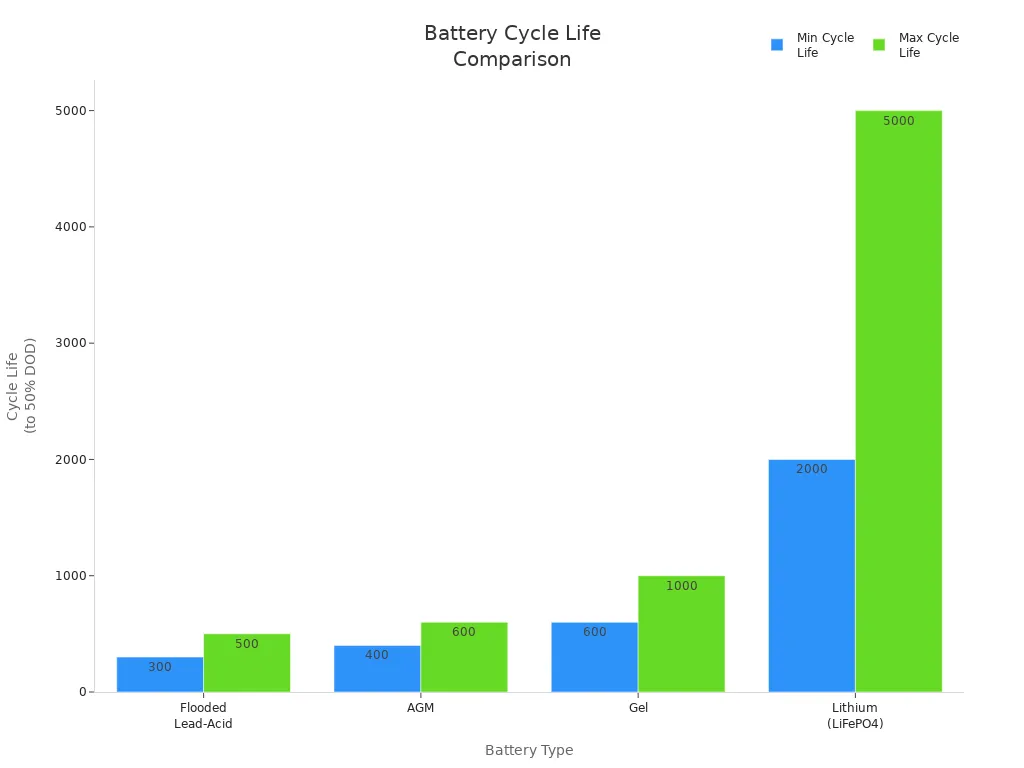
The table below compares the cycle life of common battery types used in security and industrial applications:
Battery Type | Typical Cycle Life (to 50% Depth of Discharge) |
|---|---|
Flooded Lead-Acid | 300-500 cycles |
AGM | 400-600 cycles |
Gel | 600-1,000 cycles |
Lithium (LiFePO4) | 2,000-5,000+ cycles |
You gain significant advantages with lithium battery packs. For example, in security system and infrastructure deployments, you can expect 6-15 years of lifespan with daily cycling, and up to 20 years with occasional cycling. This reduces maintenance costs and downtime for your outdoor installations.
Tip: When sourcing lithium batteries, always check your supplier’s conflict minerals policy to ensure responsible sourcing. Read our conflict minerals statement.
1.2 Durability and Weather Resistance
Your Rainproof Security Camera faces constant exposure to rain, dust, and temperature extremes. You must choose batteries that meet strict industry standards for durability and weather resistance. Look for these features:
IP Rating: Select batteries and enclosures with an IP66 or higher rating for superior water and dust resistance.
Material Quality: Use high-quality materials such as stainless steel, aluminum alloy, or heavy-duty plastics to withstand harsh weather and prevent corrosion.
Operating Temperature Range: Ensure your battery system functions from -40°C to +85°C, matching the requirements of industrial, medical, and robotics applications.
Corrosion Resistance: In coastal or industrial areas, prioritize corrosion-resistant materials to extend battery life.
These standards help your security systems maintain performance in both high heat and freezing conditions. You reduce the risk of failure and extend the operational life of your outdoor cameras.
1.3 Safety and Protection Features
You need robust safety features to prevent battery failures in outdoor security camera applications. The most effective protection strategies include:
Camera Location: Install cameras away from high-traffic areas to reduce the risk of accidental damage or tampering.
Camera Settings: Adjust motion sensitivity and enable features like People-Only Detection to conserve battery power.
Full Charging: Always use the correct power adapter and fully charge the battery before deployment to prevent rapid drainage.
Modern lithium battery packs also integrate advanced Battery Management Systems (BMS). These systems monitor voltage, temperature, and current, providing overcharge, over-discharge, and short-circuit protection. In industrial and infrastructure projects, these features help you avoid costly downtime and ensure continuous surveillance.
Note: Regularly review your battery maintenance schedule and use remote monitoring tools to detect issues early. This proactive approach keeps your Rainproof Security Camera system running smoothly in any environment.
Part2: Design for Harsh Environments
2.1 Waterproofing and IP Ratings
You must protect your Rainproof Security Camera battery system from water and dust. Advanced sealing and high IP ratings play a key role. An IP66 or higher rating means your battery enclosure resists strong water jets and airborne particles. For the most demanding sites, an IP68 rating ensures the battery remains functional even during heavy rain or temporary submersion. Hermetically sealed batteries prevent corrosion and short circuits caused by humidity or precipitation. You should choose enclosures made from durable, corrosion-resistant materials. These materials withstand moisture, ultraviolet radiation, and temperature swings. This approach keeps your power system reliable in any weather.
2.2 Temperature and Thermal Management
Outdoor environments often bring extreme temperatures. You need batteries that operate safely and efficiently in these conditions. Most lithium battery packs for outdoor security cameras work between -20°C and 60°C (-4°F to 140°F). Some advanced models extend this range from -40°C to +85°C. This wide range allows you to deploy cameras in arctic cold or desert heat. Proper thermal management prevents overheating and extends battery life. You should select battery packs with built-in thermal protection and robust construction. These features help your system maintain performance and safety, even during rapid temperature changes.
Tip: Always verify the operating temperature range of your battery pack before installation. This step reduces the risk of failure in harsh climates.
2.3 Physical and Vandal Protection
You must defend your battery system against physical damage and tampering. Use robust, corrosion-resistant materials such as steel for battery housings. These materials protect against impacts, vibration, and environmental stress. Hermetic sealing adds another layer of defense. For high-risk areas, anti-vandal features are essential. The table below highlights key features that improve reliability:
Feature | Description |
|---|---|
Vandal Resistance | IK10 rating ensures protection against physical damage from vandalism. |
Waterproofing | IP68 rating provides protection against water ingress, ensuring functionality in rain. |
Durability | Robust construction enhances longevity and reliability in harsh environments. |
You increase the lifespan and reliability of your Rainproof Security Camera system by choosing the right protective features.
Part3: Power and Charging Solutions
3.1 Solar and Alternative Power Options
In remote or hard-to-access locations, relying solely on traditional power sources can be challenging. Integrating solar panels offers a sustainable, maintenance-friendly solution for rainproof security cameras. Small, 3-5W solar panels can keep batteries charged during daylight hours, extending operational life significantly. When you use solar power, you reduce dependency on grid electricity and increase system resilience. However, regular maintenance remains essential. You should routinely check cables, connections, and battery levels to ensure the system functions during cloudy days or seasons with less sunlight. Backup power options like uninterruptible power supplies (UPS) also enhance reliability, especially during power outages. These systems require periodic testing to confirm they can support your cameras when needed, which slightly increases maintenance frequency but ensures continuous security coverage.
3.2 Smart Charging and BMS Integration
Advanced battery management systems (BMS) play a crucial role in maintaining the health of lithium battery packs used in rainproof security cameras. These systems monitor voltage, temperature, and current, providing overcharge, over-discharge, and short-circuit protection. Incorporating smart charging features allows your batteries to operate efficiently, even in extreme weather conditions. For example, some BMS solutions adapt charging rates based on environmental factors, extending battery lifespan. Evidence shows that integrating solar panels with intelligent power management can extend battery life by 200-400% under optimal conditions. Additionally, BMS can prioritize essential functions during low-battery situations, ensuring your security system remains operational when it matters most.
3.3 Maximizing Battery Life
Proper maintenance practices significantly extend the lifespan of lithium battery packs in outdoor security systems. Regularly testing backup power sources like UPS units ensures they can support your rainproof security camera during outages. Keeping batteries charged between 20-80% prevents undue stress and degradation, which is vital for maximizing calendar life—typically 2-5 years with proper care. Incorporating alternative power options, such as solar panels, reduces the frequency of manual interventions. Moreover, advanced power management features can increase operational time by 30-50%, adjusting camera functions based on available power. Consistent maintenance and smart system design help you achieve reliable, long-term outdoor surveillance.
Part4: Installation and Security
4.1 Anti-Tampering Measures
You must protect your rainproof security camera battery systems from tampering and theft, especially in industrial, infrastructure, and medical settings. Using advanced anti-tampering technologies increases the reliability of your lithium battery packs. The table below highlights effective solutions:
Technology Type | Effectiveness Description |
|---|---|
Tamper-resistant mounts | Use specialized screws that require unique tools for removal, enhancing physical security. |
Tamper-detection systems | Achieve 95% accuracy in distinguishing between environmental movement and tampering. |
Backup batteries | Maintain critical functions even if the primary power source is compromised. |
Anti-theft features | Integrated sirens and notifications alert users to unauthorized movement. |
You can also improve security by adding anti-theft measures. For example, motion-activated lights deter vandals, while securing wiring makes it harder for bad actors to cut power. Password protection prevents unauthorized access to camera feeds and stored data.
4.2 Maintenance and Remote Monitoring
You need to keep your battery systems running with minimal downtime. Regular maintenance helps you avoid unexpected failures. Common challenges include checking battery levels, limiting unnecessary video recording, and ensuring proper camera placement. You should use remote monitoring technology to reduce costs and improve efficiency. With remote monitoring, you can:
Prevent crime proactively, saving costs from damages.
Eliminate the need for in-house security staff.
Respond immediately to threats, reducing the need for extra security measures.
Outsource monitoring to expert teams, lowering infrastructure costs.
Ensure compliance and avoid theft, which leads to financial savings.
Gain 24/7 visibility, improving operational efficiency.
4.3 Best Practices for Outdoor Setup
You must consider environmental factors when installing outdoor security cameras powered by lithium battery packs. Extreme weather, such as heat or cold, can affect battery performance and lifespan. Temperature varies greatly between locations, like rural Alaska and coastal Florida. To maximize reliability:
Choose battery chemistries like LiFePO4 or NMC for wide temperature tolerance.
Install cameras in sheltered locations when possible.
Use enclosures with high IP and IK ratings for water and impact resistance.
Secure all wiring and connections to prevent tampering.
Tip: Always match your battery system to the specific environmental challenges of your installation site. This approach ensures long-term performance for your security, medical, or industrial applications.
You must prioritize battery capacity, environmental resilience, and advanced charging features when selecting lithium battery packs for rainproof security cameras. The table below shows how capacity impacts runtime and best use cases:
Battery Capacity | Estimated Runtime | Best Use Case |
|---|---|---|
2000mAh | 1-2 weeks | Low-traffic, easy access for charging |
4000mAh | 2-4 weeks | Moderate usage, standard features |
6000-10000mAh | 2-3 months | High-traffic, premium features |
You gain long-term reliability by choosing LiFePO4, NMC, LCO, or LMO packs with robust IP ratings and wide temperature tolerance. Consult experienced suppliers for tailored solutions and ongoing support. This approach ensures your outdoor security systems deliver consistent performance in any environment.
FAQ
5.1 What lithium battery chemistry works best for outdoor security cameras?
You should choose LiFePO4 for its long cycle life and wide temperature range. NMC and LMO also perform well in harsh environments. These chemistries provide stable voltage and high energy density, making them ideal for security, medical, and industrial applications.
5.2 How do I ensure battery safety in harsh outdoor environments?
You must use battery packs with advanced Battery Management Systems (BMS). These systems monitor voltage, temperature, and current. They provide overcharge, over-discharge, and short-circuit protection. This keeps your security or infrastructure system safe and reliable.
5.3 What IP rating should I select for battery enclosures?
You should select IP66 or higher for most outdoor security and industrial applications. IP68 offers the best protection against water and dust. This rating ensures your lithium battery pack operates reliably during heavy rain or dust storms.
5.4 How often should I maintain lithium battery packs in outdoor systems?
You should check battery levels and connections every three to six months. Use remote monitoring tools for real-time updates. Regular maintenance reduces downtime and extends battery life in robotics, medical, and security deployments.
5.5 Can I use solar panels with lithium battery packs for remote sites?
Yes, you can integrate solar panels with LiFePO4, NMC, LCO, or LMO packs. This setup supports continuous operation in remote infrastructure or security projects. Solar charging reduces grid dependency and lowers maintenance costs.


