


You need reliable off-grid power for IP cameras in remote surveillance, especially where grid access is limited or unstable. Integrated solar battery systems, featuring advanced lithium batteries, deliver uninterrupted power so your cameras operate day and night. The 12V solar battery stores extra energy, keeping equipment running through low sunlight and nighttime hours. This technology eliminates dependence on grid power and supports smart security solutions. The global solar-powered security camera market continues to expand rapidly, with a projected CAGR of 16.7% from 2026 to 2033.
Key Takeaways
Integrated solar battery systems provide reliable off-grid power for IP cameras, ensuring continuous surveillance in remote locations.
Lithium battery packs offer higher efficiency and longer life compared to traditional batteries, reducing maintenance costs and enhancing performance.
Proper installation and regular maintenance of solar battery systems are crucial for maximizing reliability and extending the lifespan of your surveillance setup.
Assess your site’s sunlight availability and select appropriately sized solar panels and batteries to ensure uninterrupted operation during low sunlight periods.
Stay informed about market trends in solar surveillance to leverage advancements in technology and improve your security solutions.
Part1: Solar Battery Systems Overview
1.1 Integrated Design for IP Cameras
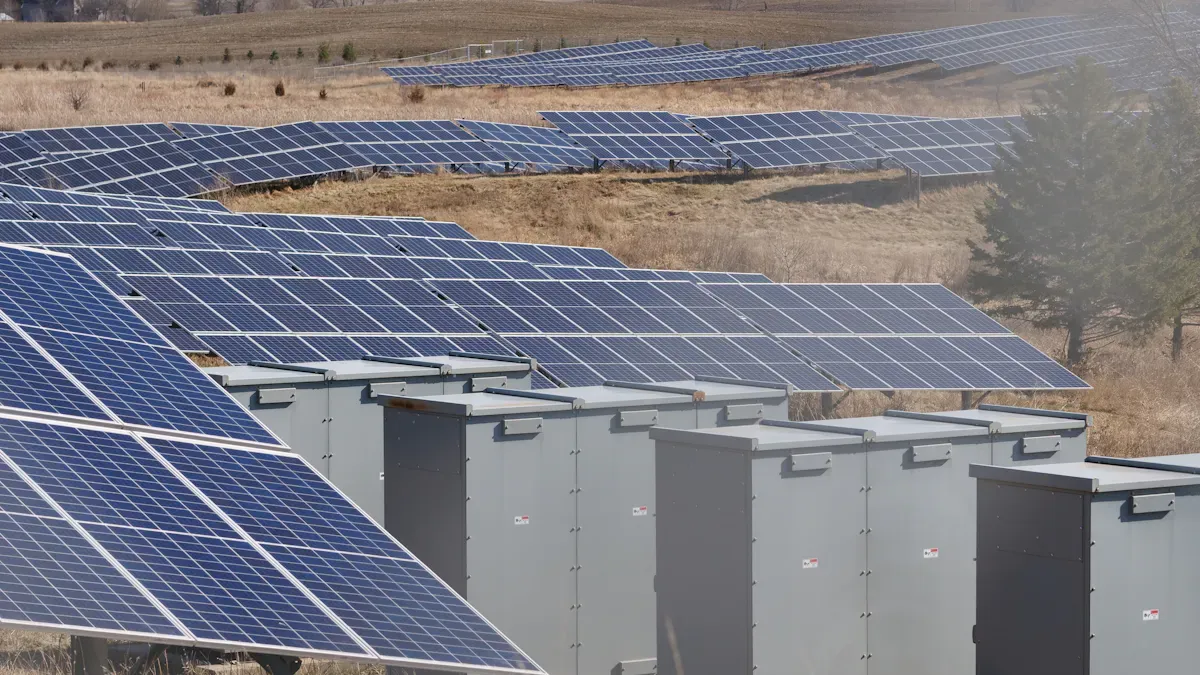
You need a power solution that works reliably in remote or off-grid locations. Integrated solar battery systems provide this by combining solar panels, lithium battery packs, and smart controllers into a single, efficient unit. These systems are designed to power IP cameras used in security, infrastructure monitoring, and industrial automation. The compact design allows you to deploy surveillance quickly, even in areas without grid access.
Key features that make these systems suitable for IP cameras include:
Photovoltaic panels that convert sunlight into electricity, usually ranging from 2 to 8 watts. These panels offer high conversion efficiency, often between 20% and 23%.
Charge controllers that regulate power flow, prevent overcharging, and ensure efficient charging.
Lithium-ion battery packs (often LiFePO4) with capacities from 5,000 to 18,000 mAh. These batteries store energy for use during cloudy periods or at night.
Energy-efficient camera components that minimize power consumption while maintaining high video quality.
You will find similar lithium battery technology in medical devices, robotics, and industrial equipment, where reliability and long service life are critical.
1.2 Key Components: Solar Panel, Lithium Battery, Controller
Solar battery systems for IP cameras use three main components:
Solar Panel: Captures sunlight and converts it into electrical energy. Residential models typically provide 2-6 watts, while premium panels can exceed 23% efficiency.
Lithium Battery Pack: Stores energy for continuous operation. LiFePO4 batteries operate at 14.2-14.6V bulk and 13.6V float. They require controllers with lithium-specific charging profiles and sometimes an external Battery Management System (BMS).
Charge Controller: Manages the flow of electricity between the solar panel, battery, and camera. Maximum Power Point Tracking (MPPT) controllers can handle high-voltage panels (up to 150-600V DC), maximizing charging efficiency and reducing installation costs.
Here is a comparison of lithium-ion and lead-acid batteries, which highlights why lithium battery packs are preferred for solar battery systems in security and industrial applications:
Battery Type | Energy Storage Capacity | Cycle Life | Charge-Discharge Efficiency |
|---|---|---|---|
Lithium-ion (LFP) | High | Long | 90-95% |
Lead-acid | Moderate | Short | 80-90% |
Lithium-ion batteries deliver higher efficiency and longer cycle life. This means you get more reliable performance and lower maintenance costs over time.
Tip: Always use a charge controller with a lithium-specific profile to protect your battery pack and extend its lifespan.
1.3 How Solar Battery Systems Work
Solar battery systems operate by capturing sunlight with photovoltaic panels and converting it into electrical current. The charge controller ensures the solar panel works at its maximum power point, providing stable voltage to your IP camera. The lithium battery pack stores excess energy, so your camera keeps running during periods of low sunlight or at night.
The system manages power distribution automatically. The controller directs energy to the battery when sunlight is available and switches to battery power when needed. This setup ensures continuous operation, even in challenging weather or remote locations.
Solar panels are sized based on your location and the power needs of your camera.
MPPT charge controllers maximize charging efficiency.
Lithium battery packs provide stable voltage and long service life.
Power distribution and protection circuits keep your system safe and reliable.
You can find similar power management strategies in industrial automation and critical infrastructure, where uninterrupted operation is essential.
Part2: Benefits for Remote Surveillance
2.1 Reliable Off-Grid Power
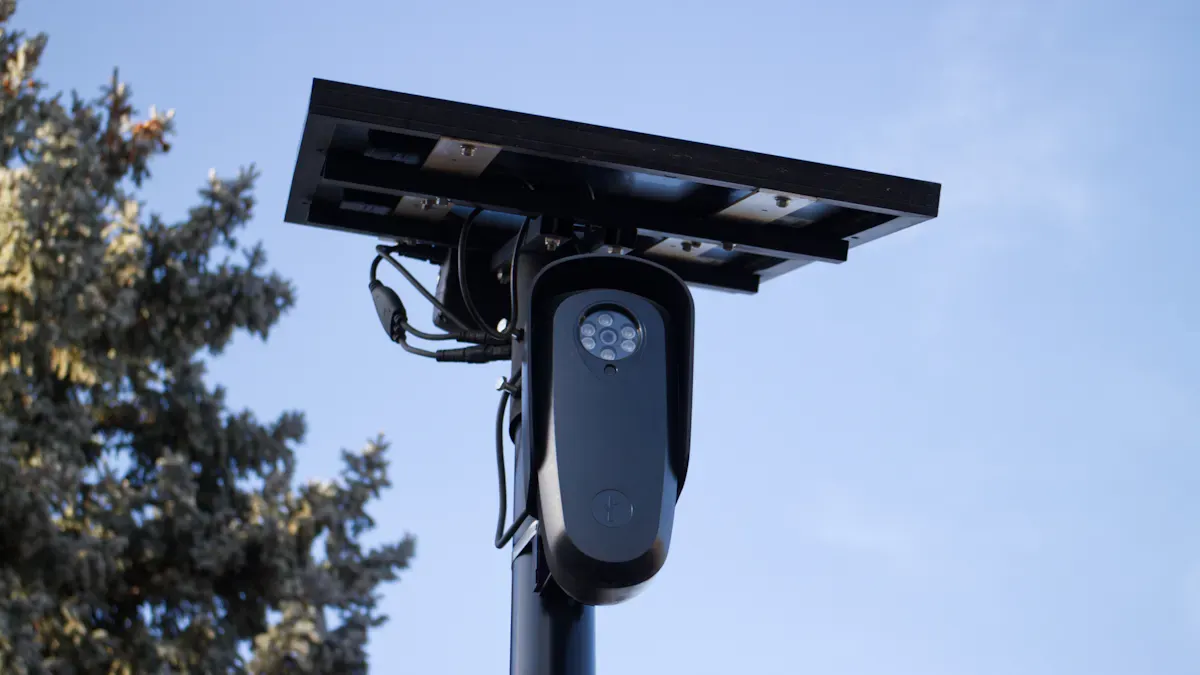
You gain dependable surveillance in remote locations when you use Solar Battery Systems. These systems operate independently of the electrical grid, so you can monitor and record activities even where traditional power sources are unavailable. The 12V lithium battery stores excess energy during sunny periods and supplies power at night or on cloudy days. This bridging of variable solar energy input and constant power demand ensures uninterrupted operation. You can deploy solar-powered security cameras in areas with unreliable power supply or where installing traditional power lines is impractical. These systems also appeal to eco-conscious organizations because they reduce reliance on fossil fuels.
Note: Solar-powered security cameras are ideal for challenging environments, offering continuous monitoring without grid dependency.
2.2 Security and Cost Efficiency
Solar Battery Systems deliver both security and cost efficiency. You avoid the expense and complexity of extending power lines to remote sites. The lithium battery pack provides long cycle life and stable voltage, reducing maintenance needs and operational costs. You also benefit from energy independence, which protects your surveillance infrastructure during power outages. Organizations in medical, robotics, infrastructure, consumer electronics, and industrial sectors rely on lithium battery packs for their reliability and performance.
Sector | Lithium Battery Application Scenario | Benefit |
|---|---|---|
Medical | Portable diagnostic devices | Reliable, long-lasting power |
Robotics | Autonomous robots | Stable voltage, high efficiency |
Security Systems | Remote surveillance cameras | Continuous operation |
Infrastructure | Monitoring sensors | Low maintenance |
Consumer Electronics | Smart devices | Extended battery life |
Industrial | Automation equipment | Robust performance |
2.3 Market Trends in Solar Surveillance
Recent trends show rapid growth in the adoption of solar surveillance systems. Advancements in battery technology and reduced costs drive this expansion. You see increased demand for renewable energy sources, energy independence, and reliability during power outages. Organizations respond to geopolitical tensions and rising electricity costs by investing in solar battery backup systems. These systems now offer unprecedented efficiency, safety, and affordability. The market shift toward accessible remote monitoring solutions highlights the importance of Solar Battery Systems in modern security strategies.
Part3: System Selection and Installation
3.1 Assessing Power Needs and Sunlight
You must start by evaluating the power requirements of your IP cameras and the available sunlight at your remote site. Calculate the daily energy consumption of each camera in watt-hours. Multiply the camera’s power draw (in watts) by the number of hours it operates each day. This calculation helps you determine the minimum solar panel and battery capacity needed.
You should also consider the sunlight conditions at your installation site. Place solar panels in direct sunlight to maximize electricity generation. Avoid regular shading by positioning panels in open areas. Seasonal changes can affect sunlight, so check for shade during different times of the year. Trim trees near the panels to prevent shading and maintain optimal performance.
The performance of your system during periods of low sunlight depends on both battery capacity and panel wattage. Increasing these components provides a greater buffer against cloudy days and reduced solar generation in winter.
Place panels in direct sunlight.
Avoid regular shading.
Consider seasonal changes in shade.
Trim nearby trees regularly.
3.2 Sizing Lithium Battery Packs
Selecting the right lithium battery pack is critical for reliable surveillance. You must match battery capacity to your camera’s backup duration needs. The table below shows how battery capacity affects backup duration for IP cameras:
Battery Capacity (mAh) | Backup Duration (Days) |
|---|---|
3,000 – 5,000 | 1 – 2 |
6,000 – 8,000 | 2 – 3 |
10,000 – 13,000 | 3 – 7 |
Choose a lithium battery pack that provides enough backup for your site’s weather patterns and security requirements. For critical infrastructure or industrial sites, select higher-capacity packs to ensure continuous operation during extended periods of low sunlight.
You should always use a battery management system (BMS) with your lithium battery pack. A BMS protects against overcharging, deep discharge, and temperature extremes. This extends battery life and ensures safe operation.
Lithium battery packs are widely used in medical devices, robotics, security systems, infrastructure monitoring, consumer electronics, and industrial automation. These sectors rely on lithium technology for its long cycle life, high efficiency, and stable voltage.
3.3 Installation Steps and Best Practices
Follow these steps and best practices to maximize the reliability and performance of your Solar Battery Systems:
Ensure solar panels receive at least 4-6 hours of direct sunlight daily.
Position panels facing south in the Northern Hemisphere. Avoid obstructions like trees and buildings.
Use panels with a power output of 3-8 watts and high conversion efficiency (up to 23%) for consistent camera operation.
Select IP cameras with IP65 or higher ratings for weather resistance. This ensures durability against dust and moisture.
Choose housings made from ASA plastic to enhance UV stability and prevent degradation.
In areas with frequent bad weather, use larger solar panels and battery banks for reliable performance.
Tip: Regularly monitor system performance and check the battery state of charge. Ensure adequate ventilation for battery enclosures.
Maintenance is essential for long-term operation. The table below outlines key maintenance tasks and their recommended frequency:
Maintenance Task | Frequency |
|---|---|
Monitor system performance | Ongoing |
Check battery state of charge | Ongoing |
Ensure adequate ventilation | Ongoing |
Post-winter inspection | Spring |
Verify cooling system operation | Summer |
Prepare system for winter | Fall |
Monitor performance in cold weather | Winter |
Annual electrical connection inspection | Annual |
Battery performance testing | Annual |
Software updates | Annual |
Plan for eventual replacement costs | Ongoing |
You should plan for annual inspections and battery performance testing. Schedule software updates and prepare for eventual replacement costs. These steps help you maintain reliable surveillance and extend the life of your investment.
Solar Battery Systems with lithium battery packs provide robust, low-maintenance solutions for remote surveillance. You can achieve continuous operation and reduce downtime by following these selection, installation, and maintenance guidelines.
Part4: Challenges and Solutions
4.1 Weather and Shading Issues
You face several environmental challenges when deploying remote surveillance systems. Severe storms, heavy rain, and snow can damage hardware and interrupt data transmission. Moisture and dust may corrode components, while ice buildup can block camera visibility. Extreme temperatures can degrade battery efficiency and damage electronics. High heat may cause overheating, and freezing conditions can make components brittle and reduce battery performance.
To address these issues:
Choose weather-resistant designs that operate from -20°F to 120°F.
Install cameras in protected locations, such as under eaves, to shield them from harsh weather.
Clean solar panels regularly and inspect for damage.
Ensure effective heat dissipation to prevent overheating.
Shading also impacts solar panel performance. You can use advanced solutions to minimize shading effects:
Solution Type | Description |
|---|---|
Field Validation | Spot-check shadow patterns during site visits |
Ongoing Monitoring | Monitor system after installation to identify new shading sources |
AI-Powered Analysis Tools | Automate pattern recognition and improve shading analysis accuracy |
IoT Sensor Networks | Provide real-time irradiance measurements and detect new shading sources |
Drone Integration | Use drones for scheduled site monitoring and thermal imaging |
4.2 Battery Life and Troubleshooting
Lithium battery packs in remote surveillance systems typically last 3 to 5 years. You should monitor battery health and plan for timely replacement to avoid unexpected downtime. Extreme temperatures, overcharging, and deep discharge can shorten battery life. Use a battery management system (BMS) to protect against these risks.
If you notice reduced backup duration or inconsistent power, check for:
Signs of battery swelling or corrosion
Faulty connections or damaged wiring
Inadequate ventilation in battery enclosures
You can find lithium battery packs in medical devices, robotics, security systems, infrastructure monitoring, and industrial automation. These industries rely on stable voltage and long cycle life.
4.3 Real-World Applications
You see integrated solar battery systems used in many real-world scenarios:
Mobile surveillance trailers with solar panels and wireless cameras monitor construction sites and public events.
Solar-powered security cameras protect residential properties, commercial facilities, and remote industrial sites.
The market for solar-powered security cameras is projected to grow at a CAGR of 19.2% from 2023 to 2030.
The North American mobile video surveillance market generated $888.5 million in 2024, with an expected CAGR of 13.3% from 2025 to 2030.
These trends show strong demand for reliable, off-grid surveillance powered by advanced lithium battery technology.
You gain reliable, sustainable power for your IP cameras in remote locations with integrated solar battery systems using lithium batteries. These systems give you energy independence, lower operational costs, and continuous security monitoring. You should assess your site’s sunlight, select high-capacity lithium batteries for cloudy periods, and ensure all components are compatible. Install batteries in ventilated areas and use proper cable management. Regular maintenance and careful system sizing help you achieve long-term performance and cost savings for your surveillance needs.
FAQ
What advantages do lithium battery packs offer for solar-powered IP camera systems?
You gain higher energy density, longer cycle life, and better charge-discharge efficiency with lithium battery packs.
How do you size a lithium battery pack for remote surveillance?
You calculate your camera’s daily energy use in watt-hours. Select a lithium battery pack that provides backup for several days. Use the table below for guidance:
Battery Capacity (mAh) | Backup Duration (Days) |
|---|---|
5,000 | 1–2 |
10,000 | 3–5 |
18,000 | 5–7 |
Can you use solar battery systems in harsh environments?
Yes. You choose weather-resistant designs rated for extreme temperatures and moisture. Lithium battery packs operate reliably in medical, infrastructure, and industrial sectors where harsh conditions are common.
What maintenance do lithium battery packs require?
You monitor battery health, check connections, and schedule annual performance tests. Use a battery management system (BMS) to protect against overcharging and deep discharge. Regular maintenance extends battery life and ensures system reliability.
Which industries benefit most from integrated solar battery systems?
You see strong adoption in security, medical devices, robotics, infrastructure monitoring, consumer electronics, and industrial automation. These sectors value lithium battery packs for stable voltage, long service life, and low maintenance.


