

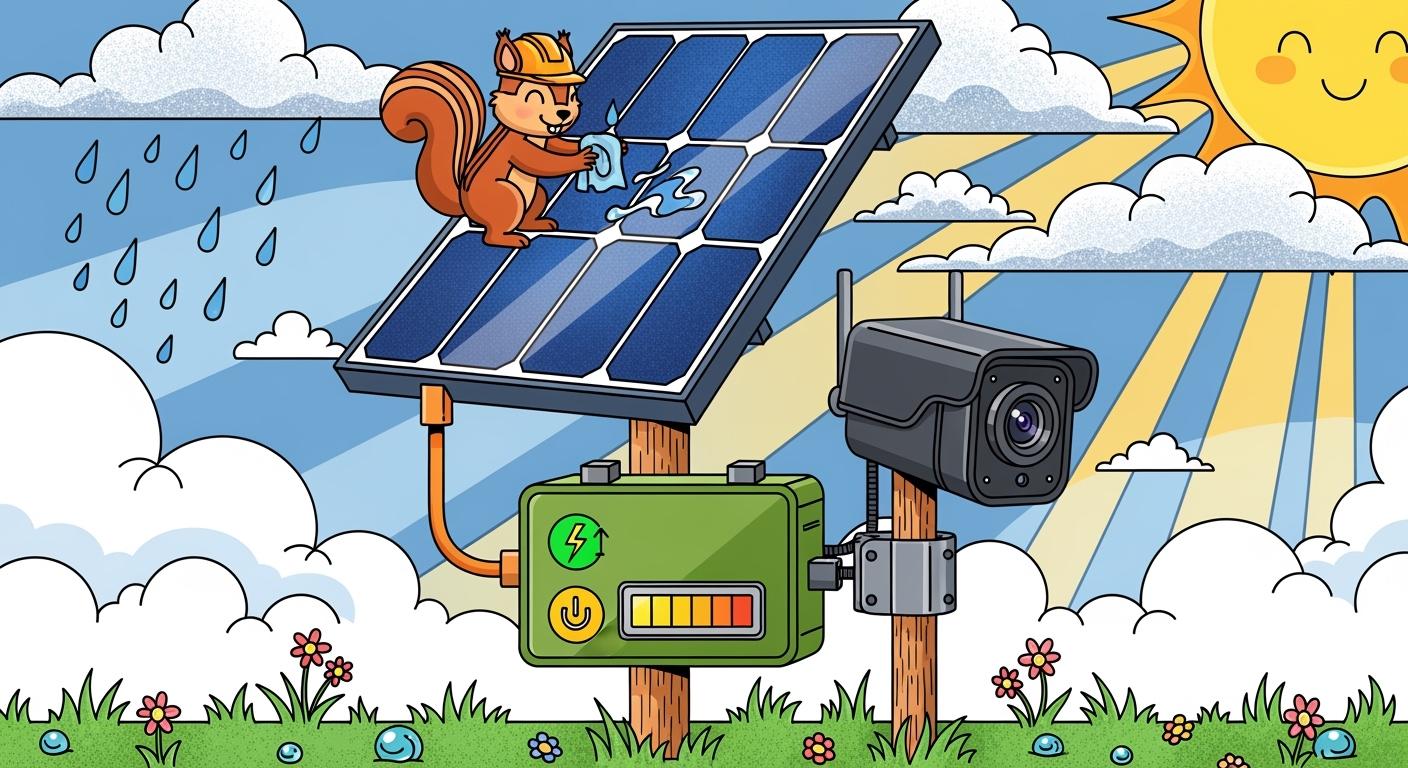
You want your IP cameras to work reliably in remote or harsh locations. Start by choosing energy-efficient models and sizing lithium battery packs so your solar battery systems run for at least three days without sunlight. Place your solar panels where they get the most sun and keep them clean to avoid dust blocking light. Monitor battery health often to prevent unexpected downtime. Use weather-resistant equipment and enclosures to protect against rain, snow, and extreme temperatures. These steps help you maintain strong performance, even in winter or low-light conditions.
Key Takeaways
Choose energy-efficient IP cameras to extend battery life and reduce costs. Look for features like adjustable IR settings and smart sleep modes.
Size lithium battery packs to provide at least three days of runtime without sunlight. This ensures continuous operation during cloudy weather.
Select high-efficiency solar panels based on your location. Panels rated at 4-10W are ideal for typical to cloudy conditions, ensuring quick and reliable charging.
Regularly monitor and maintain your solar battery system. Clean panels, check battery health, and inspect connections to prevent downtime.
Use weatherproof components and enclosures to protect your system from harsh conditions. Look for high IP ratings to ensure durability and reliability.
Part1: Solar Battery Systems Runtime
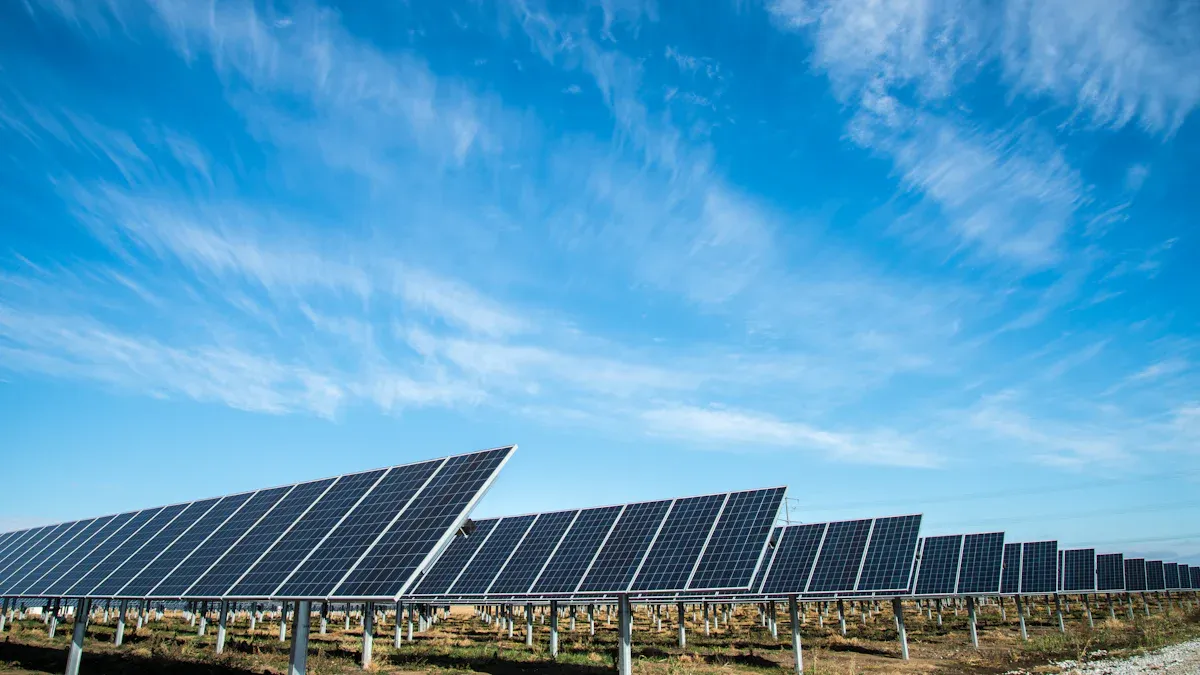
1.1 Energy-Efficient Camera Selection
You should start by selecting IP cameras with low power consumption. This decision has a direct impact on the overall runtime of your Solar Battery Systems. Energy-efficient cameras draw less current, which means your batteries last longer between charges. Most leading models use a constant amount of power, but features like built-in infrared (IR) lighting for night vision can increase usage during dark hours.
Typical power consumption for energy-efficient IP cameras:
A setup with 10 cameras may use about 49 watts continuously.
Power usage remains steady, except when IR lighting activates at night.
When you choose cameras with lower power requirements, you reduce the strain on your lithium battery packs. This strategy extends operational time, especially in remote security, infrastructure monitoring, or industrial automation applications. Lower power demand also allows you to use smaller solar panels or battery banks, which can reduce costs and simplify installation.
Tip: Look for cameras with adjustable IR settings, smart sleep modes, and efficient video compression to further minimize energy use.
1.2 Battery Sizing for Extended Operation
Proper battery sizing is essential for reliable Solar Battery Systems. You should size your lithium battery packs to provide at least three days of runtime without sunlight. This buffer ensures continuous operation during cloudy weather or short winter days.
Lithium Battery Chemistry | Energy Density (Wh/kg) | Cycle Life (cycles) | Temperature Range (°C) | Application Scenarios |
|---|---|---|---|---|
LiFePO4 | 90-120 | 2000+ | -20 to 60 | Security, infrastructure, robotics |
NMC | 150-220 | 1000-2000 | -10 to 55 | Medical, consumer electronics, industry |
LCO | 150-200 | 500-1000 | 0 to 50 | Consumer electronics |
LiFePO4 lithium battery packs offer long cycle life and wide temperature tolerance, making them ideal for outdoor security and industrial systems. NMC batteries provide higher energy density, which suits applications where space is limited, such as medical or robotics devices.
To calculate the required battery capacity, estimate your total daily energy consumption. Multiply the camera system’s average wattage by 24 hours, then multiply by three for three days of autonomy. For example, if your system uses 16 watts on average:
16 watts x 24 hours x 3 days = 1,152 watt-hours (Wh)
Select a lithium battery pack with at least this capacity. Always add a safety margin to account for battery aging and unexpected power draws.
Note: Size your solar panel array to recharge the battery fully within three to four hours of good sunlight. This approach ensures your system recovers quickly after periods of low sun.
1.3 Power Management and Scheduling
You can extend the runtime of your Solar Battery Systems by using smart power management strategies. These methods help you conserve energy and maximize battery life, especially in challenging environments.
Ensure your solar panels have an unobstructed view of the sun.
Position panels facing south (northern hemisphere) or north (southern hemisphere) for optimal exposure.
Adjust the tilt angle to match your latitude, usually between 30° and 45°.
Clean panels regularly to remove dust and debris.
Adjust the camera’s PIR sensor sensitivity to reduce unnecessary wake-ups.
Schedule recording times to match periods of expected activity.
Limit recording duration after motion triggers.
Use lower video resolutions, such as 1080p or 2K, to balance quality and power use.
Activate infrared-only night modes to save energy during low-light hours.
Environmental conditions and camera activity levels affect runtime. High traffic areas or frequent motion events increase power consumption. Cold temperatures can reduce lithium battery performance, so choose chemistries like LiFePO4 for better cold-weather reliability.
Tip: Monitor your system’s runtime and adjust settings as needed. Regular reviews help you identify trends and optimize performance for your specific application, whether in security, infrastructure, or industrial monitoring.
Part2: Charging Efficiency
2.1 High-Efficiency Solar Panel Selection
You need to select high-efficiency solar panels to ensure your IP camera system charges quickly and reliably. The right panel wattage depends on your location and sunlight availability. In very sunny regions, a 2-3W panel may suffice. For typical conditions, choose panels in the 4-6W range. In northern climates or areas with frequent cloud cover, select panels rated at 7-10W or higher. If you operate in cloudy regions, always use panels with at least 5W. Avoid panels under 3W in low-sun environments.
Wattage Range | Suitable Conditions |
|---|---|
2-3W | Very sunny locations |
4-6W | Typical conditions |
7-10W | Northern climates or cloud cover |
High-efficiency panels convert more sunlight into usable energy. This means your lithium battery packs charge faster, reducing downtime and improving reliability. Lower efficiency panels require longer sunlight exposure, which can lead to inconsistent performance, especially in critical applications like security, infrastructure monitoring, or industrial automation.
Tip: Always check the efficiency rating of your solar panel. Higher efficiency means better performance in limited space and challenging weather.
2.2 Panel Placement and Orientation
You can maximize energy harvest by placing and orienting your solar panels correctly. In the Northern Hemisphere, a south-facing orientation captures the most sunlight. East-west orientation can provide more consistent power throughout the day, which benefits systems that require steady charging. Adjust the tilt angle based on your geographic location. On flat roofs, a lower tilt angle (5-15 degrees) increases module density and reduces wind load. On pitched roofs, you have more flexibility to match the optimal angle for your latitude.
Optimal Orientation: South-facing (Northern Hemisphere) or east-west for consistent output.
Tilt Angle: Adjust for your location; increase tilt in winter to capture low-angle sunlight and help snow slide off.
Roof Type: Consider the roof structure when installing panels. Flat roofs favor lower angles, while pitched roofs allow for steeper tilts.
During winter, the sun sits lower in the sky. Adjusting the tilt of your panels boosts energy production and helps with snow removal. If you keep the orientation and tilt angles correct, you will see improved real-world energy output, even in low-light conditions.
2.3 Charge Controllers for Lithium Batteries
You must use the right charge controller to protect your lithium battery packs and optimize charging efficiency. Two main types exist: MPPT (Maximum Power Point Tracking) and PWM (Pulse Width Modulation). MPPT controllers work best for lithium batteries, especially in larger or higher voltage solar arrays. They deliver higher efficiency and adapt to changing sunlight conditions. PWM controllers cost less but offer lower efficiency and limited compatibility with lithium chemistries.
Feature | MPPT Controller | PWM Controller |
|---|---|---|
Efficiency | Higher (up to 95%) | Lower (typically 80%) |
Voltage Compatibility | Higher voltage arrays | Limited to battery voltage |
Energy Loss in Conversion | About 5% | N/A |
MPPT controllers extend battery lifespan and improve charging efficiency. This is critical for applications in security, medical, robotics, and industrial sectors where reliability matters. If you use advanced lithium battery packs, always pair them with MPPT controllers for the best results.
Note: For more on battery management systems (BMS) and protection circuits, visit BMS and PCM Guide.
2.4 System Monitoring and Maintenance
You should monitor your Solar Battery Systems regularly to ensure optimal performance. Use battery life indicators to track charge levels and health. Schedule routine system checks to spot issues early, such as panel shading, dirt buildup, or wiring problems. Clean your panels to remove dust, snow, or debris that can block sunlight. Inspect charge controllers and connections for signs of wear or corrosion.
Check battery voltage and state of charge weekly.
Review system logs for abnormal charging patterns.
Clean panels monthly, or more often in dusty or snowy environments.
Test charge controller functions and update firmware if available.
Regular maintenance extends the life of your lithium battery packs and keeps your IP camera system running smoothly. In critical sectors like infrastructure, security, and industrial automation, proactive monitoring prevents costly downtime and ensures continuous operation.
Tip: Set up automated alerts for low battery or charging faults. Early warnings help you respond quickly and maintain system reliability.
Part3: Weather Resistance for Solar Battery Systems
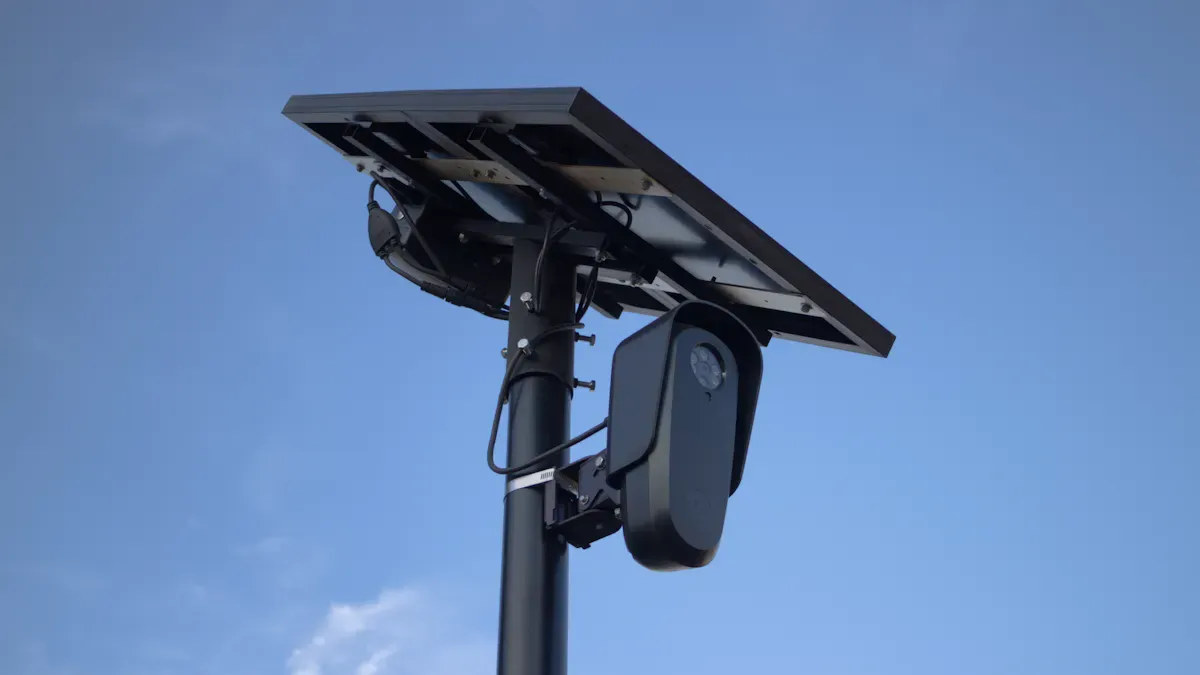
3.1 Weatherproof Components and Enclosures
You need to select components with high weatherproof ratings to ensure reliable operation in outdoor environments. The most common ratings include:
IP65: Protects against jets of water, suitable for heavy rain.
IP66: Shields from powerful water jets and wind-driven rain, ideal for storms.
IP67: Allows short-term immersion in water, useful in flood-prone areas.
IP68: Provides continuous submersion protection, best for extreme conditions.
For example, the Eufy SoloCam S40 uses an IP67-rated enclosure, offering enhanced water resistance for security applications. When you choose enclosures, look for features that extend system life and reliability:
Feature | Description |
|---|---|
IP-66 Weather Resistance | Prevents dust and water intrusion, ensuring optimal operation. |
Thermal Management | Maintains internal temperature, enhancing battery performance. |
Impact-Resistant | Protects against physical damage, increasing reliability. |
Anti-Condensation | Reduces moisture buildup, lowering failure risk. |
UV Protection | Shields from sun damage, prolonging lifespan. |
Quick-Access Panels | Eases maintenance, ensuring long-term functionality. |
Pressure-Tested Seals | Prevents moisture ingress, enhancing durability. |
Tip: Use NEMA 4 or higher rated enclosures for added protection in freezing or wet conditions.
3.2 Installation for Harsh Environments
You should design your system to withstand snow, rain, and extreme temperatures. Choose modules certified for heavy snow loads (at least 5000 Pa) and consider framed modules for higher load capacity. Install panels in landscape orientation to help shed snow and increase winter production. Use venturi deflectors to reduce snow and ice buildup. Vertical PV installation can minimize snow accumulation and capture low-angle winter sun.
Follow these best practices for mounting and cable management:
Mount cameras at 9-12 feet to deter tampering and allow maintenance.
Use heavy-duty, corrosion-proof brackets in windy areas.
Protect wiring with UV-resistant conduit.
Create drip loops in cables to prevent water ingress.
Secure cables every 12-18 inches with weather-resistant clips.
Note: Design racking as ice-sensitive structures and avoid cantilevers to handle combined snow and wind loads.
3.3 Maintenance for Durability
You must maintain your Solar Battery Systems to ensure long-term durability. Keep batteries insulated to protect against extreme temperatures. Maintain optimal temperature conditions to prevent battery stress. Check and balance battery levels to avoid deep discharge. Inspect connections and cables for efficiency and safety. Ensure proper ventilation to prevent overheating during charging.
When operating in extreme cold, select lithium battery chemistries with proven low-temperature performance. The following table compares battery types:
Battery Type | Capacity at Low Temperature | Application Scenarios |
|---|---|---|
Lithium Iron Phosphate (LFP) | 80% at -4°F | Security, infrastructure, robotics, medical |
Lead-Acid | 30% efficiency at -4°F | Industrial, backup power |
Alkaline | 40% of rated output at 0°F | Consumer electronics |
Lithium Iron Phosphate (LFP) batteries deliver superior performance in cold climates, making them ideal for security systems, infrastructure, and industrial automation. You should avoid lead-acid batteries in low temperatures due to significant efficiency loss.
Alert: Regular inspection and preventive maintenance reduce the risk of failure and extend system life, especially in challenging outdoor environments.
Part4: Integration & Case Studies
4.1 Real-World Optimization Examples
You can achieve reliable IP camera operation in remote or harsh environments by optimizing your solar battery system. For example, many security and infrastructure projects use an 18W Monocrystalline solar panel paired with a 20Ah lithium battery pack. This combination provides high-density energy storage and supports up to 20 days of continuous camera operation without sunlight. The Monocrystalline panel performs well in low-light conditions, making it suitable for regions with limited sun exposure. You can also rely on this setup in cold climates, as it maintains performance at temperatures as low as -20°C.
Lithium battery packs play a critical role in medical, robotics, and industrial monitoring applications. These sectors require uninterrupted surveillance and data collection. By selecting the right battery chemistry and panel size, you can reduce maintenance visits and ensure system uptime.
Here are some measurable outcomes from recent case studies:
Case Study | Measurable Outcomes |
|---|---|
Remote Cabin | Uninterrupted surveillance, ease of installation |
Rural Farm | 24/7 surveillance, reduced electricity costs, remote monitoring |
Suburban Neighborhood | Significant drop in crime rates, enhanced community safety |
Vacation Home | Motion detection alerts, reduced false alarms |
Wildlife Sanctuary | Real-time monitoring, valuable data for conservation |
These examples show how optimized solar battery systems improve reliability and reduce operational costs across different sectors.
4.2 Common Pitfalls and Troubleshooting
When you deploy solar battery systems for IP cameras, you may encounter several challenges:
Dependence on Sunlight: Seasonal and geographic changes can limit solar generation, causing power shortages.
Higher Upfront Cost: Initial investment is higher than wired systems, which may concern some organizations.
Panel Maintenance: You must clean panels regularly to maintain efficiency, adding to your maintenance workload.
Battery Degradation Over Time: Lithium batteries lose capacity and will eventually need replacement, affecting long-term costs.
To avoid these pitfalls, you should size your battery and panel for worst-case conditions, schedule regular maintenance, and monitor battery health. In critical sectors like security, medical, and industrial automation, proactive management ensures continuous operation and maximizes your investment in lithium battery technology.
You can optimize your solar battery system for IP cameras by following proven best practices. Use the table below to guide your approach:
Best Practice | Description |
|---|---|
Regular Cleaning | Clean panels for maximum sunlight absorption. |
Battery Health Checks | Check lithium battery packs to maintain efficiency. |
Proper Placement | Position panels for optimal sunlight exposure. |
Weatherproofing | Protect cameras from harsh weather. |
Secure Mounting | Use strong mounts to prevent wind and rain damage. |
Regular monitoring and maintenance, such as biannual inspections and performance tracking, help you prevent failures and extend system life. Real-world deployments show that optimized lithium battery systems reduce theft and deliver rapid ROI. Avoid pitfalls by sizing batteries for your environment and adjusting maintenance for local conditions.
FAQ
What lithium battery chemistry works best for outdoor IP camera systems?
You should choose Lithium Iron Phosphate (LiFePO4) packs. These batteries offer long cycle life, wide temperature tolerance, and high reliability. LiFePO4 suits security, infrastructure, robotics, and industrial applications in harsh environments.
Chemistry | Cycle Life | Temp Range (°C) | Application |
|---|---|---|---|
LiFePO4 | 2000+ | -20 to 60 | Security, robotics |
NMC | 1000-2000 | -10 to 55 | Medical, industry |
How do you size a lithium battery pack for three days of runtime?
You need to multiply your camera system’s average wattage by 24 hours, then by three. For example, a 16-watt system requires 1,152 Wh. Always add a safety margin for battery aging and unexpected power draws.
Tip: Use LiFePO4 packs for better cold-weather performance.
What maintenance steps keep lithium battery packs reliable?
You should check battery voltage weekly, clean solar panels monthly, and inspect connections for corrosion. Schedule biannual inspections. Prevent deep discharge and balance battery levels. These steps extend battery life in security, medical, and industrial systems.
How does winter affect solar charging for lithium battery packs?
Winter reduces sunlight hours and increases snow buildup. You must adjust panel tilt to capture low-angle sun and use LiFePO4 packs for reliable performance. Clean panels often to prevent snow and dust from blocking light. Need a reliable solar battery solution for your next project? Contact Large Power to discuss a custom battery pack.
Which charge controller type should you use with lithium battery packs?
You should use MPPT controllers. MPPT maximizes charging efficiency and protects lithium battery packs. This controller adapts to changing sunlight and extends battery lifespan in security, infrastructure, and industrial applications.


