

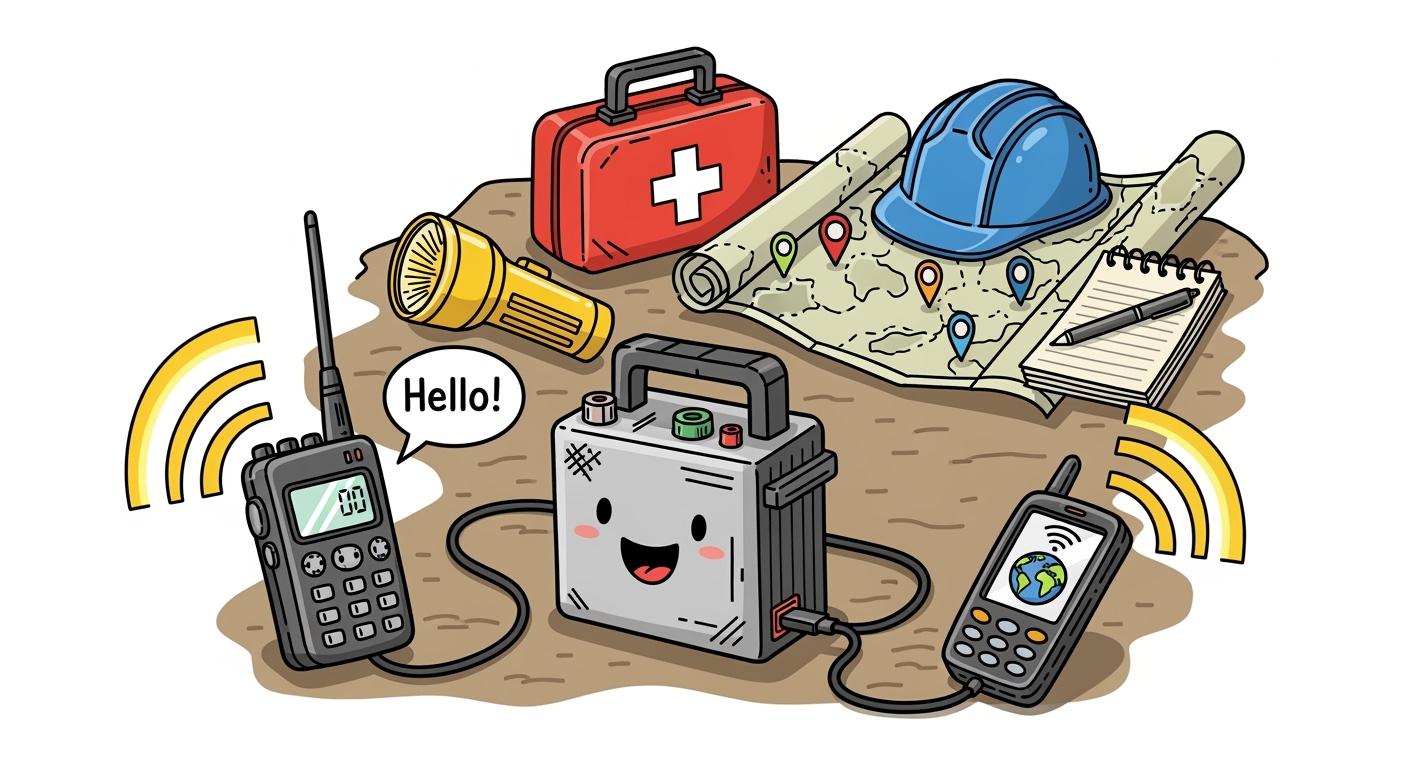
Imagine you are in charge of emergency communications during a citywide power outage. Your team relies on portable radios and data terminals to coordinate rescue efforts. If the battery systems fail, communication breaks down, and response times increase. Reliable backup power keeps operations running when every second counts. Standards like NFPA 1225 require a minimum 12-hour battery backup for Emergency Responder Radio Communication Systems. These standards also call for regular testing, proper sizing, and environmentally-friendly solutions to ensure you meet the demands of critical field operations.
NFPA 1225 outlines requirements for reliable communication, including:
Minimum 12-hour operational backup
UPS sized for full system load
Battery backup test during acceptance
Replacement schedule at handoff
Quick Answer
Emergency response and portable communication equipment needs battery systems that deliver stable backup power, long cycle life, fast readiness, and strong safety protection. LiFePO4 and NMC lithium packs with a BMS help support radios, command devices, lighting, and field coordination tools during critical operations.
Key Takeaways
Reliable battery systems ensure uninterrupted communication during emergencies.
Lightweight and portable batteries enhance quick deployment in field operations.
Durable and safe batteries withstand harsh conditions and prioritize safety.
Choosing between primary and secondary batteries impacts cost and maintenance.
LiFePO4 batteries offer high safety and environmental benefits for field use.
Part1: Battery Systems Requirements in Field Operations
1.1 Reliability & Performance
You need battery systems that deliver consistent performance in the field. Reliability ensures your communication and emergency response equipment stays operational during critical moments. NFPA 1225 and IFC Section 510 require a minimum of 12 hours of backup power for emergency responder radio communication systems. This standard helps you maintain uninterrupted operations during extended outages.
The most critical reliability metrics for battery systems include internal resistance, temperature, and voltage. Monitoring these metrics helps you detect early signs of battery degradation and prevent failures.
Metric | Importance |
|---|---|
Internal Resistance | Indicates battery efficiency and capacity; increases with age, signaling potential failure. |
Temperature | Monitoring prevents overheating, a precursor to equipment failure or fires. |
Voltage | Reflects current charge level, essential for assessing battery health. |
Mobile battery units play a vital role in emergency scenarios. You can quickly deploy them to disaster sites, where they power communication devices, medical equipment, and temporary shelters. These systems allow your operations to continue without interruption. Battery energy storage systems (BESS) offer silent operation, lower emissions, and reduced maintenance compared to diesel generators. You can also charge them with renewable energy, which supports your sustainability goals. For more on sustainability, see our sustainability page.
1.2 Portability & Weight
You must consider portability and weight when selecting battery systems for field operations. Lightweight and compact designs allow your teams to move quickly and efficiently. The Gletscher Camper Series, for example, offers higher watt-hours per kilogram, making it easier to transport without sacrificing capacity. In contrast, some leading portable units can weigh up to 48 kg for a 6 kWh unit, which can slow down deployment.
Feature | Gletscher Camper Series (Pro/Elite) | Typical Portable Unit (Leading Brand) |
|---|---|---|
Weight (approx.) | Designed for mobility – higher Wh per kg (light for capacity) | Heavy for capacity (e.g. ~48 kg for a 6 kWh unit) |
Advancements in lithium battery technology, such as LiFePO4 and NMC, have improved portability. You benefit from compact, flexible, and adaptable battery packs that meet diverse power demands. These advancements also increase device longevity and enhance safety, which is essential for emergency response.
Advancements in solid-state and lithium-ion batteries improve performance.
Increased longevity of portable devices enhances reliability in emergencies.
Enhanced safety features contribute to overall effectiveness.
1.3 Durability & Safety
You need battery systems that withstand harsh field conditions and prioritize safety. Durability ensures your equipment operates in extreme temperatures, rough handling, and unpredictable environments. Safety certifications are essential for compliance and risk management. The following table summarizes key safety standards for battery systems in emergency response:
Standard | Description |
|---|---|
NFPA 68 | Focuses on explosion protection by managing risks in battery energy storage systems. |
NFPA 69 | Emphasizes preventive measures for explosion hazards. |
NFPA 1 | Combines fire prevention and protection standards. |
NFPA 70 | Provides a framework for safe electrical design and installation. |
IFC | Establishes regulations to protect life and property from fire hazards in energy systems. |
UL 9540 | Comprehensive safety standard for energy storage systems. |
UL 9540A | Evaluates thermal runaway fire propagation in battery systems. |
NFPA 855 | Guidelines for the installation of stationary energy storage systems. |
IEC 62933 | Offers a global framework for electrical energy storage systems. |
UL 1973 | Evaluates safety and reliability of stationary batteries used in energy storage systems. |
LiFePO4 batteries stand out for their safety and environmental benefits. They have a lower risk of thermal runaway, longer lifespan, and use more environmentally friendly materials compared to other chemistries like NMC, LCO, or LMO. These features make them ideal for field operations where safety and sustainability matter. For information on responsible sourcing, see our conflict minerals statement.
Tip: Choose battery systems with robust certifications and proven chemistries like LiFePO4 to maximize safety and minimize environmental impact.
Part2: Battery Systems Types for Communication & Response
2.1 Primary vs. Secondary Batteries
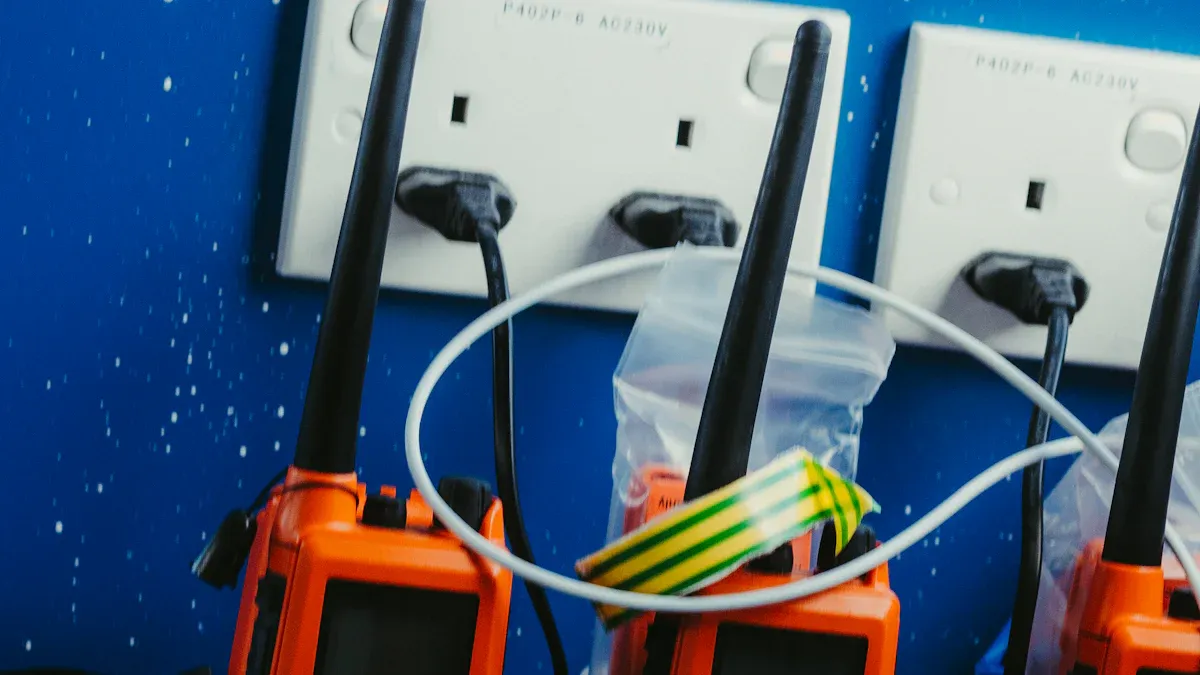
You must choose between primary and secondary batteries for portable communication and emergency response equipment. Primary batteries are single-use and offer a long operational lifespan, often lasting 10-20 years. Secondary batteries are rechargeable, providing 500-2000 charge cycles and lasting 3-5 years. The table below shows the differences:
Battery Type | Operational Lifespan | Charge Cycles |
|---|---|---|
Primary Batteries | 10-20 years | N/A |
Secondary Batteries | 3-5 years | 500-2000 cycles |
Primary batteries require minimal maintenance but have higher long-term costs due to frequent replacements. Secondary batteries reduce waste and costs over time, though you must manage charging systems and maintenance.
Feature | Primary Batteries | Secondary Batteries |
|---|---|---|
Cost | Higher long-term costs | Lower costs over time |
Maintenance Requirements | Minimal | More complex |
2.2 Lithium-Ion & Lithium Iron Phosphate
Lithium-ion and lithium iron phosphate (LiFePO4) batteries dominate emergency response applications. You benefit from longer lifespan, superior safety, and environmentally friendly materials. These batteries maintain performance in extreme temperatures and reduce the need for frequent replacements. The table below highlights their advantages:
Advantage | Description |
|---|---|
Longer lifespan | Reduces replacements and waste, ideal for remote operations |
Superior safety characteristics | Lower risk of fire, crucial for harsh environments |
Environmentally friendly materials | Less toxic, abundant components |
Performance stability | Reliable across temperature ranges |
However, lithium-ion batteries can experience thermal runaway, especially in extreme conditions. You must use strict temperature management systems to mitigate risks. High-altitude operations present challenges with atmospheric pressure and temperature fluctuations.
Tip: Portable, emission-free, and silent battery solutions like NXTGENbps help you meet sustainability goals and reduce operational noise.
2.3 Nickel-Metal Hydride Alternatives
Nickel-metal hydride (NiMH) batteries offer high safety and excellent thermal stability. You find them in aerospace, defense, and medical sectors where reliability matters most. NiMH batteries are less likely to overheat and have a lower risk of thermal runaway compared to lithium-ion batteries. The table below compares NiMH and lithium-ion batteries:
Feature | Nickel-Metal Hydride (NiMH) | Lithium-Ion |
|---|---|---|
Safety | High | Moderate |
Thermal Stability | Excellent | Variable |
Energy Density | Moderate | High |
Charging Time | Moderate | Fast |
Cycle Life | Long | Moderate |
Suitability for Emergencies | High | Moderate |
NiMH batteries degrade faster in extreme temperatures and dusty environments. Marine and arctic conditions can affect battery integrity and charging efficiency. Production of NiMH batteries uses rare earth elements and heavy metals, increasing environmental impact. In military operations, disposal and recycling remain challenging.
Part3: Essential Features & Technologies
3.1 Capacity & Power Output
You must select battery systems with the right capacity and power output for your field operations. Communication devices and emergency equipment require reliable power for extended periods. The table below shows typical requirements:
Requirement Type | Duration |
|---|---|
Operational Power | At least 12 hours |
Supervisory Power | At least 24 hours |
Accurate power output ensures your radios, medical devices, and mobile command units work without interruption. Variability in power output can cause communication failures. You should use advanced measurement tools to maintain consistent performance in the field.
Accurate RF power measurement is vital for reliable communication.
Devices like the Bird 4480A Digital Wattmeter help reduce errors and ensure dependable operation.
3.2 Rechargeability & Rapid Charging
Rechargeability and fast charging are essential for operational readiness. Quick recharging allows you to redeploy equipment without long delays. Modern systems, such as the Blade Battery, support rapid charging, which is crucial for military and emergency teams. The BIC system, for example, provides up to 200 kW of DC fast charging and can draw energy from various sources, including solar. This flexibility supports mobile energy storage for medical, robotics, and industrial applications.
Tip: Fast-charging battery systems reduce downtime and improve your team’s response time during critical missions.
3.3 Ruggedization & Temperature Tolerance
You need battery systems that perform in extreme temperatures and harsh environments. High-performance separators, ceramic coatings, and thermal shrink resistance help prevent failures. These features protect your equipment in arctic, desert, or industrial settings.
“Results at the cell level show a significant enhancement in performance at extreme temperatures, achieving a higher capacity when compared with commercial-off-the-shelf options.”
The table below highlights common failure points in harsh conditions:
Temperature Range | Common Failure Points | Example Applications |
|---|---|---|
Low (-40°C to -20°C) | Increased electrolyte viscosity, decreased lithium ion mobility, increased internal resistance, rapid voltage drop, lithium plating during charging | Outdoor surveillance cameras, cold-chain sensors, arctic devices |
High (60°C to 85°C) | Electrolyte decomposition, breakdown of SEI layer, gas generation, separator shrinkage | Automotive T-Box modules, industrial outdoor equipment, desert monitoring stations |
3.4 Smart Battery Management
Smart battery management systems (BMS) learn more monitor temperature, voltage, and current. These systems adjust charging and discharging to ensure reliability and safety. You benefit from early alerts about potential failures, which helps prevent downtime.
Indicator | Importance |
|---|---|
Internal Resistance | Indicates battery efficiency and capacity; alerts when nearing end of life. |
Temperature | Prevents overheating, a common cause of equipment failure or fires. |
You may face integration challenges, such as compatibility with existing emergency response systems and the need for specialized training. Collaboration with first responders and clear communication protocols improve the effectiveness of your backup systems.
Part4: Battery Systems Selection & Maintenance
4.1 Choosing the Right Battery
Selecting the right battery for your emergency response equipment requires a clear understanding of operational needs and site-specific risks. You should start by conducting a thorough risk assessment. Identify hazards such as chemical exposure, electrical faults, fire, and environmental threats. This step helps you choose battery chemistries and designs that match your safety requirements.
You also need to define roles and communication plans for your team. Assign responsibilities for battery management and emergency procedures. Clear communication ensures everyone knows how to respond if a battery issue arises. Develop emergency response protocols that outline steps to minimize risks and protect personnel during critical events.
Annual training for first responders is essential. Training sessions should cover battery storage technology, emergency scenarios, and safe handling practices. This approach prepares your team for real-world challenges and supports compliance with industry standards.
Key criteria for battery selection:
Hazard identification and risk assessment
Defined roles and communication plans
Emergency response protocols
First responder training and preparedness
When evaluating lithium battery packs, compare chemistries such as LiFePO4, NMC, LCO, and LMO. Consider platform voltage, energy density, and cycle life. The table below summarizes these properties:
Chemistry | Platform Voltage (V) | Energy Density (Wh/kg) | Cycle Life (cycles) |
|---|---|---|---|
LiFePO4 | 3.2 | 90–160 | 2000–5000 |
NMC | 3.7 | 150–220 | 1000–2000 |
LCO | 3.7 | 150–200 | 500–1000 |
LMO | 3.7 | 100–150 | 300–700 |
Tip: LiFePO4 batteries offer high cycle life and thermal stability, making them ideal for long-term deployments in harsh environments.
4.2 Storage & Charging Protocols
Proper storage and charging protocols extend the lifespan of your battery systems. You should limit the charge range to avoid stressing the battery. While this may reduce the total energy delivered, it significantly increases longevity. Lowering the charge voltage, as practiced in electric vehicles and satellites, also helps extend battery life.
Environmental conditions play a major role. Avoid storing fully charged batteries at high temperatures. Heat accelerates degradation and shortens service life. Many devices now offer a “Long Life” mode, which maintains batteries at a lower voltage for better durability.
Most consumer chargers aim for maximum capacity by charging to 4.20V per cell. However, exceeding this voltage can shorten battery life and compromise safety. For best results, follow these protocols:
Store batteries in cool, dry environments.
Use chargers that limit voltage to safe levels.
Enable “Long Life” or similar modes when available.
Avoid leaving batteries fully charged in hot conditions.
Note: Consistent storage and charging practices help you maintain operational readiness and reduce replacement costs.
4.3 Lifecycle Management
Effective lifecycle management ensures your battery systems remain reliable throughout their service life. Different industries use specific best practices to maximize uptime and minimize risks. The table below highlights these approaches:
Industry | Best Practices |
|---|---|
Data Centers | Predictive replacement cycles, parallel system testing, capacity forecasting tools |
Telecom Networks | Use low-maintenance chemistries, emphasize environmental resilience in maintenance programs |
Healthcare Facilities | Higher-frequency discharge testing, dual-redundant battery strings with synchronized maintenance |
Industrial Manufacturing |
You should continuously measure critical indicators such as internal resistance and temperature. Active monitoring helps you detect early signs of degradation and avoid unexpected downtime. This approach prevents equipment damage and supports compliance with regulatory requirements.
Benefits of strong lifecycle management:
Prevents unexpected downtime and operational disruptions.
Reduces risk of equipment damage from overheating or failure.
Helps you avoid regulatory fines for non-compliance.
4.4 Field Maintenance Tips
Regular maintenance routines keep your battery systems reliable during critical deployments. You should schedule inspections and cleaning to minimize failures and extend service life. Consistent maintenance also ensures compliance with operational requirements.
Best practices for field maintenance:
When troubleshooting, follow these steps:
Use diagnostic tools to pinpoint root causes of battery issues.
Check for alternator problems, especially in dusty or challenging conditions.
Regular maintenance and predictive replacement cycles help you avoid failures and ensure your equipment is ready when you need it most.
Part5: Real-World Applications

5.1 Emergency Response Scenarios
Medical teams rely on lithium battery-powered ventilators and infusion pumps during mass casualty events. Security teams use battery-backed surveillance cameras to monitor critical infrastructure when the grid fails. You can trust these systems to deliver consistent performance in harsh environments.
5.2 Portable Communication in Action
You need reliable communication tools in the field. Brands like Hytera supply portable radios with integrated lithium battery packs. These radios support rescue operations in tunnels, high-rise buildings, and remote areas. NXTGENbps offers mobile energy storage for robotics and industrial automation, ensuring that robots and sensors stay operational during extended outages.
In infrastructure repair, crews use battery-powered lighting and diagnostic tools to restore power lines and pipelines. Industrial teams deploy ruggedized lithium battery systems to run sensors and control units in hazardous zones. These applications show how advanced battery technology supports critical communication and operations.
5.3 Lessons from Deployments
You can learn important lessons from real-world deployments of battery systems:
Collaboration between manufacturers, operators, and first responders improves safety and mission success.
Regular joint training with fire departments and digital access to site schematics help first responders act quickly.
Staying updated with NFPA 855 and UL 9540A fire safety standards is essential for risk management.
Participation in industry safety initiatives builds a foundation for safer operations.
Tip: You should integrate remote monitoring and regular training into your emergency plans to maximize the reliability of your battery systems.
You depend on advanced battery systems like lithium-ion and lithium iron phosphate to support reliable communication and emergency response. To maximize operational success and safety, follow these steps:
Select battery packs with proven chemistries and strong certifications.
Integrate backup systems that meet NFPA 1225 and IFC Section 510 standards.
Maintain batteries with regular testing and environmentally-friendly practices.
Prioritize robust backup solutions to ensure your equipment performs when you need it most.
FAQ
What makes LiFePO4 batteries a top choice for emergency response equipment?
LiFePO4 batteries offer high thermal stability, long cycle life, and low environmental impact. You get reliable performance in harsh conditions. These batteries also meet strict safety standards, making them ideal for critical field operations.
How do you compare LiFePO4, NMC, LCO, and LMO batteries for field use?
Chemistry | Platform Voltage (V) | Energy Density (Wh/kg) | Cycle Life (cycles) |
|---|---|---|---|
LiFePO4 | 3.2 | 90–160 | 2000–5000 |
NMC | 3.7 | 150–220 | 1000–2000 |
LCO | 3.7 | 150–200 | 500–1000 |
LMO | 3.7 | 100–150 | 300–700 |
Need help selecting the right chemistry? Contact Large Power to design a lithium battery pack for emergency response equipment.
How often should you test and replace lithium battery packs?
You should test lithium battery packs at least once a year. Follow the replacement schedule recommended by NFPA 1225 and your manufacturer. Regular testing helps you avoid unexpected failures during critical operations.
What are the key safety standards for lithium battery systems in emergency response?
You must comply with standards like NFPA 1225, UL 9540, UL 9540A, and NFPA 855. These standards address backup duration, fire safety, and installation requirements. Meeting these standards ensures your battery systems remain safe and reliable.


