

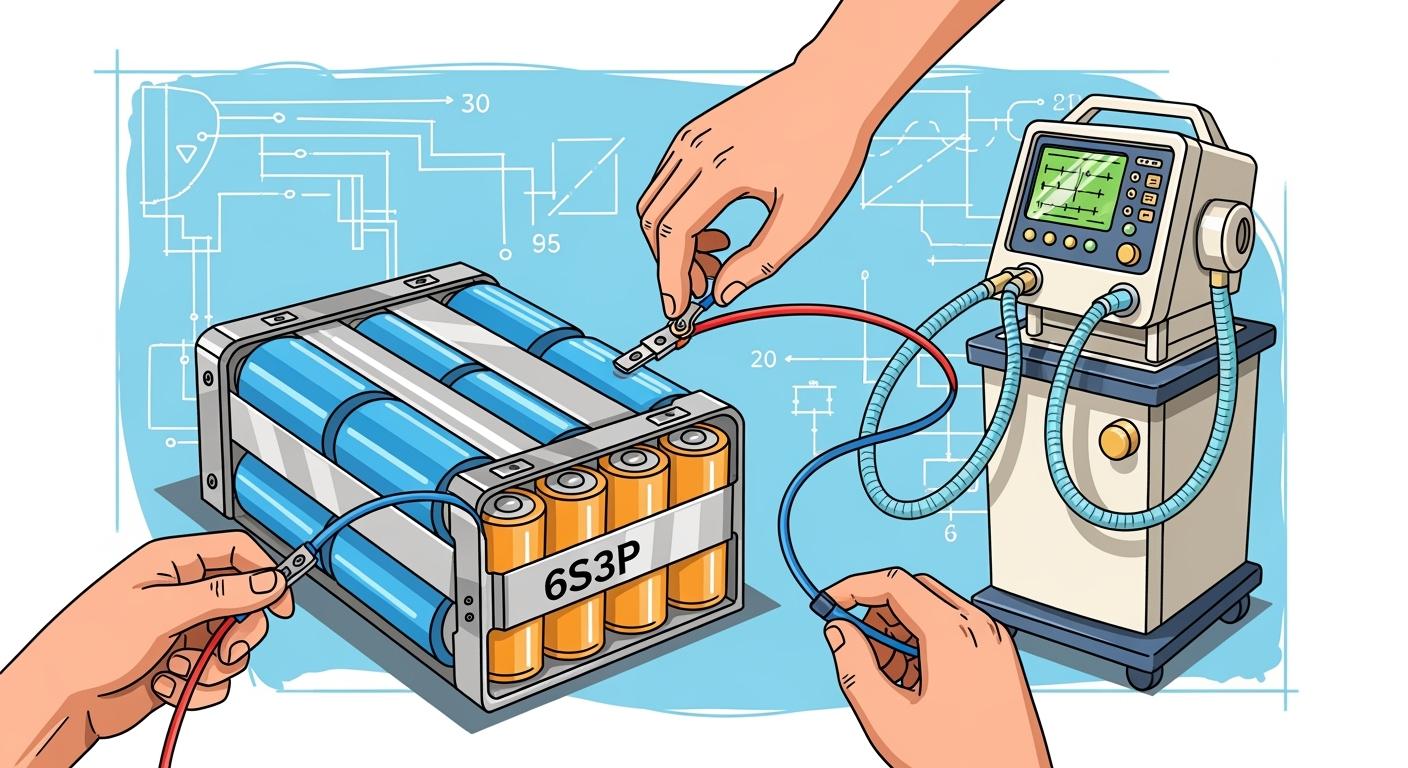
You must design a lithium battery pack that meets strict demands for high-power ventilators in medical applications. You define battery pack design parameters for voltage, capacity, and safety. High energy density and long-lasting battery packs drive reliability. Battery selection and battery integration shape effective battery pack design.
Quick Answer
A 6S3P lithium battery pack for high-power ventilators uses six cells in series and three parallel groups to raise platform voltage, capacity, and discharge stability. For medical ventilator backup power, the pack should combine matched cells, a medical-grade BMS, thermal protection, redundant safety controls, and validation for transport and medical safety requirements.
For a custom ventilator battery project, contact Large Power with your voltage, capacity, runtime, and certification requirements.
Key Takeaways
Understand the power, capacity, and voltage needs of high-power ventilators. This ensures your battery pack delivers reliable energy for medical applications.
Select the right lithium ion battery cells based on chemistry and format. NMC cells offer high energy density and long cycle life, making them ideal for medical devices.
Integrate a robust battery management system (BMS) to monitor voltage, current, and temperature. A reliable BMS enhances safety and optimizes battery performance.
Part1: Design a Lithium Battery Pack—Requirements & Cell Selection
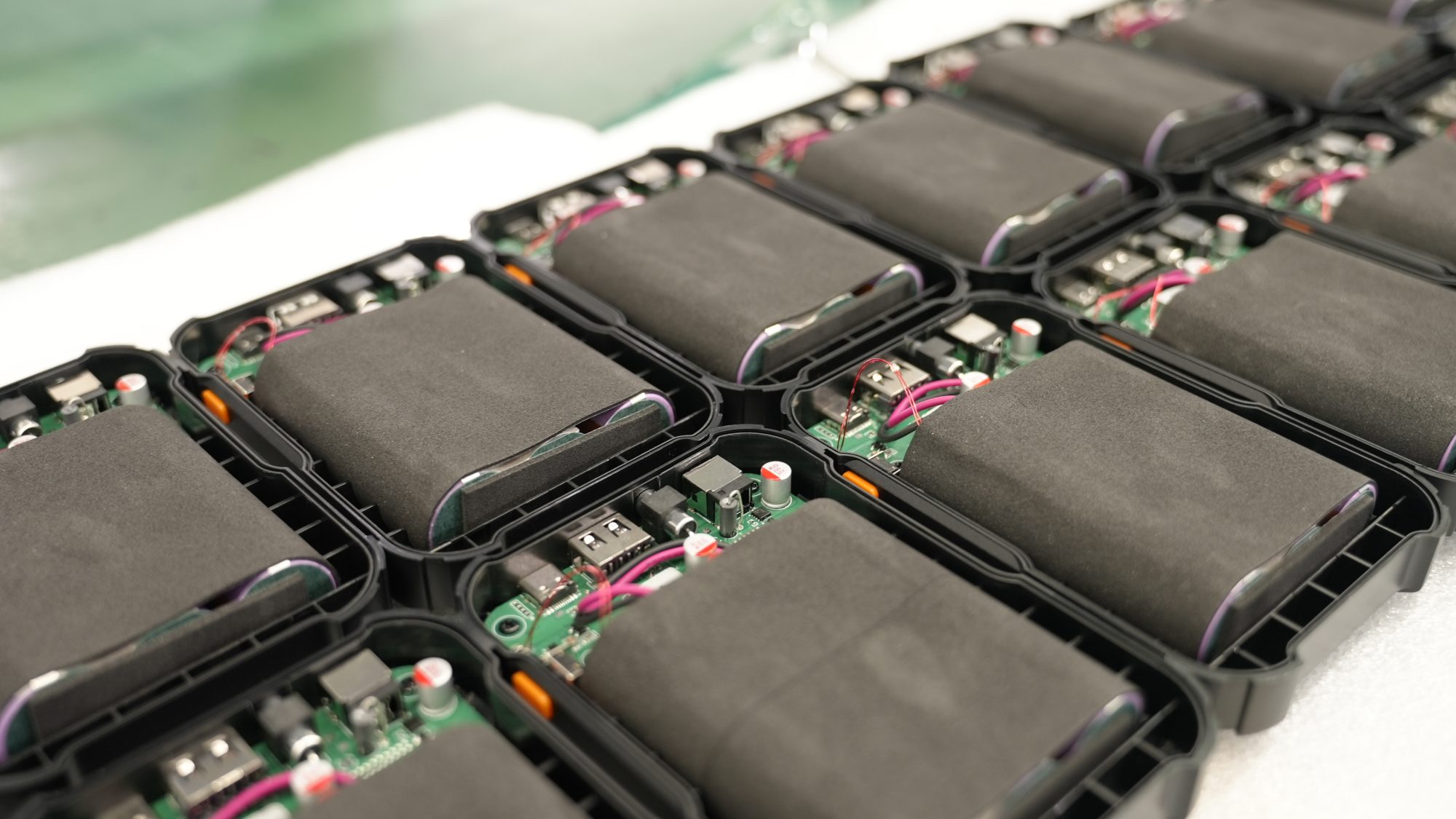
1.1 Define Power, Capacity and Voltage Needs
You must start by understanding the ventilator’s operational requirements. High-power ventilators in medical applications need custom lithium battery packs that deliver reliable energy. You should focus on three main parameters: power, capacity and voltage. The table below shows typical specifications for a lithium ion battery pack used in these systems:
Specification | Value |
|---|---|
Voltage | 12.8V |
Capacity | 300Ah |
Energy | 3840Wh |
You should also consider industry standards for air changes and exhaust requirements, which influence battery runtime and sizing.
1.2 Select Lithium Ion Battery Pack Cells
Choosing the right cell chemistry and format is critical for custom lithium battery packs. For medical devices, you often select between these chemistries:
Lithium Cobalt Oxide (LCO)
Nickel Manganese Cobalt (NMC)
NMC offers high energy density (≥220 Wh/kg) and a cycle life of 500–800 cycles at 80% capacity. You must also compare cell formats for your lithium ion battery pack:
Feature / Metric | Cylindrical | Prismatic | Pouch |
|---|---|---|---|
Energy Density (Wh/kg) | 150–280 | 160–255 | 250–300 |
Cycle Life | 800–1,200 | >2,000 (LiFePO4) | ~1,000 |
Durability | High | Moderate | Low |
1.3 Series and Parallel Configuration for Custom Lithium Battery Packs
You configure your lithium ion battery pack in series to increase voltage and in parallel to boost capacity. In a 6S3P pack, six cells in series set the pack voltage, while three cells in parallel multiply the capacity. Proper balancing—using passive, active, or hybrid methods—ensures all cells in custom lithium battery packs operate safely and efficiently. This approach maximizes battery life and performance for demanding medical applications.
Part2: Integration, Safety, and Validation of Custom Lithium Battery Packs
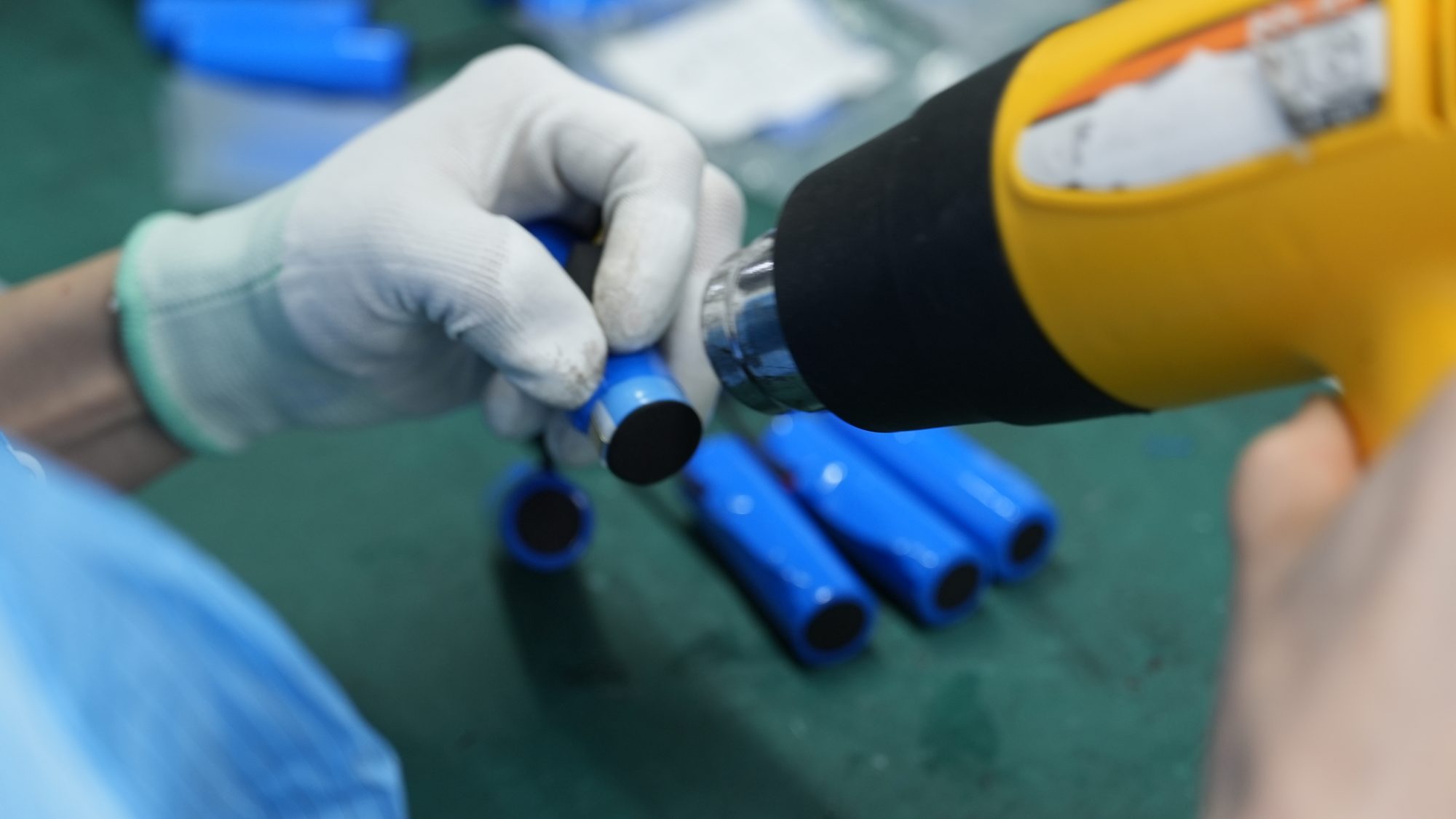
2.1 BMS Integration and Electrical Design
You must integrate a robust battery management system to ensure the safety and reliability of your lithium battery pack. The battery management system acts as the central intelligence for your pack, continuously monitoring and controlling all critical parameters. In medical ventilator applications, you need a BMS that provides:
Continuous monitoring of voltage, current, and temperature
Real-time assessment of state of charge and state of health
Overcharge and overdischarge protection
Cell balancing for optimal performance
Fault detection and reporting
A high-quality battery management system, such as those described, prevents overcharging, over-discharging, and overheating. It also optimizes the pack’s performance by balancing cells and extending battery life. You should select a BMS that complies with international safety compliance requirements, including ISO 13485:2016 for medical devices and IEC 61000/61326 for electromagnetic compatibility.
Tip: Always choose a BMS with proven reliability in medical applications. This reduces the risk of unexpected pack failures and ensures patient safety.
Electrical design strategies must minimize the risk of short circuits and overcurrent. You should use fuses near the power source, as these components disconnect the circuit during overcurrent events. Protection circuits, as outlined in IEEE 1725-2011, are essential for mitigating risks such as overvoltage, undervoltage, and overcurrent. The table below summarizes key electrical safety features:
Feature | Function |
|---|---|
Fuses | Interrupt overcurrent, prevent damage |
Protection Circuits | Mitigate overvoltage, undervoltage, and overcurrent |
BMS Real-Time Monitoring | Manage voltage, current, temperature, and cell balancing |
Fault Diagnosis | Detect and report abnormal conditions |
You must ensure that all electrical connections are secure and that wiring is routed to prevent insulation damage. This approach supports both safety and optimal performance in your lithium battery pack.
2.2 Mechanical Design and Thermal Management
Mechanical design and size play a critical role in protecting your battery pack from physical damage and environmental hazards. You should design the enclosure to withstand shocks, vibrations, and accidental impacts common in medical environments. Use mechanical structures such as ribs and clamps to enhance ruggedness. Proper cable routing and strain relief prevent insulation wear and electrical faults.
Thermal management is essential for maintaining optimal performance and safety. Lithium batteries generate heat during operation, especially in high-power ventilator applications. You must conduct thermal analysis to ensure uniform temperature distribution and prevent hot spots. Place cells near enclosure walls and use conductive pads to facilitate heat transfer. Incorporate airflow channels and, if necessary, active cooling systems or phase change materials to maintain temperatures within the optimal range (25 °C-40 °C).
Best Practice | Description |
|---|---|
Thermal Analysis | Ensures heat dissipation and prevents thermal runaway |
Ruggedization | Minimizes shock and vibration susceptibility |
Cable Management | Prevents damage from vibration and ensures secure connections |
Safety Connectors | Prevents reverse polarity and ensures correct installation |
Note: Non-uniform temperatures can reduce battery life and increase maintenance costs. Always prioritize thermal management in your mechanical design and size planning.
To prevent thermal runaway, use fire-blocking coatings, SiO₂ aerogel mats, and intumescent materials. Design the pack with pressure-relief vents and burst panels to safely channel hot gases away from adjacent cells. These features enhance safety and protection for both the battery and the ventilator system.
2.3 Safety Features and Compliance Testing
You must integrate comprehensive safety and protection features to meet regulatory standards for medical lithium battery packs. Overcharge and overdischarge protection are mandatory to prevent voltage excursions that can damage cells or cause hazardous conditions. The pack enclosure should include ventilation to allow safe gas release and prevent accumulation.
The table below outlines essential safety features for medical battery packs:
Safety Feature | Description |
|---|---|
Overcharge Protection | Prevents charging voltage from exceeding safe limits |
Overdischarge Protection | Stops discharging before voltage drops below critical levels |
Battery Enclosure & Ventilation | Allows safe gas release, prevents accumulation |
Reverse Polarity Protection | Ensures correct installation, prevents circuit damage |
Overcurrent & Short-Circuit Protection | Interrupts fault currents using fuses or equivalent devices |
Compliance with International Standards | Meets IEC 62133 and other safety compliance requirements |
You must validate your battery pack through rigorous compliance testing. Standards such as FDA General Controls & QSR (21 CFR 820), UL 2054, UL 1642, IEC 60601, IEC 62133, and UN 38.3 cover design controls, risk management, and abuse testing. These tests ensure your pack can withstand extreme conditions and maintain safety in all scenarios.
Alert: Over-discharge, thermal runaway, manufacturing defects, and mechanical damage are the most common causes of lithium battery pack failure in medical devices. Implement regular maintenance and monitoring protocols, including visual inspections, terminal torque checks, firmware updates, and performance diagnostics.
By following these guidelines, you ensure your lithium battery pack delivers optimal performance, meets all safety and protection requirements, and achieves full regulatory compliance for medical ventilator applications.
You achieve a high-performance, safe, and compliant 6S3P lithium battery pack by following best practices in requirements analysis, cell selection, safety integration, and validation. Regulatory standards shape your process, as shown below:
Regulatory Standard | Impact on Design and Validation Process |
|---|---|
IEC 62133 | Ensures thermal stability, overcharge protection, and short-circuit resistance. |
ISO 13485 | Requires quality management and traceability. |
FDA Regulations | Demands documentation and BMS validation. |
EU MDR | Focuses on conformity and risk management. |
FAQ
What makes a 6S3P lithium battery pack suitable for medical ventilators?
You achieve stable voltage, high energy density, and reliable cell management. This pack supports continuous operation and meets strict safety standards for medical environments.
How does cell management differ across battery chemistries in lithium packs?
Chemistry | Platform Voltage | Energy Density (Wh/kg) | Cycle Life (cycles) |
|---|---|---|---|
NMC | 3.7V | 160-270 | 1000-2000 |
LCO | 3.7V | 180-230 | 500-1000 |
LiFePO4 | 3.2V | 100-180 | 2000-5000 |
LMO | 3.7V | 120-170 | 300-700 |
LTO | 2.4V | 60-90 | 10000-20000 |
You must select the right pack and management strategy for your application, from medical to industrial.
Where can you get custom lithium battery pack consultation for your project?
You can contact Large Power for a custom ventilator battery review, including voltage, runtime, BMS, enclosure, and certification requirements. You can also explore our custom battery pack solutions.


