

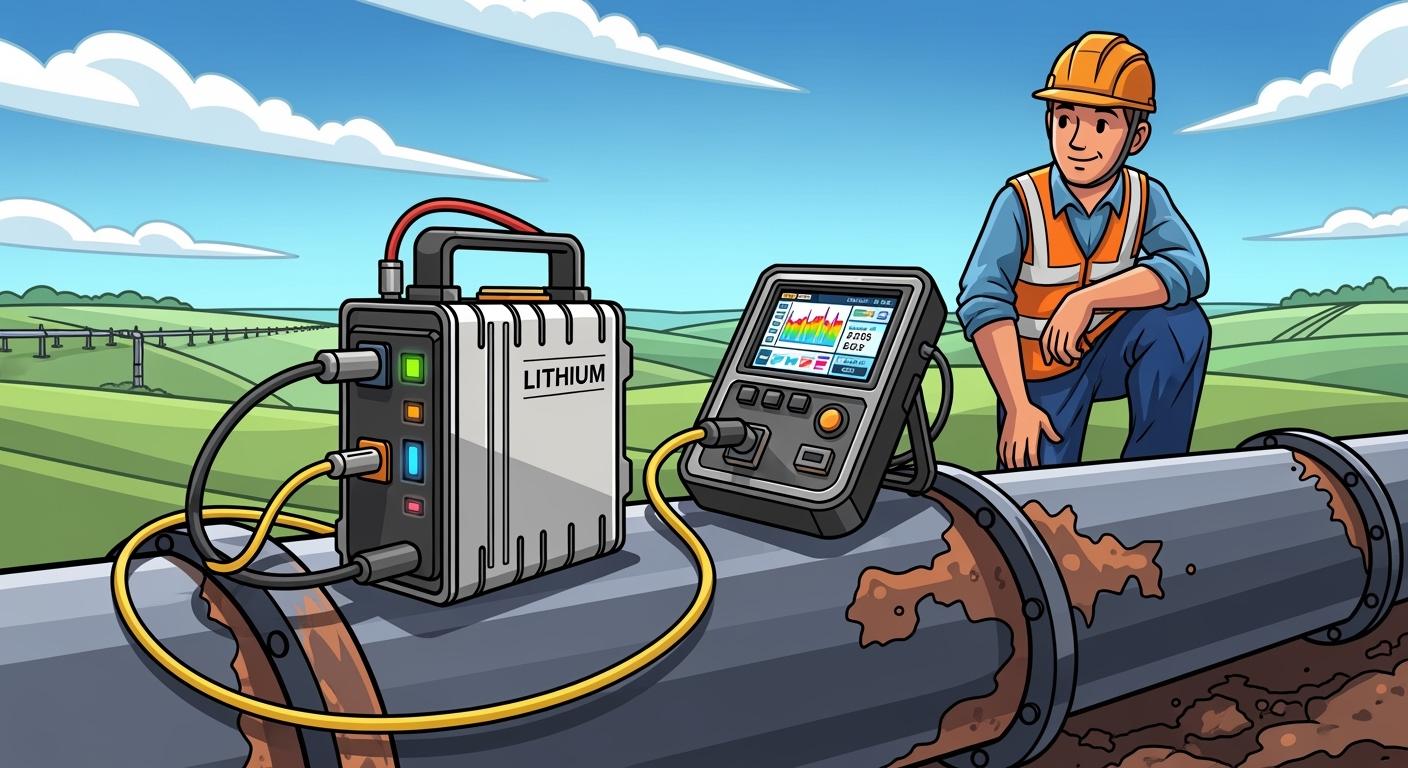
You need Portable Power Systems that deliver reliable performance for pipeline inspection devices in demanding field conditions. Lithium battery solutions stand out as the optimal choice because they offer durability, compactness, and easy integration. These batteries excel in hazardous and remote environments, providing high energy density, rapid charging, and improved safety. The table below highlights the most valued advantages:
Advantage | Benefit for Field Service |
|---|---|
High Energy Density | Lightweight, ideal for remote operations |
Longer Lifespan | Reduces maintenance and replacement costs |
Improved Safety | Built-in features protect your equipment |
Rapid Charging | Minimizes downtime in critical situations |
You can trust lithium battery-powered systems to enhance portability, reliability, and safety during pipeline inspections.
Quick Answer
Pipeline inspection devices benefit from lithium battery packs because they reduce weight, extend runtime, and support reliable field service in remote locations. LiFePO4 and NMC chemistries can be customized for voltage, capacity, enclosure protection, charging method, and certification needs.
Key Takeaways
Lithium batteries provide high energy density, making them lightweight and ideal for remote pipeline inspections.
These batteries have a longer lifespan, reducing maintenance and replacement costs significantly.
Safety features in lithium battery systems protect equipment and personnel, ensuring reliable operation in hazardous environments.
Rapid charging capabilities minimize downtime, allowing for continuous operation during critical inspections.
Choosing lithium battery solutions can enhance efficiency and reduce total cost of ownership over time.
Part1: Portable Power Systems for Pipeline Inspection
1.1 Power Needs and Device Types
You rely on a range of pipeline inspection devices, each with unique power requirements. Robotic crawlers, camera systems, and sensor arrays demand consistent energy delivery for extended operation. Lithium battery packs, including LiFePO4, NMC, LCO, and LMO chemistries, offer high voltage, superior energy density, and long cycle life. The table below outlines common inspection methods and their merits:
Inspection Method | Merits | Limitations |
|---|---|---|
MFL | Easy online detection, highly automated for various defects | Distortion in poorly magnetized materials |
EC | Suitable for small diameter pipelines, lightweight | Depth of penetration depends on AC frequency |
UT | High penetration depth, suitable for all materials | Affected by dense muds and casing scales |
ECPT | High spatial resolution, fast detection | Limited internal crack detection |
MBN | High sensitivity, fast detection | Inconsistent signal behavior |
RT | Permanent image records, no surface treatment needed | Potential harm to humans and environment |
AE | Dynamic detection applicable | Cannot assess static defects |
PT | Sensitive to surface cracks | Complex process, environmental pollution |
MT | High sensitivity, intuitive display | Complicated procedure, limited to ferromagnetic materials |
VT | Economical and easy to operate | Results affected by human factors |
1.2 Field Challenges and Environments
You face harsh environments during pipeline inspections. Cold temperatures, ice, and snow can stress pipeline materials and affect device performance. Extreme temperature variations cause thermal stresses, increasing vulnerability. Moisture and debris further complicate operations. Lithium battery packs excel in these conditions, supporting industries such as Medical, Robotics, Security Systems, Infrastructure, Consumer Electronics, and Industrial. You must select Portable Power Systems that meet hazardous environment ratings like ATEX.
ATEX outlines safety requirements for equipment in hazardous areas.
Compliance ensures safety in industries with flammable gases and vapors.
ATEX certification confirms equipment safety in explosive atmospheres.
Using certified devices protects lives and minimizes financial losses.
1.3 Portability and Reliability
You need Portable Power Systems that are lightweight and mobile. Observation-class ROVs demonstrate agility and visual clarity, making them ideal for inspections. Their compact design allows easy deployment with minimal crew. Modular systems, like the M18, enable quick battery changes, supporting continuous field operations. The table below highlights features that enhance reliability:
Feature | Description |
|---|---|
Agility | Maneuverability and visual clarity for precise inspections |
Lightweight | Easy deployment from small vessels, minimal crew requirements |
Versatility | Adaptable to various inspection tools and tasks |
Depth Capability | Operates at depths up to 1,000 meters, suitable for diverse environments |
You benefit from lithium battery-powered Portable Power Systems that deliver consistent performance, rapid charging, and robust safety features. These solutions ensure your inspection devices operate reliably in demanding field conditions.
Part2: Why Choose Lithium Battery Solutions
2.1 Advantages Over Other Batteries
You need a power source that delivers consistent performance and minimizes downtime in the field. Lithium battery solutions outperform traditional chemistries like lead-acid and nickel-metal hydride in almost every critical metric. The table below compares the most common battery types used in pipeline inspection devices:
Battery Type | Platform Voltage (V) | Energy Density (Wh/kg) | Cycle Life (cycles) | Efficiency (%) |
|---|---|---|---|---|
LiFePO₄ | 3.2 | 90–160 | 3,000–5,000+ | 95–98 |
NMC | 3.6–3.7 | 150–220 | 2,000–3,000 | 95–98 |
LCO | 3.6 | 150–200 | 500–1,000 | 95–98 |
LMO | 3.7 | 100–150 | 1,000–2,000 | 95–98 |
Nickel-Metal Hydride | 1.2 | 60–120 | 500–800 | 70–80 |
Lead-acid | 2.0 | 30–50 | 200–800 | 70–85 |
You can see that lithium chemistries, especially LiFePO₄ and NMC, offer higher energy density, longer cycle life, and greater efficiency. This means you spend less time on maintenance and battery replacement. While lead-acid batteries may seem cost-effective at first, lithium batteries provide a lower total cost of ownership over time. The following table highlights this difference:
Battery Type | Upfront Cost | Total Cost of Ownership |
|---|---|---|
Lithium (LiFePO₄) | Higher | Lower over full lifecycle |
Lead-Acid | Lower | Higher over full lifecycle |
You benefit from fewer replacements, less labor, and reduced downtime, especially when managing multiple field sites. This makes lithium battery packs the smart choice for your Portable Power Systems.
2.2 Safety and Durability
You operate in environments where safety cannot be compromised. Lithium battery systems integrate advanced safety features to protect both your equipment and your team. These features include:
Safety Feature | Description |
|---|---|
Temperature control | Prevents charging and discharging in extreme temperatures to avoid thermal runaway and performance issues. |
Compliance with national standards | Ensures the use of power supply circuits that meet safety standards for stability and safety. |
Equipment insulation and grounding | Provides insulation to prevent electric shock and ensures proper grounding for safety during faults. |
Electrical connection and protection | Ensures reliable connections and protective measures to prevent accidental contact with electrical parts. |
Regular inspection and maintenance | Involves routine checks to ensure equipment is functioning properly and safely. |
Safety training and operating specifications | Trains personnel on safety performance and emergency measures, ensuring adherence to operating procedures. |
Primary lithium systems combine stable chemistry with reinforced structure to deliver long service life under stress. Primary lithium systems such as lithium thionyl chloride cells are widely used in meters and safety devices. They offer high energy density and strong chemical stability, which supports long shelf life. To turn this into a robust battery, designers reinforce internal supports and control electrode winding tension.
You can trust lithium battery packs to withstand physical shocks, vibration, and harsh weather. This durability ensures your inspection devices remain operational even in the most demanding field conditions.
2.3 Weight and Energy Density
You need power solutions that are lightweight and easy to transport. Lithium-ion batteries deliver high energy and power per unit of battery mass, making them lighter and more compact than other rechargeable batteries. Their energy density ranges from 100 to 265 Wh/kg, which allows you to carry more power without adding bulk to your equipment. The table below shows how lithium batteries compare to other chemistries:
Battery Type | Energy Density (Wh/kg) |
|---|---|
Lithium Metal | 200–500 |
Lithium-ion | 100–265 |
Nickel-Metal Hydride | 60–120 |
Lead-acid | 30–50 |
You gain a significant advantage in field mobility and runtime. Lighter batteries mean easier handling, faster deployment, and less fatigue for your crew. High energy density ensures your devices run longer between charges, which is critical for extended pipeline inspections in remote areas.
Part3: Lithium Battery System Types
3.1 Form Factors and Integration
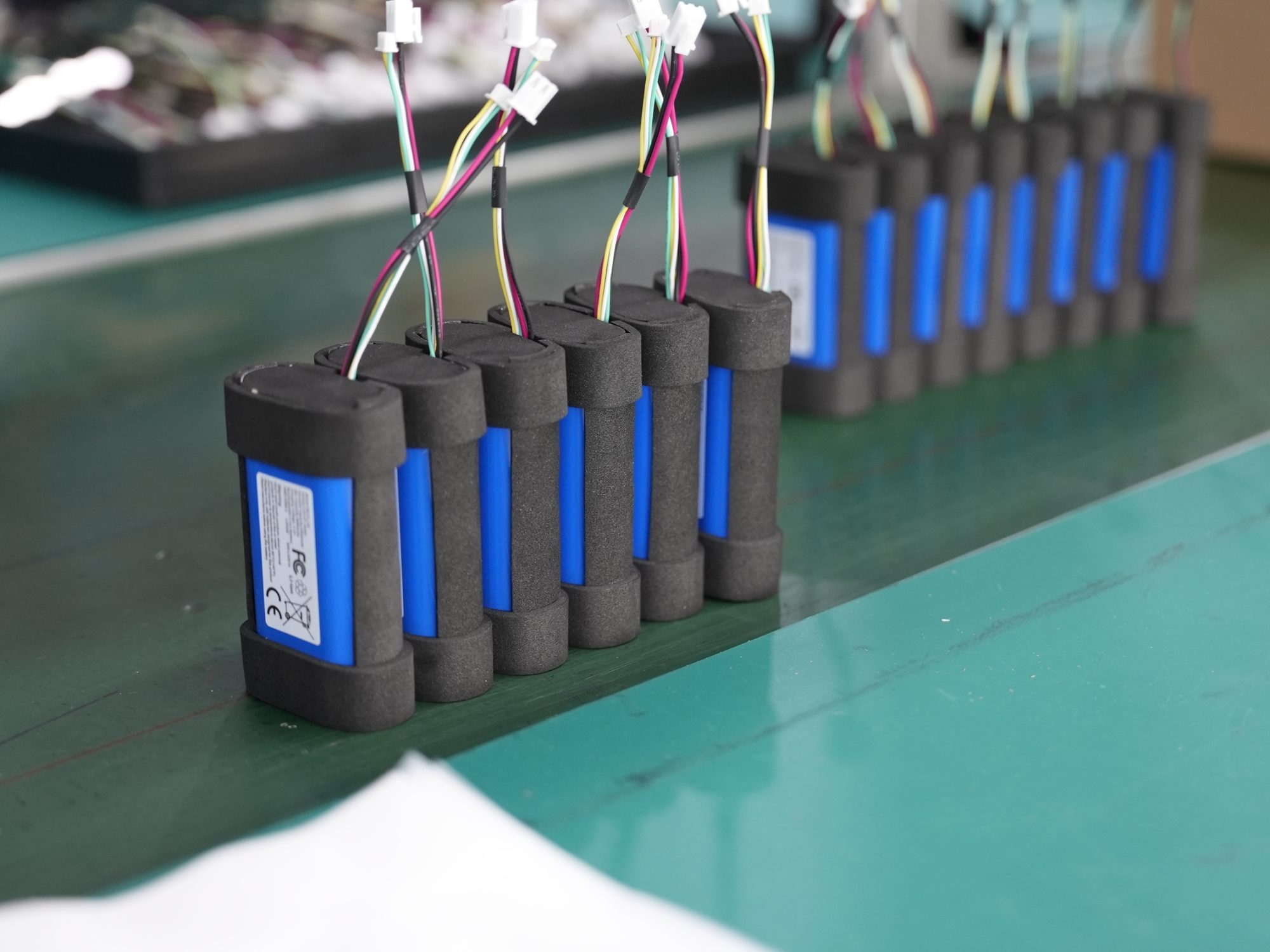
You need lithium battery systems that fit seamlessly into your pipeline inspection devices. The most common form factors include cylindrical cells, prismatic packs, and pouch cells. Each form factor supports different device designs and operational needs. For example:
Li-SoCl2 batteries power monitoring systems on pipelines.
These batteries support sensors that detect corrosion, leaks, and other issues.
Their long lifespan reduces the need for frequent maintenance or replacements.
You can integrate these batteries into both compact and large inspection devices. When you select a battery, consider how it will fit with your device’s electronics and enclosure. You should also ensure the battery system includes a reliable Battery Management System (BMS). A BMS protects your equipment and optimizes battery performance.
3.2 Modular and Swappable Designs
You benefit from modular and swappable lithium battery designs in field service. These systems allow you to adjust capacity and replace batteries quickly. The table below highlights key benefits:
Benefit | Description |
|---|---|
Modular Batteries | Enable precise capacity matching by adding or removing modules. You can scale from 3000mAh to 6000mAh, optimizing weight for different mission lengths. |
Safety and Reliability | Incorporate redundant safety features. If one module fails, others continue to function. A case study showed a 40% reduction in battery-related incidents. |
Customization Flexibility | Provide unmatched customization options. You can tailor battery systems to meet specific electrical specifications and operational needs without compromising performance. |
You can swap batteries in the field, which keeps your inspection devices running longer and reduces downtime.
3.3 Compatibility with Inspection Equipment
You must ensure your lithium battery packs work with a wide range of inspection equipment. Compatibility challenges often involve communication protocols, environmental performance, and firmware integration. The table below outlines important aspects:
Compatibility Aspect | Details |
|---|---|
Battery Management System | Ensure selected batteries support the communication protocol used by the device (e.g., CAN bus). |
Environmental Performance | Request battery performance curves for extreme temperatures. Quality batteries maintain 80%+ capacity between 0°C and 40°C. |
Communication Failures | Verify firmware compatibility to prevent issues. Maintain a compatibility matrix for battery and device firmware. |
You should always verify that your Portable Power Systems meet the technical requirements of your inspection devices. This approach ensures safe, reliable, and efficient field operations.
Part4: Selecting and Using Lithium Batteries
4.1 Capacity and Runtime
You must select lithium battery packs that match your device’s operational needs. Consider factors such as sleep current, active current, and pulse current. These parameters determine the base capacity and impact battery size. Temperature derating and safety margin are critical for field service in cold climates. Self-discharge loss adds to the required capacity, especially for devices in Medical, Robotics, Security Systems, Infrastructure, Consumer Electronics, and Industrial applications.
Design Parameter | Typical Value Range | Impact on Battery Size |
|---|---|---|
Sleep Current | 10–50 μA | Determines base capacity |
Active Current | 1–10 mA | Significant if duty cycle high |
Pulse Current | 100–500 mA | May require high pulse capability |
Temperature Derating | 1.2–1.5x | Critical for cold climates |
Safety Margin | 1.2–1.3x | Prevents premature failure |
Self-Discharge Loss | 10–20% over lifetime | Adds to required capacity |
You can expect average operational runtimes of 79.3 minutes for PVC pipelines and 76.8 minutes for steel pipelines. Battery capacity directly affects inspection duration and efficiency.
4.2 Charging and Field Recharging
You need fast and flexible charging options for lithium battery packs. Lithium-ion batteries charge in one to two hours, with no cooling period required. This allows opportunity charging during breaks and supports multi-shift operations. Lead-acid batteries require eight hours of charging and a cool-down period, limiting operational efficiency.
You can charge lithium batteries in short spurts for continuous use.
Lead-acid batteries require downtime, reducing productivity.
4.3 Safety and Compliance
You must ensure lithium battery systems meet strict safety certifications for hazardous environments. Standards such as UL 1973, UL 1642, IEC 62619, IEC 62133, NFPA 68, and NFPA 69 address overcharging, mechanical stress, fire resistance, electrical isolation, and explosion prevention.
Standard | Description | Key Aspects Tested |
|---|---|---|
UL 1973 | Stationary batteries safety | Overcharging, mechanical stress, fire resistance, electrical isolation |
UL 1642 | Lithium-ion cell safety | Overcharge performance, crush resistance, thermal shock resilience |
IEC 62619 | Industrial lithium battery safety | Abuse testing, fault tolerance, high-load performance |
IEC 62133 | Portable lithium battery safety | Electrical safety, environmental stressors, toxicity risks |
NFPA 68 | Explosion protection by venting | Pressure buildup management, safe venting design |
NFPA 69 | Explosion prevention systems | Flammable gas detection, suppression mechanisms |
You must also comply with regulations such as Batteries Regulation, EN IEC 62485-5, EN IEC 62619, General Product Safety Regulation, and Inland Transport of Dangerous Goods Directive.
4.4 Maintenance and Best Practices
You improve reliability and safety by following proper maintenance practices. Regular inspection identifies risks before they escalate. Check charge status and runtime; replace batteries if performance drops below 80%. Charge batteries to 50% before long-term storage and recharge every six months. Store batteries between 5°C and 20°C, avoiding moisture and physical damage.
Maintenance Practice | Description |
|---|---|
Regular Inspection | Identify risks before escalation |
Check Charge Status and Run Time | Replace if performance drops below 80% |
Storage Instructions | Charge to 50% before storage; recharge every six months |
Environmental Conditions | Store between 5°C and 20°C; avoid moisture and physical damage |
Tip: Consistent maintenance extends battery life and ensures safe operation in demanding field environments.
You gain a clear advantage when you choose lithium battery-powered portable power systems for pipeline inspection. These solutions deliver reliability, portability, safety, and operational efficiency.
Lithium batteries can reduce maintenance needs by up to 75%, which means you spend less time on repairs and more time inspecting.
Quick charging and seamless power transitions keep your devices running without interruption.
High-performance lithium batteries provide stable energy and long lifespan, even in harsh field conditions.
Evaluate your current power systems and consult with trusted suppliers. Prioritize lithium battery solutions for your next pipeline inspection project to maximize uptime and safety.
FAQ
What lithium battery chemistry works best for pipeline inspection devices?
You should consider LiFePO₄ and NMC chemistries. Both offer high energy density, long cycle life, and strong safety profiles. LiFePO₄ provides 3,000–5,000+ cycles, while NMC delivers higher energy density for longer runtimes.
How do lithium batteries improve field service efficiency?
You gain faster charging, lighter weight, and longer runtimes. Lithium batteries reduce downtime and maintenance. You can swap packs quickly, which keeps your inspection devices running in remote locations.
Are lithium battery packs safe for hazardous environments?
You can use lithium battery packs with ATEX or IEC 62619 certification. These packs meet strict safety standards for explosive atmospheres. Always verify compliance before deployment.
How do lithium batteries compare to lead-acid batteries for inspection equipment?
Feature | Lithium (LiFePO₄/NMC) | Lead-Acid |
|---|---|---|
Energy Density | 90–220 Wh/kg | 30–50 Wh/kg |
Cycle Life | 2,000–5,000+ | 200–800 |
Weight | Lightweight | Heavy |
Tip: You can reduce total cost of ownership by switching to lithium battery packs. Need a price estimate? Contact Large Power with your voltage, capacity, runtime, and certification requirements to get a custom lithium battery pack quote.
For a project-specific pack, review our custom battery solutions or contact Large Power with your inspection device requirements.


