

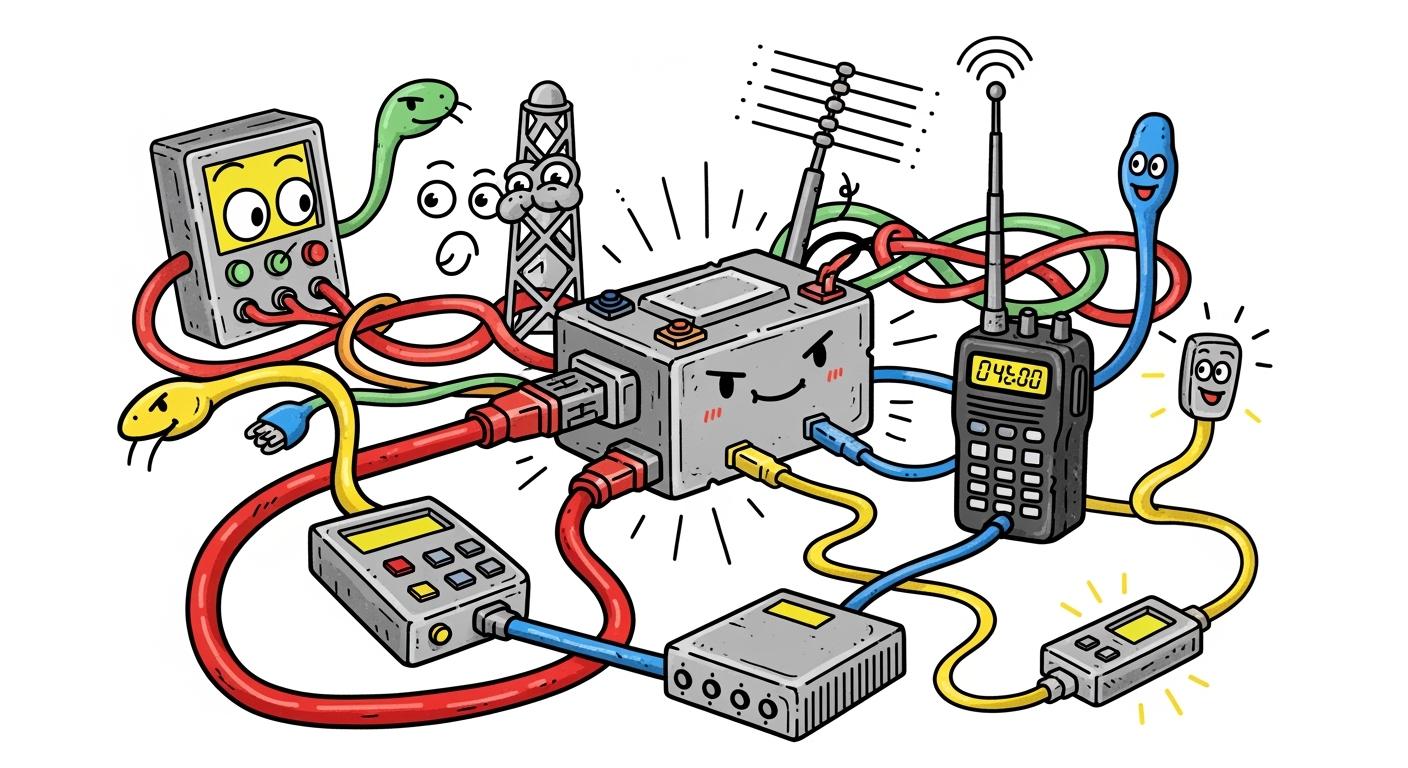
Industrial radios, communication gateways, and remote field networks require stable power in environments exposed to temperature extremes, vibration, moisture, and limited maintenance access. Custom lithium battery packs allow you to match voltage, capacity, discharge current, enclosure protection, and communication interfaces to the equipment’s operating profile.
LiFePO4 batteries provide long cycle life and thermal stability for stationary and frequently cycled systems, while NMC batteries offer higher energy density for compact portable radios. A properly engineered Battery Management System monitors voltage, current, and temperature to reduce unexpected shutdowns and support reliable operation across demanding industrial systems.
Key Takeaways
Match battery chemistry, voltage, capacity, and discharge capability to the radio or gateway’s actual load profile.
Use LiFePO4 for long cycle life and thermal stability, or NMC when compact size and higher energy density are priorities.
Integrate a chemistry-specific BMS with voltage, current, temperature, balancing, and fault-protection functions.
Specify rugged enclosures, secure connectors, and suitable ingress protection for outdoor or mobile deployments.
Monitor cycle count, temperature history, state of health, and runtime trends to identify degradation before a field failure occurs.
Part 1: High-Reliability Battery Packs Features
1.1 Durability & Environmental Resistance
You need battery packs that perform reliably in the harshest industrial environments. High-Reliability Battery Packs use advanced lithium-ion chemistries like LiFePO4, NMC, LCO, and LMO, as well as lithium thionyl chloride (Li-SoCl2), to withstand extreme temperatures, humidity, and vibration. These features matter for industries such as oil and gas, robotics, medical devices, and security systems.
You can deploy these battery packs in environments with temperatures ranging from -40°C to 180°C.
They operate in high-shock and high-vibration conditions, which is essential for downhole monitoring, pipeline inspection, and mobile robotics.
Custom designs allow you to match the battery pack to your application, charging needs, and environmental challenges.
Tip: Always evaluate your application’s temperature and vibration requirements before selecting a battery chemistry. The right choice ensures long-term reliability and safety.
1.2 Cycle Life & Capacity
You want batteries that last. Lithium-ion chemistries like LiFePO4 can deliver between 2,500 and 9,000 charge cycles, which far exceeds the performance of standard batteries. With proper care, these batteries can last 5–10 years, reducing downtime and replacement costs. Lithium thionyl chloride batteries offer extremely low self-discharge rates—less than 1% per year—and shelf lives over 20 years. This makes them ideal for backup power in infrastructure, remote sensors, and security systems.
Here’s a comparison of common lithium battery chemistries used in High-Reliability Battery Packs:
Chemistry | Platform Voltage (V) | Energy Density (Wh/kg) | Typical Cycle Life (cycles) |
|---|---|---|---|
LiFePO4 | 3.2 | 90–120 | 2,500–9,000 |
NMC | 3.6–3.7 | 150–220 | 1,000–2,000 |
LCO | 3.6 | 150–200 | 500–1,000 |
LMO | 3.7 | 100–150 | 300–700 |
Li-SoCl2 | 3.6 | 420 | Non-rechargeable, >20 years shelf life |
You can find more technical details about lithium battery chemistries in Nature’s battery technology review.
Long cycle life and high capacity support continuous operation in critical applications like medical devices, industrial gateways, and remote field networks.
Low self-discharge and long shelf life reduce maintenance for backup and emergency systems.
1.3 Safety & Certifications
You must prioritize safety when deploying battery packs in industrial settings. High-Reliability Battery Packs include advanced battery management systems (BMS) that monitor temperature, voltage, and current. These systems prevent overcharging, overheating, and short circuits. Collaboration with industry experts and automation specialists helps you identify and address potential safety issues during battery design and manufacturing.
You benefit from expert recommendations that improve occupational safety and reduce hazards for employees.
Engaging with specialists ensures your battery packs meet strict safety standards and certifications, such as UL, IEC, and UN38.3.
These safety features are critical for applications in medical, infrastructure, and security sectors, where failure can lead to severe consequences.
Note: Always verify that your battery supplier provides documentation for all relevant safety certifications. This step protects your operations and supports regulatory compliance.
High-Reliability Battery Packs combine robust chemistries, custom engineering, and advanced safety features to deliver reliable power for your industrial communication equipment, no matter the environment.
Part 2: Application Needs for Radios, Gateways, Networks

2.1 Radios: Power & Mobility
You depend on radios for instant communication in industrial, medical, and security environments. High-Reliability Battery Packs give you dependable energy, even in harsh field conditions. These battery packs reduce downtime and extend the operational range of your radios. You can trust them to keep communication lines open during emergencies or when you work in remote locations.
Dependable energy solutions support continuous communication.
Extended operational range helps you cover larger areas.
Rugged design withstands drops, vibration, and temperature swings.
Smart charging and battery management systems protect your investment.
Compatibility with multiple radio platforms increases efficiency.
Motorola Solutions, for example, uses advanced battery and energy management technologies in its MOTOTRBO™ radios. These features maximize uptime and eliminate power disruptions, which is critical for first responders and industrial teams. You can learn more about battery technology in radios from Motorola Solutions’ official resources.
Tip: Always select battery packs with integrated management systems to ensure safe and reliable operation in the field.
2.2 Gateways: Backup & Redundancy
Industrial gateways connect your devices and networks. You need backup and redundancy features to keep these gateways running during power outages or emergencies. Battery packs like those used in Xfinity Pro WiFi Extenders provide essential backup power, allowing gateways to maintain connectivity by switching to cellular networks when the main connection fails.
Feature | Description |
|---|---|
Identifies essential circuits needing backup power during outages. | |
Essential Circuits Backup | Powers only critical loads to maximize backup runtime. |
Hybrid Configuration | Combines whole-system capability with prioritization of essential circuits. |
Backup Power Transition Management | Ensures uninterrupted operation during power transitions. |
Monitoring & Control Features | Offers system monitoring and control through dedicated apps. |
Real-Time Energy Monitoring | Enables detailed energy tracking with precise metering. |
You can use these features to support critical infrastructure, medical devices, and industrial automation systems. Reliable backup ensures your operations continue without interruption, even in emergencies.
2.3 Remote Networks: Long Operation
Remote field networks in oil and gas, robotics, and infrastructure require battery packs that deliver long-term, maintenance-free operation. You should look for advanced multi-protocol gateways that handle multiple LiFePO4 batteries efficiently. Compatibility with various industrial devices and global remote visibility are essential for monitoring thousands of data points.
Choose gateways with secure IT network compliance.
Manage IP addresses for each battery to ensure smooth operation.
Prioritize telecom industrial-grade specifications for reliability.
Ensure data polling responsiveness for timely data retrieval.
Select easy-to-commission protocol gateways for fast deployment.
Wireless Sensor Networks (WSNs) integrated into Battery Management Systems (BMS) allow you to monitor temperature, voltage, and current in real time. This technology helps you optimize battery performance and extend operational life. WSNs also improve safety and energy efficiency, which is vital for remote and energy-constrained environments. For more on WSNs and battery management, see Nature’s review on battery technology.
Note: Real-time battery monitoring and management are essential for maximizing uptime and safety in remote field networks.
Part 3: Choosing Battery Packs for Industrial Use
3.1 Matching Specs to Equipment
Selecting the right battery pack for your industrial communication equipment requires careful evaluation of technical specifications. You must consider the unique demands of radios, gateways, and remote field networks. Each device has different requirements for voltage, capacity, and cycle life. Matching these needs ensures reliable operation and long-term performance.
You can use the following table to guide your selection process:
Key Factor | Description |
|---|---|
Communication Distance | Determines the suitable protocol for long or short distances. |
Data Speed | Affects the choice of protocol based on the required speed of data transfer. |
Environmental Conditions | Influences the robustness and suitability of the communication method. |
You should also review these important criteria:
Speed and control of data collection and transfer
Preference for programmed or configured functions
Availability of built-in network device diagnostics
Types and availability of product support
Range of applications the network can manage
Plans for system expansion
Data form compatibility
Manufacturer’s conformance requirements
For example, if you operate in a high-temperature environment, you may choose LiFePO4 batteries for their stability and long cycle life. If your application requires high energy density, NMC or LCO chemistries may be more suitable. Always match the platform voltage, energy density, and cycle life to your equipment’s needs. This approach helps you maximize uptime and reduce maintenance.
Tip: Consult your equipment’s technical documentation and work with battery specialists to ensure compatibility and optimal performance.
3.2 Reliability & Vendor Support
Reliability is critical when you deploy battery packs in industrial settings. You must evaluate vendors based on their understanding of your energy and power requirements, their expertise in lithium battery chemistries, and the quality of their battery management systems (BMS). The following table highlights key factors to consider:
Factor | Description |
|---|---|
Energy and Power Requirements | Understanding the energy and power needs of machinery is crucial for reliable battery performance. |
Battery Chemistry | The choice of battery chemistry impacts performance, safety, and longevity, affecting reliability. |
A BMS is essential for monitoring and ensuring safe operation, reducing risks of failure and downtime. |
Procurement involves more than just purchasing a product. You acquire a system that ensures consistent performance, documentation, and ongoing support. A thorough vetting process confirms that your supplier can deliver consistent quality and provide future support as your operational conditions evolve. Effective support is crucial when issues arise. It affects fault diagnosis, spare part strategies, and response times. These factors are vital for maintaining high utilization operations.
You should also consider the vendor’s commitment to responsible sourcing. Review their conflict minerals statement to ensure ethical supply chain practices. Conflict Minerals Statement
Note: High-performance battery systems ensure stable power delivery and improved lifecycle performance. This approach helps you maintain productivity and reduce long-term maintenance costs.
3.3 Deployment Success Cases
You can learn from real-world deployment cases to understand the impact of high-reliability battery solutions. The following table summarizes several successful projects:
Deployment Case | Description | Key Achievements |
|---|---|---|
Silent Power | High-reliability communication systems | Over 500 successful deployments across North America, trusted by organizations like the Department of Defense and State Emergency Management Agencies. |
Narada | Lead-carbon batteries in telecommunications | Extensive deployment in China and globally for peak shaving and energy storage in datacenters. |
Trojan Battery | Solar microgrids in Colombia | Electrification of 50 rural communities using advanced lead batteries. |
NR Electric | Battery storage for power station in China | First power station in China utilizing lead-carbon batteries for energy storage. |
C&D and Convergent | Energy storage in the US | First non-wires alternative application of battery-based storage for utility infrastructure. |
Custom battery packs are enhancing industrial equipment by providing tailored power and higher efficiency. This improvement not only boosts performance but also extends the lifespan of your machinery. After deploying high-reliability battery packs, many organizations have reported measurable improvements:
Improvement Type | Description |
|---|---|
Uptime | Extended operational cycles by 40% |
Maintenance Needs | Reduced maintenance intervals |
Energy Efficiency | Better energy efficiency and operational resilience |
You can expect reduced safety risks, lower maintenance needs, and enhanced operational continuity when you choose the right battery solution for your application.
Tip: Review deployment case studies and performance data before making your final selection. This step helps you make informed decisions and achieve the best results for your industrial communication systems.
Part 4: Maximizing Battery Performance & Life
4.1 Maintenance & Monitoring
You can extend the life and reliability of your lithium battery packs by following a regular maintenance and monitoring routine. Proper care helps you avoid unexpected failures and keeps your industrial communication equipment running smoothly.
Manage the State of Charge (SOC) by keeping batteries between 20% and 80%. This range can significantly increase cycle life for chemistries like LiFePO4 and NMC.
Control temperature during operation. LiFePO4 batteries perform best between 20°C and 30°C. High or low temperatures can damage cells and reduce capacity.
Maintain safe charge and discharge rates. Fast charging or heavy discharging creates excess heat and stress, which shortens battery life.
Tip: Use monitoring tools to track SOC, temperature, and charge cycles. Early detection of issues helps you prevent costly downtime.
4.2 Storage & Replacement
Proper storage and timely replacement keep your battery packs safe and efficient. You should follow best practices to avoid damage and maximize lifespan.
Best Practice | Description | Impact on Battery Lifespan |
|---|---|---|
Avoid Extreme Temperatures | Keep batteries away from very high or low temps. | Prolongs lifespan up to 20%. |
Partial Charges | Charge batteries partially, not always to 100%. | Improves longevity significantly. |
Avoid Deep Discharge | Do not let batteries fall below 20% often. | Extends lifespan by avoiding deep cycles. |
Store at Optimal Charge | Store batteries at about 50% charge. | Minimizes capacity loss in storage. |
Improper storage can cause serious problems:
Physical damage, such as electrolyte leaks or short circuits, may occur from impacts or vibration.
High temperatures above 40°C can trigger thermal runaway, which may lead to combustion.
High humidity increases the risk of micro-short circuits and self-discharge.
Note: Schedule regular inspections and replace batteries before they reach the end of their rated cycle life. This practice ensures safety and operational continuity.
4.3 Battery Management Systems
Battery Management Systems (BMS) play a key role in maximizing the performance and safety of your lithium battery packs. A BMS monitors and protects each pack, making sure it operates within safe limits.
The BMS prevents overcharging, overheating, and deep discharging, which protects your investment.
It optimizes battery operation, helping you get the most cycles from chemistries like LiFePO4, NMC, LCO, and LMO.
Real-time monitoring allows you to detect faults early and schedule maintenance before problems escalate.
You can learn more about advanced BMS solutions at BMS and PCM Solutions.
Tip: Choose battery packs with integrated BMS for your industrial radios, gateways, and remote networks. This choice supports safety, reliability, and sustainability. For more on sustainable battery practices, visit Our Approach to Sustainability.
You can rely on high-reliability lithium battery packs like LiFePO4, NMC, LCO, and LMO to power your industrial radios, gateways, and remote networks. Custom connectors and tailored designs ensure reliable contact and performance. Strategic planning and best practices help you manage supply chain risks and maintain uptime.
Custom connectors support automation and reliability.
Design partners adapt battery packs for your unique needs.
Maintenance planning reduces unexpected downtime.
To optimize reliability and performance, follow these steps:
Avoid deep discharge below 20% capacity.
Cool batteries before charging.
Use only manufacturer-approved chargers.
Monitor charge cycles and battery history.
Audit your battery inventory regularly.
Implement a tracking system for each battery.
Train your operations teams on proper handling.
Establish climate-controlled storage protocols.
Consistent application of these practices will help you achieve safe, efficient, and long-lasting power for your industrial communication systems.
FAQ
What lithium battery chemistry should you choose for industrial radios?
You should compare chemistries based on your needs. See the table below:
Chemistry | Platform Voltage (V) | Energy Density (Wh/kg) | Cycle Life (cycles) |
|---|---|---|---|
LiFePO4 | 3.2 | 90–120 | 2,500–9,000 |
NMC | 3.6–3.7 | 150–220 | 1,000–2,000 |
Choose LiFePO4 for long life and safety. Select NMC for higher energy density.
How do you maximize the lifespan of lithium battery packs?
You should keep batteries between 20% and 80% charge. Store them at room temperature. Avoid deep discharges and high temperatures. Use a Battery Management System (BMS) for real-time monitoring.
Why is a Battery Management System (BMS) important?
A BMS protects your battery pack from overcharging, overheating, and deep discharge. It tracks voltage, current, and temperature. This system helps you prevent failures and extend battery life.
What certifications should your battery packs have?
You should look for UL, IEC, and UN38.3 certifications. These standards ensure safety, quality, and compliance for industrial lithium battery packs.
How often should you replace lithium battery packs in remote networks?
You should follow the manufacturer’s cycle life rating. For example, LiFePO4 packs last 2,500–9,000 cycles. Schedule replacements before reaching the end of rated cycles to avoid downtime.


