

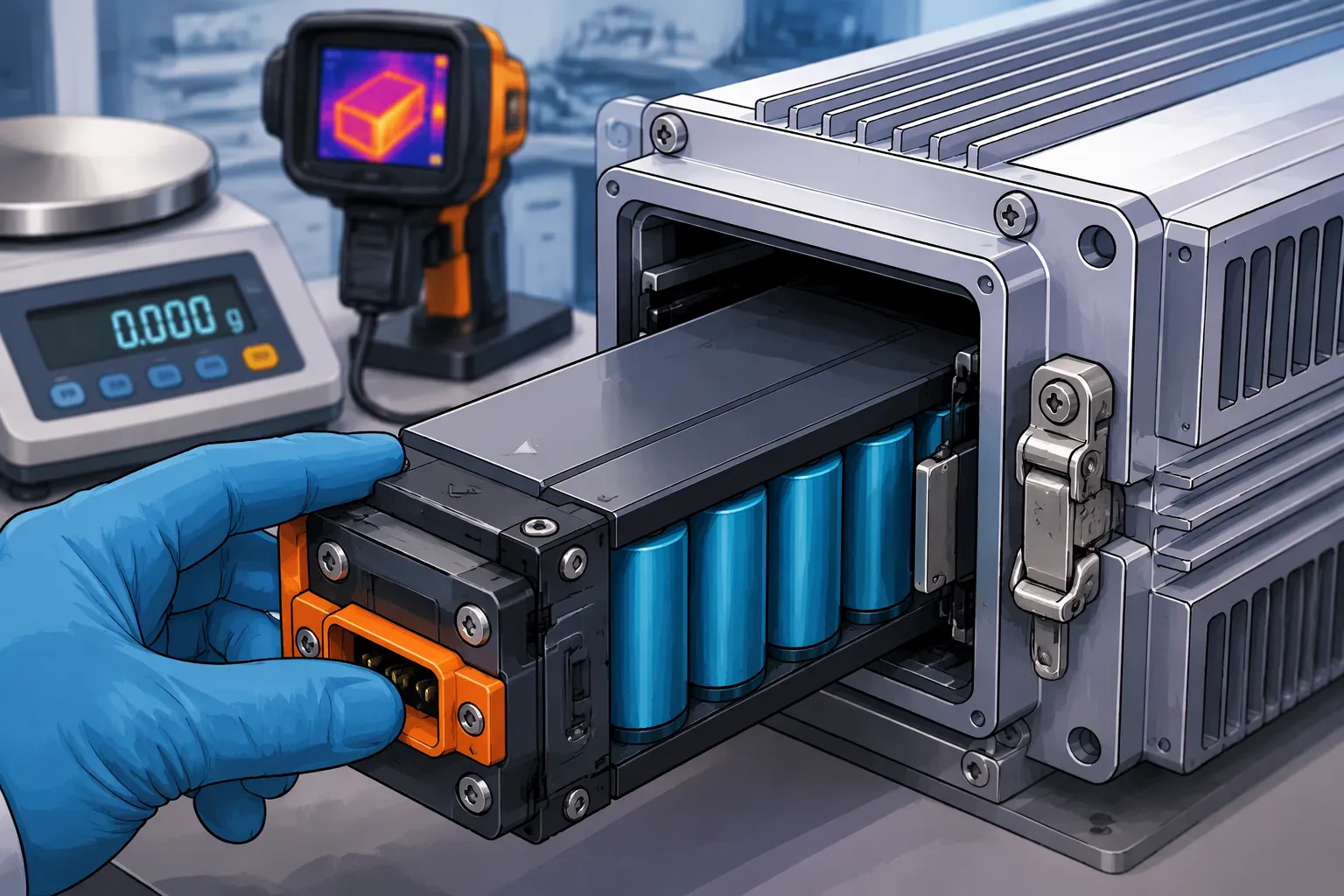
Quick Answer: Choose an aluminum enclosure when its stiffness or heat-spreading benefits justify the pack weight and the required insulation. Validate the enclosure, rails and latch together for retention, removal force, electrical isolation and thermal behavior in the robot.
Key Takeaways
Aluminum gives a high strength-to-weight ratio. It keeps packs light and strong.
Aluminum spreads heat well. It moves heat away from cells to a sink.
Aluminum holds precise shapes for rails and latches. This helps packs survive many swaps.
Choose aluminum for high-duty robots. Choose polymer or steel for low-heat, cost-driven designs.
Weigh weight, heat, retention, compliance, and cost together. This ensures the best material choice.
Part1: Aluminum Enclosures for Removable Robot Battery Packs — Weight
1.1 Strength-to-Weight Design
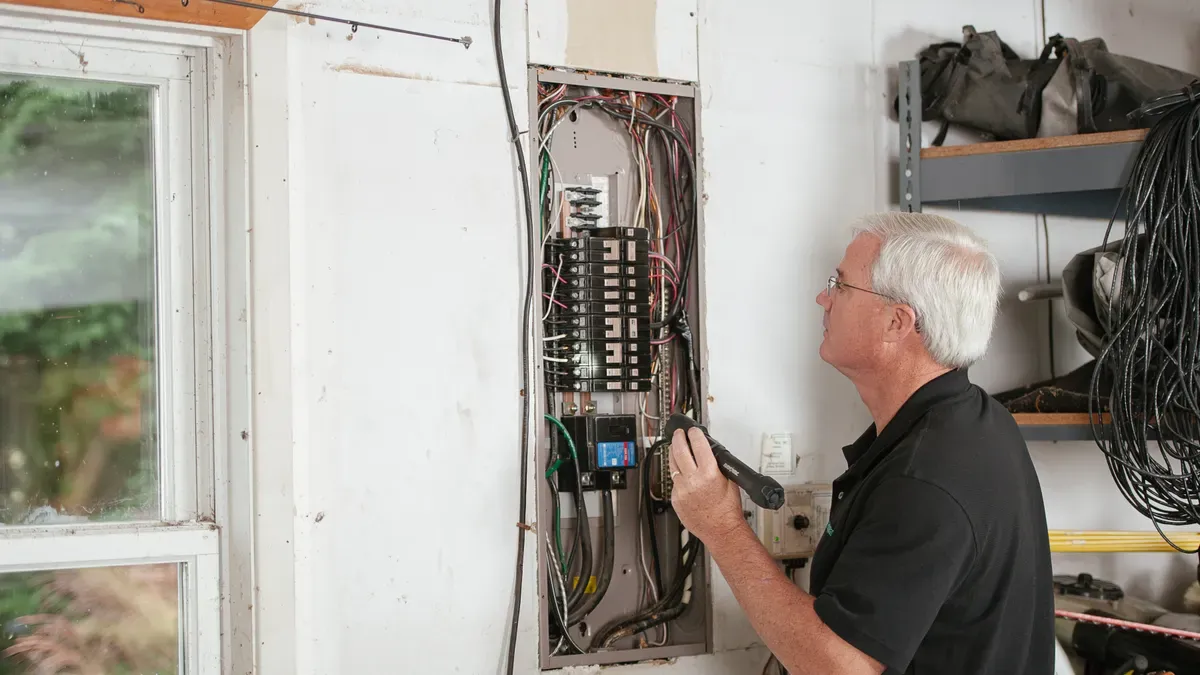
Aluminum earns its spot in removable pack design because it has a good strength-to-weight ratio. PartMfg reports that the strength-to-weight ratio of 7075-T6 aluminum is about four times that of A36 mild steel. The alloy you pick drives the result. 7075-T6 reaches a typical tensile strength of 572 MPa at a density of 2.81 g/cm³, while 6061-T6 delivers 310 MPa at 2.70 g/cm³. Stainless steel 304 offers 515 MPa but at 8.00 g/cm³. The table below, from PartMfg, compares these figures directly.
Metal / Alloy | Density (g/cm³) | Typical Tensile Strength (MPa) | Strength-to-Weight Ratio (kN·m/kg) |
|---|---|---|---|
Aluminum 7075-T6 | 2.81 | 572 | ~204 |
Aluminum 6061-T6 | 2.70 | 310 | ~115 |
Stainless Steel 304 (reference) | 8.00 | 515 | ~64 |
Mild Steel A36 (reference) | 7.85 | 400 | ~51 |
Wall-thickness optimization turns this material advantage into real mass savings. PatSnap Eureka notes that traditional aluminum frame walls run 2–4 mm, and topology-optimized structures can cut weight by 20–30%. Bonnen Batteries adds that finite element analysis finds high-stress zones before tooling release, so engineers thicken only where loads demand it. Hotean describes pocketing non-critical flat areas to 30–40% of original thickness and ribbing that achieves 80% of solid-wall stiffness at 15% of the weight. PTSmake reports that three longitudinal ribs raise bending stiffness 2.3 times at unchanged mass. Integrated mounting bosses replace separate brackets, and a boss outer diameter of at least twice the thread diameter prevents stripping in thin walls.
Mass outcomes vary by material. Polymer enclosures weigh less than aluminum in low-load designs, and Ufine Battery lists plastics as preferred for robotics and drones where weight reduction dominates. Steel costs less per kilogram but adds mass. Neither material is universally better; the pack’s duty cycle decides.
Cell chemistry sets the mass budget. LiFePO4 (3.2 V, 100–180 Wh/kg, 2,000–5,000 cycles) needs more cells for a given energy than NMC (3.6–3.7 V, 160–270 Wh/kg, 500–1,000 cycles), so enclosure mass matters more in LiFePO4 packs. LCO (3.7 V, 180–230 Wh/kg) and LMO (3.7 V, 120–170 Wh/kg) fall between. Solid-state and lithium-metal cells at 300–500 Wh/kg may relax enclosure mass targets. These are cell-level references, not pack guarantees. Aluminum-air research reports roughly 41% energy-storage mass reduction and about 1,000 Wh/kg at cell level, a research direction rather than a pack promise.
1.2 Fit, Compliance, and Cost
Corrosion resistance adds durability without adding weight. Mingtai Aluminum notes that 5052 aluminum forms a dense, self-protecting oxide layer that resists salt spray and self-repairs when scratched. PatSnap Eureka warns that 6xxx and 7xxx alloys remain susceptible to pitting and galvanic corrosion at steel fasteners, so coating and interface design matter.
A hybrid vehicle battery pack frame design featuring side members with a polymer reinforcement integrated into a profiled body absorbs and distributes impact energy, maintaining structural integrity during side collisions and reducing weight by 20% compared to traditional metal designs. — PatSnap Eureka
Cost favors aluminum where machining precision and corrosion resistance replace coating and maintenance. JCProto notes that carbon steel often has the lowest raw-material cost, while aluminum resists atmospheric corrosion without depending entirely on an applied coating. Ufine Battery reports higher manufacturing cost for metal versus injection-molded plastic at high volume. For Aluminum Enclosures for Removable Robot Battery Packs, the weight decision therefore ties to swap frequency, payload sensitivity, and environment rather than material preference alone.
Part2: Heat Transfer in Aluminum Enclosures
2.1 Thermal Conductivity Paths
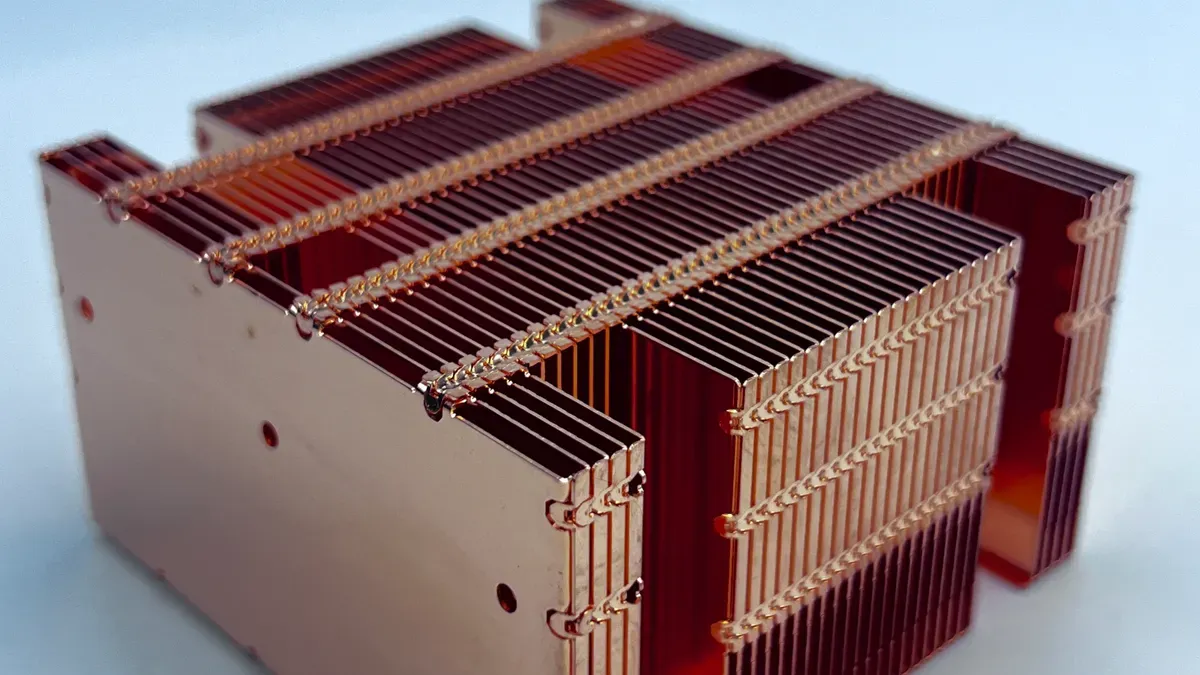
Aluminum moves heat much better than most enclosure materials. PatSnap Eureka lists thermal conductivity of 150–235 W/m·K for aluminum enclosures, compared to 50–60 W/m·K for steel and 0.5–5 W/m·K for composite and polymer materials. That big gap lets an aluminum wall spread cell heat over a wide area and connect the pack to a chassis or ambient sink. Heson Thermal describes how a machined aluminum joint housing carries motor or drive heat around its circumference and lowers a local hot spot without adding a separate heat sink. The same idea works for a battery enclosure that also acts as a spreader.
Several paths carry heat out of the cells. Conduction paths run from cell surfaces to enclosure walls through thermal interface materials. Extruded cooling channels fit constant profiles, and embedded channels put coolant close to the modules. An aluminum plate heat spreader above the module evens out temperature differences across the pack. Interface quality decides whether any of this works. Heson Thermal warns that a large aluminum part cannot cool a source if the interface is poor, and it calls for defined contact area, flatness, roughness, interface material, compression, and fastener pattern. Cold environments flip the problem, so insulation layers may be needed to hold cell warmth.
The first mistake is to treat each hot component on its own. A motor may transfer heat into a joint housing that also controls bearing alignment. A compute module may conduct into a torso frame that receives heat from a battery enclosure. — Heson Thermal
Chemistry shapes heat generation and tolerance. LiFePO4 (3.2 V, 2,000–5,000 cycles) tolerates a narrower voltage window and makes less heat per cell in many duty cycles. NMC (3.6–3.7 V, 500–1,000 cycles), LCO (3.7 V, 500–1,000 cycles), and LMO (3.7 V, 300–700 cycles) each bring their own thermal profile. Solid-state and lithium-metal cells at 300–500 Wh/kg may change thermal design assumptions. These are cell-level references, not pack guarantees. Where thermal monitoring matters, a BMS with temperature sensing and protection integration supports the enclosure design.
2.2 Fit, Compliance, and Cost
Mass reduction is the main driver behind aluminum battery enclosures, and thermal requirements prove challenging for the lightweight material. This tension defines Part2. Epectec notes that modular packs normally carry thermal interface materials between the cooling plate and the cells, and those materials add weight and take up space. Cell-to-pack designs remove the module and bond cells directly to the cooling plate with thermal conductive adhesive, which lowers part count and frees about 15% volume utilization. Epectec also reports that embedded cooling channels work best in thermal plastic trays, with an aluminum plate on top moving heat to the coolant. Steel or aluminum trays can use the same channels but need a multi-material approach. Epectec adds that steel and aluminum enclosures often need a thermal blanket, while thermoplastic and long-glass fiber materials handle higher temperatures without one.
Cooling method drives cost. Ayaa Tech compares forced air at a baseline cost multiplier of 1.0, indirect liquid at 2.5×–3.5×, phase change at 2.0×–3.0×, and direct immersion at 5.0×–8.0×. The Ayaa Tech chart below shows these relative cost multipliers.
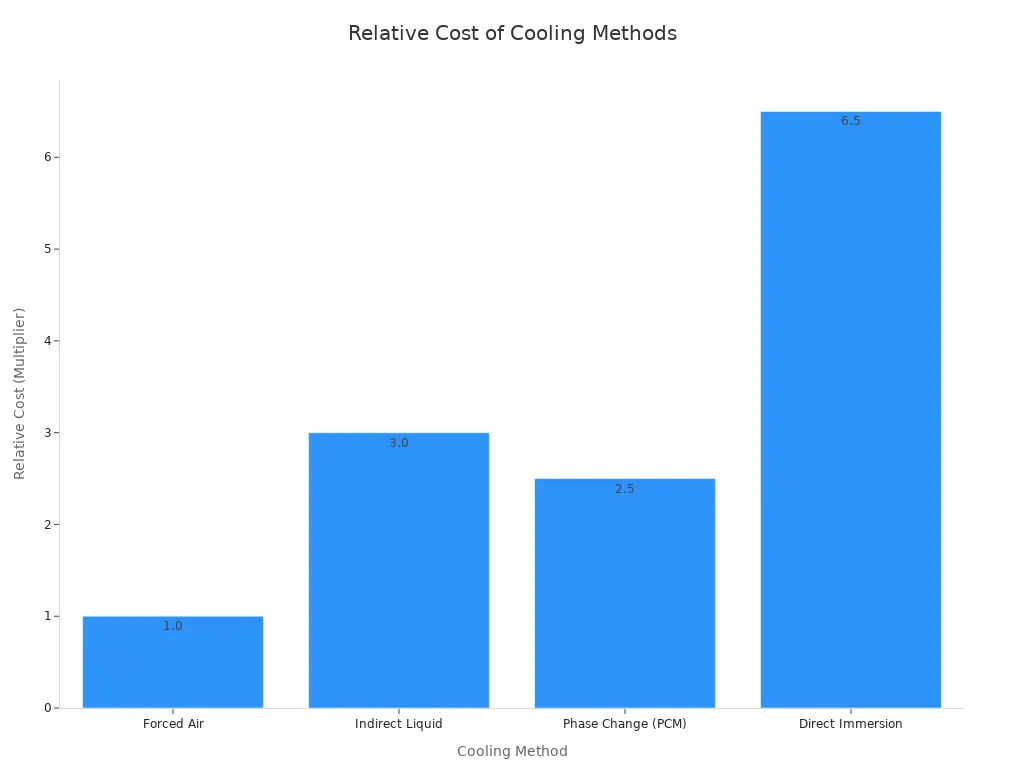
Ayaa Tech also warns that custom stamped cold plates require expensive NRE tooling, and it recommends standard modular cold plate profiles to keep dual-sourcing options. For Aluminum Enclosures for Removable Robot Battery Packs, the thermal decision therefore balances spreading performance, interface quality, cooling method cost, and the mass the pack can afford.
Part3: Retention in Aluminum Enclosures for Removable Robot Battery Packs
3.1 Mechanical Retention Design
The hardware that holds the pack in place decides how it acts over hundreds of swaps. Rails guide the pack into its bay, latches lock it down, captive fasteners stay with the enclosure, and keyed interfaces stop wrong-way insertion. These parts must stand up to vibration and shock without coming loose. Aluminum’s stiffness keeps rail and latch shapes steady under load, and it machines easily for tight fits on mating features. Watch out for wear and galling. 3ERP notes that built-up edge happens when aluminum sticks to the cutting edge, and the same sticking risk shows up where aluminum slides on aluminum. Hardened inserts, anodized surfaces, or dry-film lubricant coatings keep the wear surfaces apart.
The enclosure, rails, retention hardware, and insulation work as one system. Insulation adds thickness around the pack edge, so rail clearances must allow for it. A secure latch and a fast field swap pull against each other. Tool-free latches speed up swaps but need careful detent design. Bolted retention holds tighter but slows down service.
3.2 Fit, Compliance, and Cost
Retention needs follow the application. Medical robots need sterile, tool-free swaps with smooth surfaces that clean easily. Security and infrastructure robots face vibration and weather, so latches need sealing and positive locking. Industrial AGVs swap packs many times a day, which favors strong rails and guided alignment. Designers should check IEC and ISO mechanical standards, UL 2271 for battery safety, and UN 38.3 transport testing from the UN Manual of Tests and Criteria.
Cost splits between precision machining, hardware count, and durability testing. 3ERP reports that sharp tools, polished flutes, 2 or 3 flutes, and helix angles of 35°–45° improve aluminum cutting quality, and DLC or PCD coatings cut down sticking. Those choices raise tooling cost but protect latch tolerances over the pack’s life. Bad retention carries its own cost through pack loss and downtime. For Aluminum Enclosures for Removable Robot Battery Packs, the retention decision therefore weighs swap speed, vibration exposure, and lifecycle risk together.
Aluminum works best when a robot platform needs light structure, heat spreading, and exact retention features all at once. Cutting mass drives most aluminum battery enclosure projects. Heat needs remain the hard part that the light material must handle.
Robots with high duty cycles, vibration, and thermal demands gain the most from aluminum. Cost-driven, low-heat, high-volume designs may do better with polymer or steel.
A decision checklist helps match material to platform:
Weight: does payload sensitivity justify metal?
Heat: do cells need spreading or cooling channels?
Retention: how many swaps, and how much shock?
Compliance: which safety and transport standards apply?
Cost: what does downtime from poor retention cost?
Aluminum Enclosures for Removable Robot Battery Packs reward teams that weigh all five together.
FAQ
Does aluminum make a removable robot battery pack heavier or lighter than steel?
Aluminum is lighter for the same structural job. Its strength-to-weight ratio is much higher than mild steel and stainless steel. So a thinner aluminum wall can carry the same load. Polymer still beats aluminum in low-load designs. The pack’s duty cycle decides which material fits.
Can an aluminum enclosure alone keep lithium cells cool?
An aluminum wall spreads heat well. Its thermal conductivity is far above steel and polymers. But spreading heat is not the same as cooling it. The pack still needs a clear conduction path, a good thermal interface, and a sink like a chassis or cooling channel. Interface quality decides the result.
Which cell chemistry changes the thermal design most?
LiFePO4 (3.2 V, 2,000–5,000 cycles) and NMC (3.6–3.7 V, 500–1,000 cycles) set different heat profiles. LCO and LMO add their own too. Solid-state and lithium-metal cells at 300–500 Wh/kg may shift assumptions. These are cell-level references, not pack guarantees.
How many swap cycles should a retention system survive?
No single number fits every platform. Industrial AGVs that swap packs many times a day need stronger rails and guided alignment than medical robots with occasional sterile swaps. Designers should check retention against vibration and shock testing. They should also confirm battery safety under UL 2271 and transport testing under UN 38.3.
When should a team choose polymer or steel instead?
Polymer fits cost-driven, low-heat, high-volume designs where injection molding wins. Steel fits cost-sensitive frames that can handle extra mass. Aluminum Enclosures for Removable Robot Battery Packs suit platforms that value light structure, heat spreading, and precise retention all at once.
Share the enclosure drawings, mounting loads, and service clearances when discussing custom robot battery pack integration with the pack supplier.


