


Quick Answer: Portable ultrasonic flaw detectors require lightweight lithium battery packs that deliver stable voltage throughout long inspection sessions. A typical 4S2P pack using 3.6–3.7V 18650 cells provides approximately 14.4–14.8V nominal voltage while increasing capacity through two parallel cell strings. Final voltage, capacity, discharge capability and connector design must match the specific NDT instrument.
Portable ultrasonic flaw detectors depend on stable power to generate pulses, process reflected signals and maintain readable displays during field inspections. An unexpected voltage drop or battery shutdown can interrupt data collection and require an inspection to be repeated.
Properly engineered custom lithium battery packs provide the energy density, portability and configurable electrical interface required by modern non-destructive testing equipment. Manufacturers can customize voltage, capacity, enclosure dimensions, connectors and communication functions for a particular detector platform.
A common design for portable instruments is a 4S2P pack built with cylindrical 18650 cells. Four cells connected in series establish the voltage platform, while two parallel strings increase capacity and available current. However, this configuration is only a starting point. Cell chemistry, load profile, runtime target, temperature range and enclosure space must be evaluated before finalizing the pack.
Key Takeaways
Select the battery according to the detector’s voltage range, average load and peak-current requirements.
A 4S2P pack using 3.6–3.7V cells typically provides 14.4–14.8V nominal voltage.
Confirm connector polarity, mechanical dimensions, charging parameters and communication requirements.
Use a properly configured Battery Management System to monitor and protect the pack.
Evaluate the battery under actual inspection loads, temperatures and field conditions.
Confirm applicable transport and product-safety requirements before deployment.
Part1: Power Needs of Ultrasonic Flaw Detectors
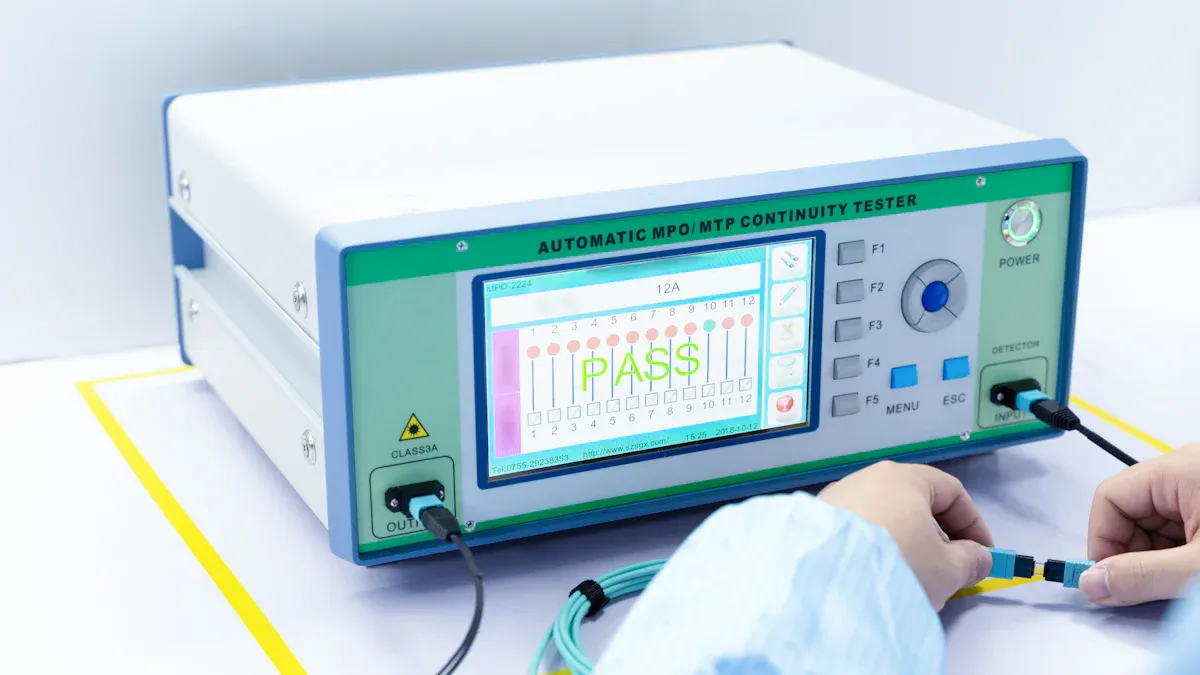
1.1 Battery Requirements for NDT
You rely on your ultrasonic flaw detector to deliver accurate results during non-destructive testing. The battery you choose must meet strict requirements to support continuous operation. Most ultrasonic flaw detector batteries use lithium-ion technology because it offers high energy density and long cycle life. You often see configurations like 14.8V packs built from 18650 lithium-ion cells in a 4S2P arrangement. These batteries provide stable voltage and consistent power output. You benefit from large-capacity lithium batteries that have no memory effect, allowing you to recharge them without reducing their lifespan. Many lithium-ion batteries for ultrasonic flaw detectors offer more than 6 hours of continuous working time.
Typical battery specifications for ultrasonic flaw detectors include:
14.8V voltage for stable operation
18650 lithium-ion cells for high energy density
4S2P configuration for balanced capacity and discharge rate
5Ah capacity for extended runtime
8.4V charging voltage and 2.5A discharge current
You can also find batteries with 7.2V and 5200mAh capacity, which suit smaller ultrasonic flaw detector models.
Specification | Details |
|---|---|
Voltage | 7.2V |
Capacity | 5200 mAh |
1.2 Field Challenges and Reliability
You face many challenges when using ultrasonic flaw detectors in the field. Limited battery capacity restricts the duration of inspections. Heavy batteries can reduce portability and make it harder to carry your ultrasonic flaw detector. High-energy-demand sensors require batteries that deliver consistent power. Battery failure can disrupt non-destructive testing and compromise safety. You must select lithium-ion batteries that provide reliable power and withstand harsh conditions. Reliable battery solutions help you avoid downtime and maintain the accuracy of your ultrasonic flaw detector. You improve operational efficiency and safety by choosing lithium-ion batteries designed for demanding environments.
Tip: Always check the battery specifications and ensure compatibility with your ultrasonic flaw detector. Reliable lithium-ion battery solutions support your non-destructive testing needs and enhance reliability in the field.
Part2: Benefits of Lithium Battery Solutions

2.1 Reliability and Longevity
You need lithium battery solutions that deliver consistent performance for your ultrasonic flaw detector. Lithium-ion batteries offer extended runtime and long life, which reduces the frequency of maintenance and replacement. You benefit from minimal maintenance requirements, as lithium-ion batteries do not require regular water refills or corrosion checks. This reliability helps you maintain your non-destructive testing schedule without unexpected interruptions.
Lithium-ion batteries support proactive maintenance. You must monitor for risks such as external short circuits, overcharging, and mechanical robustness issues. Proper testing and monitoring ensure battery safety and reliability in portable ultrasonic equipment. You can rely on lithium battery solutions to keep your ultrasonic flaw detector operating efficiently, even during long field sessions.
Note: Lithium battery solutions can handle over 4,000 cycles and last more than 10 years, while lead-acid batteries typically last only 3 to 5 years and require frequent maintenance.
2.2 Performance in Harsh Environments
You often use your ultrasonic flaw detector in challenging environments. Lithium-ion batteries maintain stable output in extreme temperatures and high-vibration conditions. Cold temperatures reduce battery capacity and efficiency, but lithium-ion batteries retain more capacity than other types. Increased internal resistance in cold conditions makes it harder for batteries to deliver power, but lithium-ion batteries maintain a voltage drop of only 0.05V under low temperatures. After one hour of discharge, they can still output 1.33 volts, showing consistent performance.
Cold temperatures slow chemical reactions and reduce battery efficiency.
Lithium plating can occur in cold temperatures, causing safety hazards and permanent capacity loss.
High temperatures accelerate aging and increase the risk of thermal runaway, which affects battery safety.
You need battery solutions that withstand these harsh conditions. Lithium battery solutions deliver reliable power for ultrasonic flaw detectors used in medical, robotics, security, infrastructure, consumer electronics, and industrial applications.
Condition | Lithium-Ion Performance | Lead-Acid Performance |
|---|---|---|
High Temperature | Maintains better cycle life at 55°C | Operates at room temperature |
Low Temperature | Retains more capacity at low temperatures | Performance drops significantly |
Vibration Resistance | Maintains consistent output | Output may fluctuate |
2.3 Lithium-Ion vs Other Battery Types
You must compare lithium battery solutions to other battery chemistries to select the best option for your ultrasonic flaw detector. Lithium-ion batteries offer the highest energy density and lowest weight, making them ideal for portable ultrasonic equipment. Lead-acid batteries are reliable but heavy and have low energy density. Nickel-cadmium batteries are less common due to environmental concerns and lower efficiency.
Battery Type | Weight | Energy Density | Safety Concerns |
|---|---|---|---|
Lead Acid | Heavy | Low energy density | Reliable but less safe |
Lithium-Ion | Light | Highest energy density | Requires advanced management for safety |
Lithium-ion batteries:
Highest energy densities (125-600+ Wh/l)
Specific energy (100-300 Wh/kg)
Charge efficiency (>95%)
Lowest weight of all battery chemistries
Lead-acid batteries:
Low-cost and reliable
Heavy weight and low energy density
You also need to consider the total cost of ownership. Lithium-ion batteries have lower operational costs and minimal maintenance requirements. You spend less on charging and replacement over time. Lead-acid batteries require frequent maintenance and have higher cumulative costs.
Aspect | Lithium-Ion Batteries | Lead-Acid Batteries |
|---|---|---|
Initial Purchase Cost | Higher initial investment | Lower initial cost |
Maintenance Requirements | Minimal maintenance, no regular replacements | High maintenance, regular water refills |
Lifespan | Longer lifespan (> 3,500 cycles) | Shorter lifespan (1,000 cycles) |
Charging Efficiency | Higher (96%) | Lower (75%) |
Charging Time | Faster, supports partial charging | Slower (6-8 hours for full charge) |
Overall TCO | Lower over time due to reduced costs | Higher due to frequent replacements |
You can choose from several lithium battery chemistries for your ultrasonic flaw detector. Each chemistry offers unique advantages:
Chemistry | Platform Voltage | Energy Density (Wh/kg) | Cycle Life (cycles) |
|---|---|---|---|
NMC | 3.7V | 150-220 | 1,000-2,000 |
LCO | 3.7V | 150-200 | 500-1,000 |
LiFePO4 | 3.2V | 90-120 | 2,000-5,000 |
LMO | 3.7V | 100-150 | 1,000-2,000 |
Solid-State | 3.7V | 250-500 | 2,000-10,000 |
Lithium Metal | 3.7V | 300-500 | 500-1,000 |
You can use lithium battery solutions in medical devices, robotics, security systems, infrastructure monitoring, consumer electronics, and industrial equipment.
Tip: Always select lithium battery solutions with advanced management systems to ensure battery safety and reliability in your ultrasonic flaw detector.
Part3: Selecting the Right Lithium-Ion Battery
3.1 Capacity and Runtime
You must select the right battery capacity to ensure your ultrasonic flaw detector operates efficiently during long inspections. Capacity, measured in ampere-hours (Ah), determines how long your ultrasonic equipment can run before you need to recharge. For most ultrasonic flaw detector models, a 5Ah lithium-ion battery pack provides over six hours of continuous use. This runtime supports extended fieldwork in industrial, infrastructure, and security applications.
You should match the battery voltage to your ultrasonic flaw detector’s requirements. Many detectors use 14.8V lithium-ion batteries built from 18650 cells in a 4S2P configuration. This setup balances high energy density and stable voltage output. Some smaller ultrasonic flaw detector models use 7.2V batteries with 5200mAh capacity. You need to check your equipment’s specifications to avoid compatibility issues.
Tip: Choose lithium-ion battery solutions with higher energy density for portable ultrasonic flaw detectors. This reduces weight and increases runtime, which is essential for field operations in medical, robotics, and consumer electronics sectors.
Detector Type | Typical Voltage | Recommended Capacity | Configuration |
|---|---|---|---|
Phased Array | 14.8V | 5Ah | 4S2P, 18650 |
Thickness Gauge | 7.2V | 5200mAh | 2S2P, 18650 |
Industrial Portable | 14.8V | 5Ah | 4S2P, 18650 |
3.2 Safety and Certifications
You must prioritize battery safety when selecting lithium-ion batteries for ultrasonic flaw detectors. Advanced safety features protect your equipment and personnel during non-destructive testing. Modern lithium-ion battery solutions use advanced cooling mechanisms, thermal barriers, and improved thermal management to reduce the risk of thermal runaway or fire. Non-flammable electrolytes further enhance safety during ultrasonic field operations.
Safety Feature | Function |
|---|---|
Advanced Cooling Mechanisms | Reduces heat buildup and prevents thermal runaway |
Thermal Barriers | Isolates cells to contain overheating |
Improved Thermal Management | Maintains safe operating temperature |
Non-Flammable Electrolytes | Prevents fire incidents |
You should always look for lithium-ion batteries with certifications such as UN38.3, IEC62133, and UL2054. These certifications confirm that the battery meets international safety and transport standards.
Note: Understanding the mechanisms of thermal runaway helps you prevent incidents and minimize risks in ultrasonic flaw detector applications.
3.3 Compatibility with Detector Models
You must ensure that your lithium-ion battery solutions are compatible with your ultrasonic flaw detector model. Each detector, such as phased array, thickness gauge, or industrial portable, has unique voltage and capacity requirements. Using the wrong battery can cause performance issues or damage your ultrasonic equipment.
You should check the connector type, physical size, and battery management system (BMS) compatibility. Many ultrasonic flaw detectors require smart BMS features for cell balancing, overcharge protection, and real-time monitoring. This ensures reliability and extends battery life in demanding environments.
Review your ultrasonic flaw detector’s manual for battery specifications.
Confirm the battery pack matches the voltage, capacity, and connector type.
Choose lithium-ion batteries with advanced BMS for enhanced safety and performance.
Detector Model | Voltage Requirement | Connector Type | |
|---|---|---|---|
Phased Array | 14.8V | Required | Custom/Standard |
Thickness Gauge | 7.2V | Optional | Standard |
Industrial Portable | 14.8V | Required | Custom |
You can find lithium-ion battery solutions for ultrasonic flaw detectors used in medical diagnostics, robotics inspection, security screening, infrastructure monitoring, consumer electronics testing, and industrial quality control. Selecting the right battery ensures reliability, safety, and optimal performance for your ultrasonic applications.
Tip: Always verify battery compatibility before purchase to avoid downtime and ensure continuous operation of your ultrasonic flaw detector.
Part4: Battery Maintenance and Best Practices
4.1 Charging and Storage
You must follow proper charging and storage practices to extend the life of lithium batteries in ultrasonic flaw detectors. Charging at the recommended voltage and current prevents overheating and preserves battery health. You should avoid deep discharge and overcharging, as these actions reduce cycle life and increase safety risks. When storing batteries, keep them at about 40% charge and place them in a cool environment. Remove batteries from ultrasonic devices during storage and check the state of charge regularly. Improper storage, such as leaving batteries fully charged in high temperatures, accelerates degradation and raises the risk of thermal runaway. This can cause fires or explosions and reduce usable capacity.
These practices help maintain performance and safety for lithium battery solutions in non-destructive testing applications across medical, robotics, security, infrastructure, consumer electronics, and industrial sectors.
4.2 Monitoring Battery Health
You need to monitor the health of lithium batteries in ultrasonic flaw detectors to ensure reliable operation. Track the state of charge (SoC), state of health (SoH), depth of discharge (DoD), cycle life, and round-trip efficiency. Deep discharge below 20% can cause irreversible damage and reduce capacity by up to 30%. Use diagnostic tools to assess battery degradation. High-frequency diagnostics identify mechanical defects, mid-frequency tests diagnose reaction kinetics, and low-frequency analysis detects lithium-ion diffusion blockages.
Frequency Region | Diagnostic Capability |
|---|---|
High-frequency (10,000–100 Hz) | Identifies contact impedance at current collector/electrode interfaces, revealing mechanical defects such as poor tab welding, electrode layer separation, or current collector corrosion. |
Mid-frequency (1,000–10 Hz) | Characterizes charge transfer impedance (Rct), diagnosing reaction kinetics degradation in active materials, including electrolyte depletion and surface passivation. |
Low-frequency (10–0.01 Hz) | Detects Warburg impedance changes, exposing lithium-ion diffusion blockage within electrode particles, such as graphite layer collapse. |
You can use battery management systems for real-time monitoring and cell balancing.
4.3 Replacement Planning
You must plan battery replacement cycles to reduce downtime and maintenance costs in ultrasonic flaw detector operations. Proactive maintenance can cut failure-related downtime by up to 60%. Scheduled inspections help you identify weak cells early and prevent critical failures. Consistent maintenance practices enable continuous operations and higher fleet utilization.
Evidence | Description |
|---|---|
Reduction in downtime | Proactive maintenance can reduce failure-related downtime by up to 60%. |
Importance of inspections | Scheduled inspections help identify weak cells early, preventing critical failures. |
Impact on fleet utilization | Consistent maintenance practices enable continuous operations and higher fleet utilization. |
Digital battery management prevents failures and provides operational intelligence. State-of-health trend data helps you schedule replacements before failures occur. Comprehensive battery records support insurance claims and warranty disputes. You improve reliability and efficiency by following these best practices for lithium battery solutions in ultrasonic flaw detectors.
Tip: Regularly review battery health and schedule replacements to maintain optimal performance in ultrasonic testing.
You need high-quality lithium battery solutions for portable ultrasonic flaw detectors to achieve reliable, safe, and efficient NDT operations. Smart technologies and IoT-enabled sensors improve your inspection efficiency and quality assurance. You should focus on technical compatibility, safety, and supplier reputation when choosing batteries.
Key Factor | Description |
|---|---|
Battery Specifications | 14.8V lithium battery pack with 18650 cells in 4S2P configuration. |
Performance Characteristics | High energy ratio, light weight, small size, high cycle life, high safety, and high consistency. |
Usability | Convenient for direct replacement on site. |
AI-powered defect detection and automated inspection stations support consistent battery performance.
Real-time monitoring ensures rapid throughput and accuracy.
You must select batteries with stable materials and robust design to prevent safety hazards and maintain long-term performance.
FAQ
What lithium battery chemistry is suitable for ultrasonic flaw detectors?
NMC is often suitable when portable equipment requires high energy density and reduced weight. LiFePO4 may be considered when thermal stability and cycle life are more important than minimum pack size. LCO and LMO can support particular designs, but their selection should depend on the required discharge rate, lifetime and safety strategy.
Chemistry | Typical Nominal Voltage | Typical Energy Density | General Design Priority |
|---|---|---|---|
LiFePO4 | 3.2V per cell | 90–160 Wh/kg | Thermal stability and cycle life |
NMC | 3.6–3.7V per cell | 150–220 Wh/kg | Energy density and portability |
LCO | 3.6–3.7V per cell | 150–200 Wh/kg | Compact portable equipment |
LMO | 3.7V per cell | 100–150 Wh/kg | Power capability and thermal performance |
These values are representative ranges rather than guaranteed specifications. Actual performance depends on the selected cell model, operating conditions and pack design.
Does a 4S2P battery always provide 14.8V?
No. A 4S2P pack using cells rated at 3.7V nominal provides approximately 14.8V nominal voltage. A design using 3.6V cells would be rated at approximately 14.4V. A four-series LiFePO4 pack would instead provide approximately 12.8V nominal voltage.
Manufacturers must also confirm the detector’s maximum input voltage. A four-series conventional lithium-ion pack can reach approximately 16.8V when fully charged.
How do you ensure compatibility with an ultrasonic flaw detector?
Check the following requirements:
Nominal and maximum input voltage
Required capacity and runtime
Continuous and peak discharge current
Connector type and polarity
Pack dimensions and mounting method
Approved charging voltage and current
Temperature range
BMS communication or fuel-gauge requirements
Testing the complete battery and detector assembly is necessary before production deployment.
How does a BMS improve reliability during field inspections?
A BMS monitors voltage, current and temperature while providing protection against overcharge, over-discharge, excessive current and short circuits. It may also support cell balancing, state-of-charge estimation and communication with the detector.
BMS thresholds must be coordinated with the cell specifications and the equipment’s real load profile. Incorrect protection settings can cause premature shutdown even when the cells are operating normally.
How can operators extend battery service life?
Use the specified charger and avoid prolonged exposure to extreme heat. For extended storage, keep the battery partially charged in a cool, dry environment according to the manufacturer’s instructions. Inspect the pack regularly for swelling, damaged wiring, loose connectors or abnormal heating.
A fixed 40% storage level should not be presented as a universal requirement. The appropriate storage state of charge depends on the cell manufacturer, storage duration and temperature.
Which testing and certification requirements should manufacturers consider?
UN 38.3 is commonly required for transporting lithium batteries. IEC 62133-2 and UL 2054 may apply depending on the product, battery design and destination market. These are different standards with different scopes and should not be described collectively as general “certifications.”
Manufacturers should confirm all applicable battery, charger, equipment and market-access requirements with a qualified testing organization. Large Power’s industrial battery solutions can be developed around the electrical, mechanical and compliance requirements of portable NDT equipment.


