

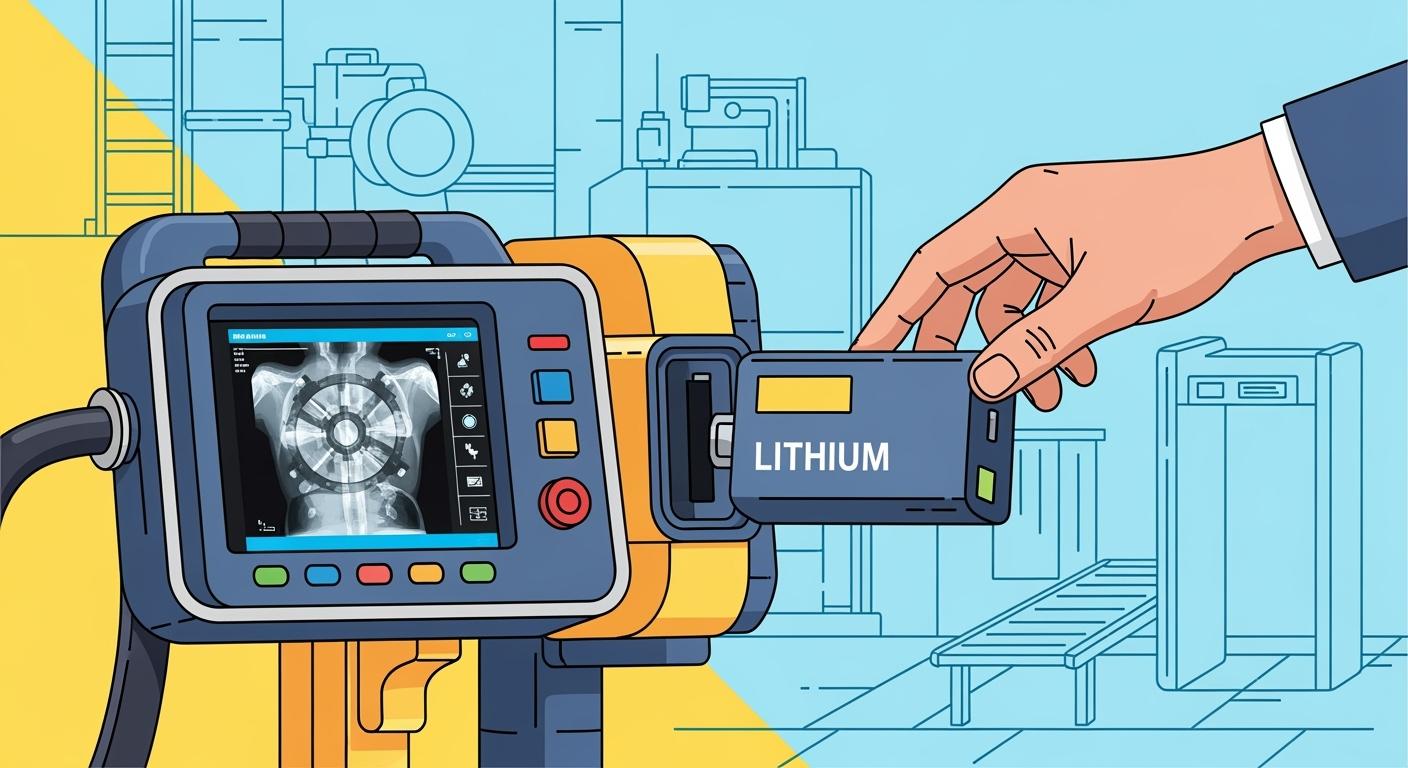
Quick Answer: Portable X-ray inspection equipment requires a compact battery pack capable of supporting continuous electronics loads and short periods of higher power demand. A properly engineered custom lithium battery solution combines suitable cell chemistry, discharge capability, thermal management and BMS protection to maintain dependable operation in industrial and security imaging environments.
Portable X-ray systems depend on stable power for image acquisition, processing, communication and high-voltage generation. Compared with conventional battery technologies, lithium-ion batteries provide higher energy density, lower self-discharge and longer service life, allowing inspection teams to operate portable equipment for extended periods without frequent battery replacement.
Key operational advantages include:
High energy density for more compact and portable equipment.
Stable voltage delivery for consistent imaging performance.
Low self-discharge to keep equipment ready between inspections.
Fast or opportunity charging to reduce operational downtime.
Configurable voltage, capacity, connectors and communication protocols.
Integrated protection against overcharge, over-discharge, overcurrent and excessive temperature.
Battery chemistry and pack architecture should be selected according to the equipment’s voltage platform, pulse-load profile, runtime target, enclosure space and operating environment. A battery designed for an industrial inspection system may prioritize rugged construction and temperature tolerance, while a pack for a security screening system may place greater emphasis on portability, rapid deployment and predictable remaining-runtime indication.
Key Takeaways
High energy density enables longer operating time without making portable X-ray equipment excessively heavy.
Battery selection must account for both average power consumption and short-duration peak loads.
A properly configured BMS monitors pack voltage, current and temperature while providing essential fault protection.
NMC is commonly considered where compact size and energy density are priorities, while LiFePO4 may suit designs emphasizing thermal stability and cycle life.
Rugged enclosures, secure connectors and effective thermal design improve reliability in field inspections.
Battery packs intended for shipment should undergo applicable testing, including UN 38.3, while product-level certification requirements must be confirmed for the target market and equipment category.
Part1: Power Needs for Portable X-Ray Systems
1.1 Energy Density and Compact Design
Portable X-ray inspection equipment relies on battery packs with high energy density and compact architecture. Manufacturers often select lithium battery chemistries such as LiFePO4, NMC, LCO, or LMO for their favorable platform voltage and cycle life. Compact battery design improves mobility and usability, allowing operators to move equipment easily across industrial and security sites. The following table highlights how compact battery features benefit portable X-ray systems:
Feature | Benefit |
|---|---|
Compact mono-block architecture | Simplifies integration into production lines, enhancing mobility of equipment. |
Sealed design | Reduces contamination risks and maintenance needs, improving usability in various environments. |
High-resolution imaging | Enables detailed inspections, crucial for battery quality and operational efficiency. |
Versatile imaging modalities | Allows tailored inspection approaches, enhancing usability across production stages. |
Consistency and reliability | Ensures high system uptime, critical for maintaining mobility in high-throughput settings. |
1.2 High Pulse Current Requirements
Portable X-ray devices require battery packs that deliver short pulses of high-intensity radiation energy. Lithium Battery Solutions provide the necessary power for these demanding applications. Supercapacitors, charged to 28V, store and supply energy for rapid discharge. Fast charging of supercapacitors demands high current pulses, which traditional batteries cannot support due to weight and bulk. The following list summarizes these requirements:
Portable X-ray devices need short, high-intensity energy pulses.
Supercapacitors store and supply energy, charged to 28V.
Fast charging requires high current pulses.
Traditional batteries are too heavy and bulky for portable use.
1.3 Regulatory Compliance
Battery packs for portable X-ray equipment must comply with federal, state, and international regulations. Regulatory standards ensure safe operation and reliable performance. Lithium Battery Solutions help manufacturers meet these requirements by enhancing reliability and safety. The table below outlines key regulatory requirements:
Regulation Description | Requirement |
|---|---|
Battery charge indicator | Visual means must indicate battery charge state for proper operation. |
Compliance for capacitor energy storage | Compliance determined by maximum selectable charge per exposure. |
Minimum state of charge | Specification of minimum charge necessary for proper operation of battery-powered generators. |
Manufacturers recommend using batteries approved for their equipment to ensure optimal performance and safety. Compliant power sources help healthcare providers avoid risks and maintain patient safety in critical care areas.
Part2: Lithium Battery Solutions Advantages
2.1 Lightweight and Long Cycle Life
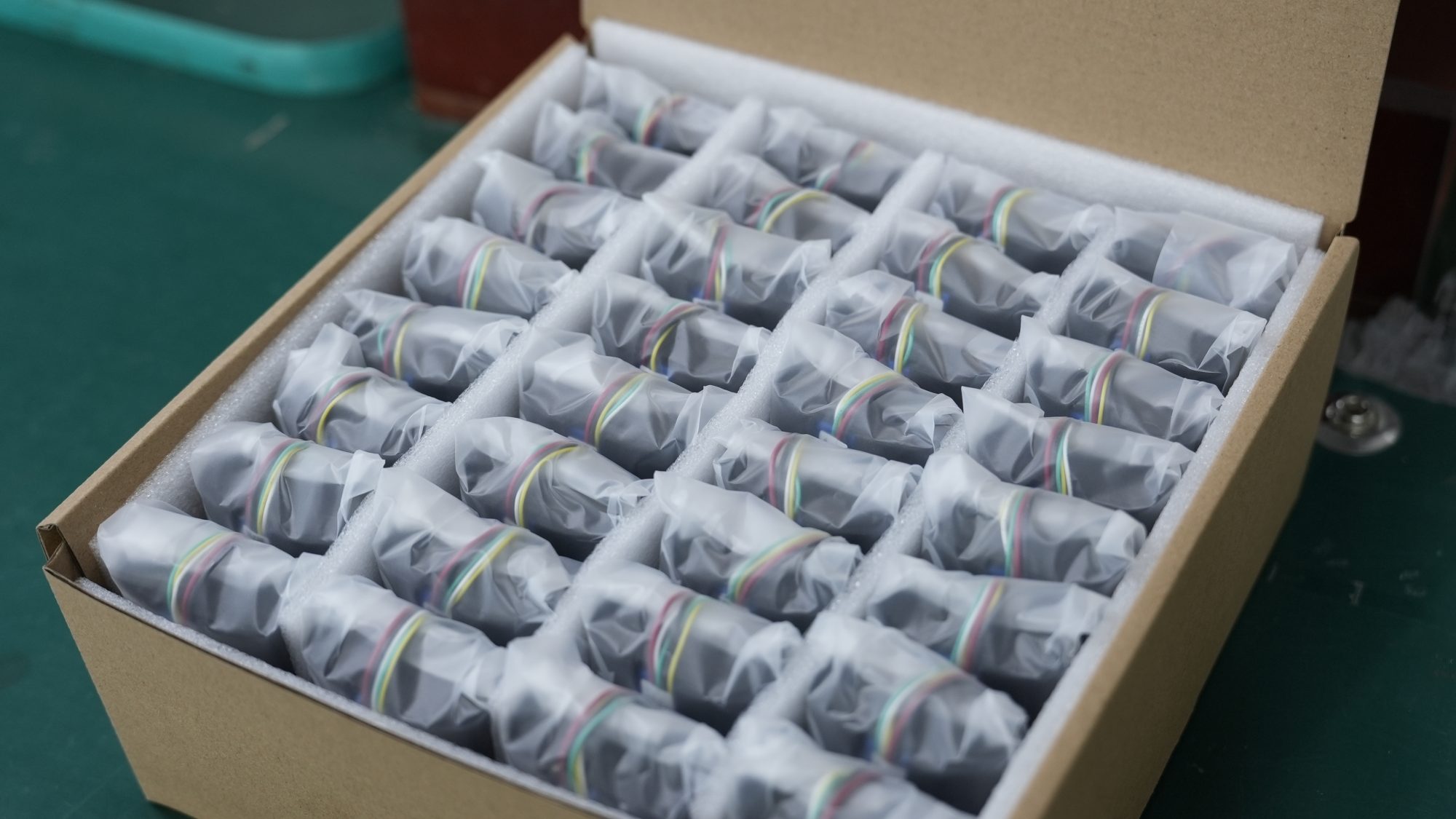
Lithium Battery Solutions offer a significant advantage in weight reduction for portable X-ray inspection equipment. These batteries use advanced chemistries such as LiFePO4, NMC, LCO, and LMO, which provide high energy density while keeping the battery pack compact and easy to transport. This lightweight design enables operators to move imaging systems efficiently across industrial and security sites.
A key benefit of lithium battery packs is their long cycle life. High-quality lithium batteries for medical and security imaging applications can sustain over 500 charge-discharge cycles while retaining more than 80% of their original capacity. This durability reduces the frequency of battery replacements and lowers total cost of ownership for organizations.
Lithium-ion batteries maintain high capacity after many charge-discharge cycles.
Most lithium battery packs for portable X-ray systems deliver over 500 cycles with 80%+ capacity retention.
Long cycle life supports continuous operation in demanding environments.
The following table compares the main lithium battery chemistries used in portable X-ray equipment:
Chemistry | Platform Voltage (V) | Energy Density (Wh/kg) | Typical Cycle Life (cycles) | Key Advantage |
|---|---|---|---|---|
LiFePO4 | 3.2 | 90-120 | 2000+ | High safety, long life |
NMC | 3.7 | 150-220 | 1000-2000 | High energy density |
LCO | 3.7 | 150-200 | 500-1000 | High voltage |
LMO | 3.7 | 100-150 | 500-1000 | Fast charge/discharge |
2.2 Safety Features and Protections
Safety remains a top priority for lithium battery packs in portable X-ray inspection equipment. Manufacturers integrate multiple safety features to prevent hazards such as short circuits, overheating, and overcharging. Battery management systems (BMS) monitor and control voltage, current, and temperature in real time, ensuring safe operation.
“A short circuit in a lithium-ion battery can cause it to ignite or explode. There are more than 40 features within the electrical assembly of each battery that need to be checked in order to ensure its absolute safety. And these checks have to be done in real time.”
“By detecting whether the positive and negative poles are misplaced and ensuring their insulation status, X-ray inspection equipment plays a crucial role in ensuring the safety of the product when it goes on the market.”
“To ensure quality and improve product safety and yield, X-ray inspection has become a standard requirement in manufacturing processes.”
These safety protocols help organizations comply with industry regulations and reduce operational risks. Real-time monitoring and X-ray inspection during manufacturing further enhance product reliability.
2.3 Fast Charging and Maintenance
Lithium Battery Solutions support fast charging, which is essential for high-throughput industrial and security imaging systems. For example, the X-tech cell® battery can reach full capacity from empty in just 90 minutes. This rapid charging capability minimizes downtime and maximizes equipment availability.
Proper maintenance practices extend the lifespan of lithium battery packs. Organizations should:
Monitor battery health regularly.
Follow charging instructions in the product manual.
Store batteries according to manufacturer guidelines.
Check the battery’s charge status routinely.
Replace batteries when run time drops below 80% of the original value.
These steps help maintain optimal performance and safety. For companies focused on sustainability, lithium battery packs offer recyclability and reduced environmental impact.
Part3: Design and Safety Considerations
3.1 Customization for X-Ray Equipment
Manufacturers design lithium battery packs to meet the unique requirements of portable X-ray inspection equipment. Each application may require a different voltage, capacity, or form factor. Engineers select chemistries such as LiFePO4, NMC, LCO, or LMO based on platform voltage, energy density, and cycle life. Customization ensures that the battery pack fits the device and supports high pulse currents needed for imaging. Companies often work with battery specialists to develop solutions that balance performance, weight, and safety for industrial and security imaging systems.
3.2 Battery Structure and X-Ray Inspection
The internal structure of lithium batteries plays a critical role in their performance and safety. X-ray inspection systems allow manufacturers to examine battery packs without damaging them. This technology checks the alignment of the anode and cathode, which prevents malfunctions and internal shorts. High-resolution imaging detects even small defects, such as foreign particles or separator issues, that could lead to short circuits or thermal runaway. X-ray tomography provides a detailed view of the battery’s internal components, helping engineers identify faults and ensure reliability.
“X-ray scanning is the best and only practical way to see the battery’s internal structure and prevent problems,” says Shalvey.
X-ray inspection enables non-destructive testing, detects faults, and verifies the alignment of critical parts. This process improves manufacturing integrity and ensures that every battery meets strict quality standards.
3.3 Industry Standards and Certifications
Lithium Battery Solutions must comply with industry standards and certifications to ensure safety and reliability. Manufacturers engage third-party organizations to validate functional safety throughout the product life cycle. This process includes engineering support, safety training, and documentation reviews. Continuous thermal monitoring, such as infrared thermal imaging, helps detect early anomalies and prevent thermal runaway. Companies follow protocols from organizations like UL, IEC, and UN to meet regulatory requirements for industrial and security imaging systems.
Third-party validation ensures batteries meet safety standards before market release.
Real-time temperature monitoring prevents catastrophic failures.
Compliance with international standards supports safe operation in demanding environments.
Part4: Applications and Case Studies
4.1 Industrial and Security Imaging
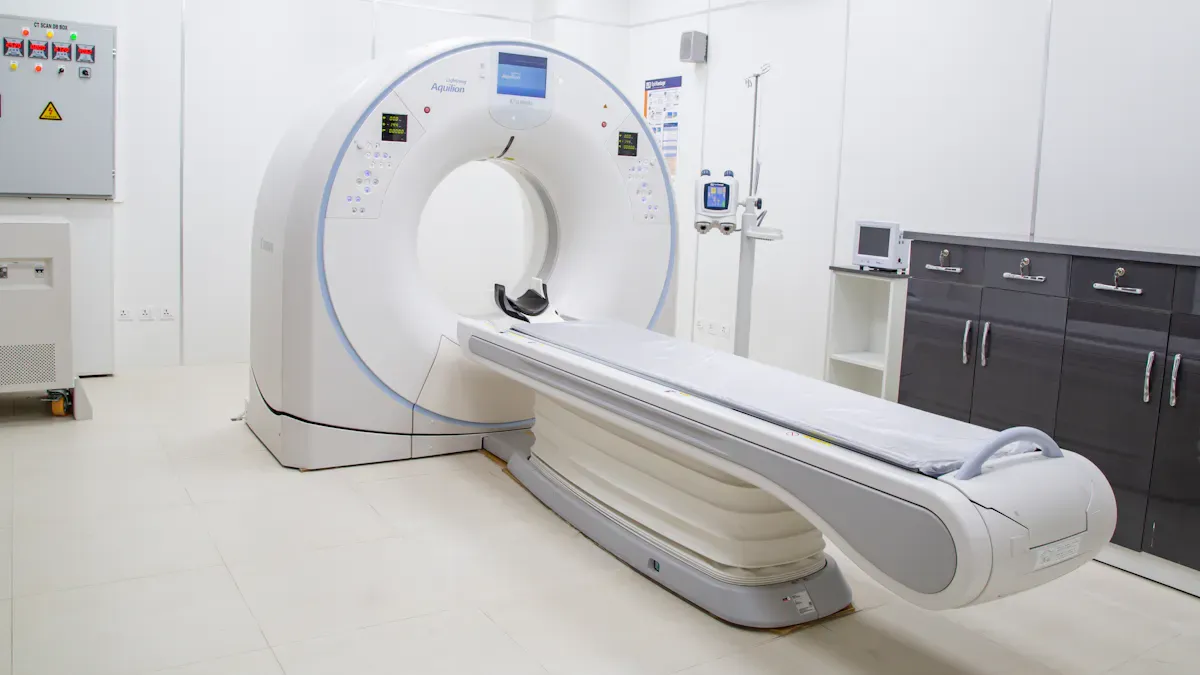
Lithium Battery Solutions power a wide range of portable X-ray inspection equipment across industrial and security sectors. These systems support critical tasks in manufacturing, transportation, and infrastructure. Operators use portable X-ray devices to inspect lithium-ion batteries in electric vehicles, electronics, and aerospace. They rely on these tools for non-destructive examination, which helps identify defects such as misaligned electrodes, cracks, voids, or foreign materials. Quality control teams depend on X-ray imaging to ensure product safety and performance, preventing risks like overheating or failure.
Battery inspection in electric vehicles, electronics, and aerospace
Non-destructive examination for defect detection
Quality control to prevent overheating and failure
Security teams deploy portable X-ray systems at airports, border crossings, and public venues. These devices help detect threats and verify the integrity of security equipment. Medical professionals use portable X-ray units for rapid diagnostics in emergency settings. Robotics and consumer electronics manufacturers apply X-ray inspection to verify internal structures and maintain high standards. Transportation and infrastructure projects benefit from portable imaging systems that assess materials and components for safety.
4.2 Real-World Deployments
Companies across the globe have adopted lithium battery-powered portable X-ray inspection equipment to improve reliability and performance. The following table highlights a notable deployment:
Company | Equipment Used | Location | Operational Details |
|---|---|---|---|
Boston-Power | X-Line HRS inline X-ray system | Taiwan | Inspects up to 600,000 batteries per month, runs 24-7, ensures internal structure integrity of batteries. |
Boston-Power operates in Taiwan, using the X-Line HRS inline X-ray system to inspect hundreds of thousands of batteries each month. The system runs continuously, verifying the internal structure and integrity of lithium battery packs. This deployment demonstrates the reliability and efficiency of Lithium Battery Solutions in high-volume industrial environments.
Companies in medical, robotics, security, and infrastructure sectors depend on portable X-ray inspection equipment to maintain safety and quality. These real-world examples show how advanced battery technology supports operational excellence.
Lithium Battery Solutions deliver reliable power for portable X-ray inspection equipment. These batteries offer high energy density, long cycle life, and stable voltage output. Operators benefit from compact and lightweight designs, fast charging, and maintenance-free operation.
Proper battery selection and compliance with safety standards ensure consistent performance.
Real-time X-ray inspection technology supports quality control and safety.
Advancements in lithium battery technology, including improved monitoring and eco-friendly materials, will drive future innovation in industrial imaging.
FAQ
What lithium battery chemistry is suitable for portable X-ray inspection equipment?
NMC and LiFePO4 are two practical options. NMC offers higher energy density and can reduce pack size and weight. LiFePO4 batteries provide strong thermal stability and long cycle life. The appropriate chemistry depends on runtime, weight, discharge current, enclosure size and environmental requirements.
How does a BMS improve safety in portable X-ray equipment?
A BMS monitors cell voltage, pack current and temperature. It can provide overcharge, over-discharge, overcurrent and short-circuit protection while supporting cell balancing and state-of-charge estimation. These functions help prevent abnormal battery operation and provide more predictable equipment runtime.
Can lithium battery packs support the peak power demands of portable X-ray systems?
Yes, provided that the cells, interconnections, protection circuit and thermal design are engineered for the actual load profile. Designers should evaluate pulse duration, peak current, voltage sag, recovery time and temperature rise rather than selecting a pack based only on nominal capacity.
What environmental factors should manufacturers consider?
Manufacturers should evaluate operating temperature, storage temperature, vibration, shock, dust, moisture and ingress-protection requirements. A rugged enclosure, strain-relieved wiring, secure connectors and suitable thermal management can improve reliability during industrial and field inspections.
How can operators extend battery-pack service life?
Use the approved charger, avoid unnecessary deep discharge, keep the pack within its specified temperature range and inspect it regularly for damage, swelling or abnormal heating. Battery-health data from the BMS can also help determine when maintenance or replacement is required.
What testing and certification requirements may apply?
Requirements depend on the battery design, equipment category and destination market. Common considerations include UN 38.3 for transport, IEC 62133-2 for certain portable sealed secondary batteries and UL 2054 where applicable. Equipment manufacturers should confirm all relevant product-level electrical, radiation and market-access requirements with an accredited testing organization.


