

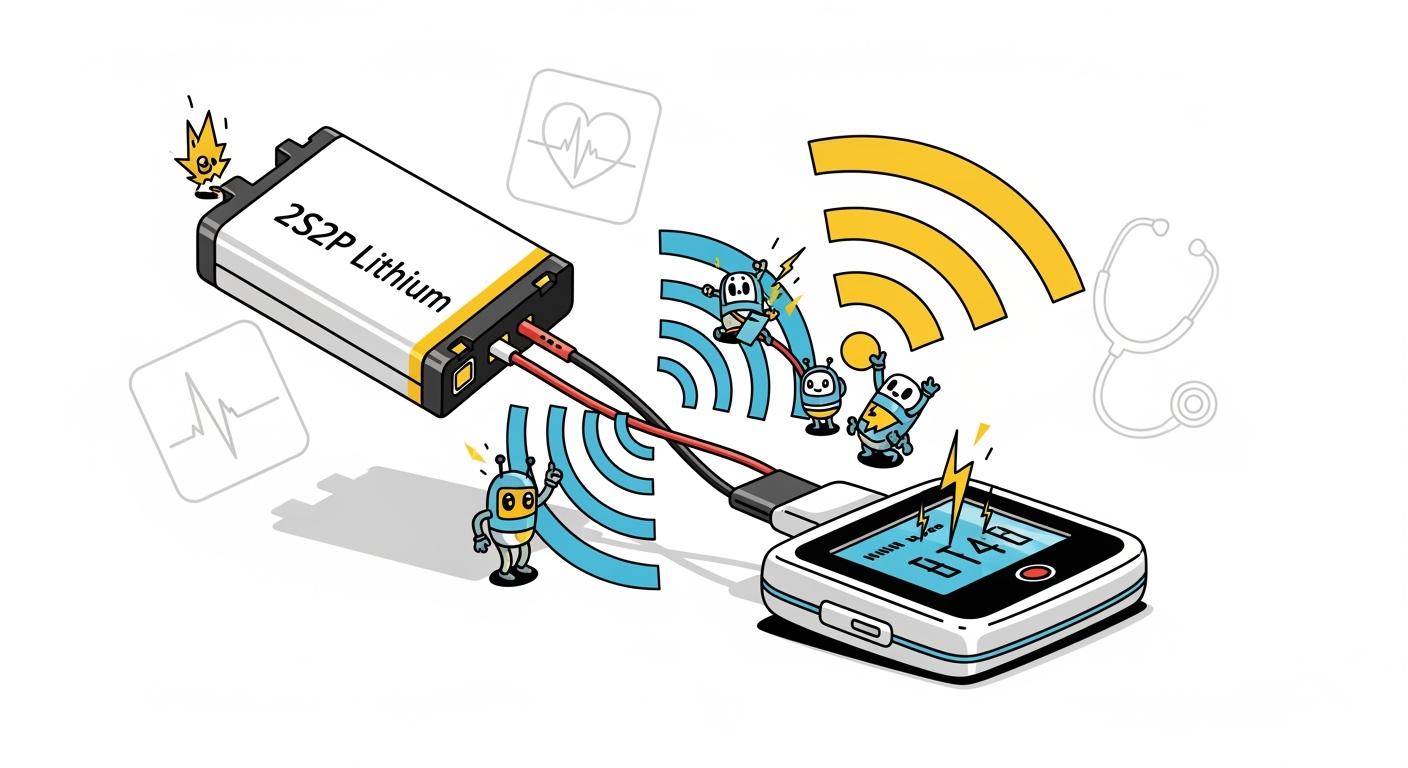
You need reliable wireless power for remote patient monitoring terminals. A 2S2P lithium battery pack delivers stable voltage, high capacity, and advanced safety with integrated BMS. This configuration supports continuous operation and safeguards critical medical data, ensuring your devices maintain uptime and protect patient safety.
Key Takeaways
A 2S2P lithium battery pack provides stable voltage and high capacity, ensuring reliable power for remote patient monitoring devices.
Integrating a Battery Management System (BMS) enhances safety by protecting against overcharging and overheating, crucial for medical applications.
Following best practices for battery maintenance, such as using a star topology for wiring and advanced monitoring techniques, improves device reliability and patient safety.
Part1: 2S2P Lithium Battery Pack Overview
1.1 Configuration and Voltage
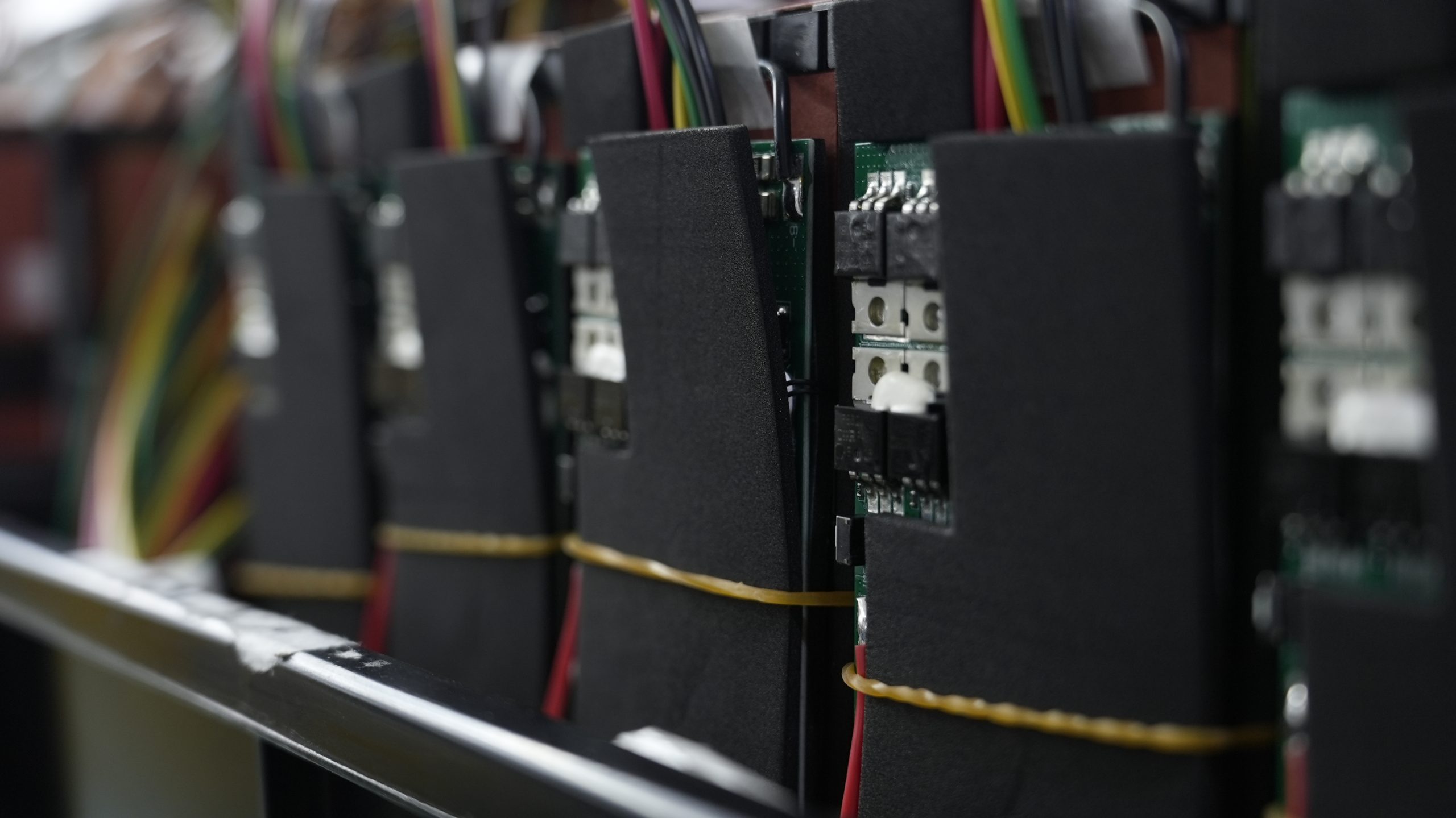
You need to understand the structure of a 2S2P Lithium Battery Pack to optimize your remote patient monitoring terminals. This configuration connects two cells in series and two in parallel, which increases both voltage and capacity. The typical voltage range for these packs is between 7.2V and 7.4V, with capacities from 5.7Ah to 7Ah. The following table summarizes common specifications:
Configuration | Voltage | Capacity |
|---|---|---|
2S2P | 7.4V | 7Ah |
2S2P | 7.2V | 5.7Ah |
This setup provides a balance between energy density and thermal stability, which is essential for maintaining voltage stability in medical applications. You should consider certified smart BMS modules that log battery events and support safe operation, further enhancing voltage stability.
1.2 Capacity and Application in Medical Devices
A 2S2P Lithium Battery Pack offers the capacity needed for continuous wireless operation in medical devices. You benefit from extended uptime, which is critical for remote patient monitoring terminals. These packs deliver reliable power for advanced sensors and wireless communication modules. The configuration supports high discharge rates, making it suitable for medical, robotics, and security applications.
1.3 Power Consumption Challenges
You face several challenges when managing wireless power consumption in medical devices. The table below outlines key issues:
Challenge | Description |
|---|---|
Regulatory Compliance | Medical device batteries must meet strict regulations from organizations like the FDA and ISO. |
Patient Safety | Batteries must be safe for human contact, free from contaminants. |
Reliability | High reliability is crucial as battery failure can have serious consequences in healthcare settings. |
Longevity | Batteries need to maintain performance over long periods for uninterrupted device operation. |
Environmental Impact | Consideration for proper disposal and recycling of hazardous materials is essential. |
Consistent power delivery is crucial for accurate device functioning. Voltage fluctuations can compromise diagnostic precision and operational reliability. Remote sensing technology compensates for cable resistance and load variations, ensuring your devices operate as intended. You should also review your sustainability practices and conflict minerals statement to align with industry standards.
Part2: Power Management and Implementation
2.1 Lithium Battery Pack Efficiency
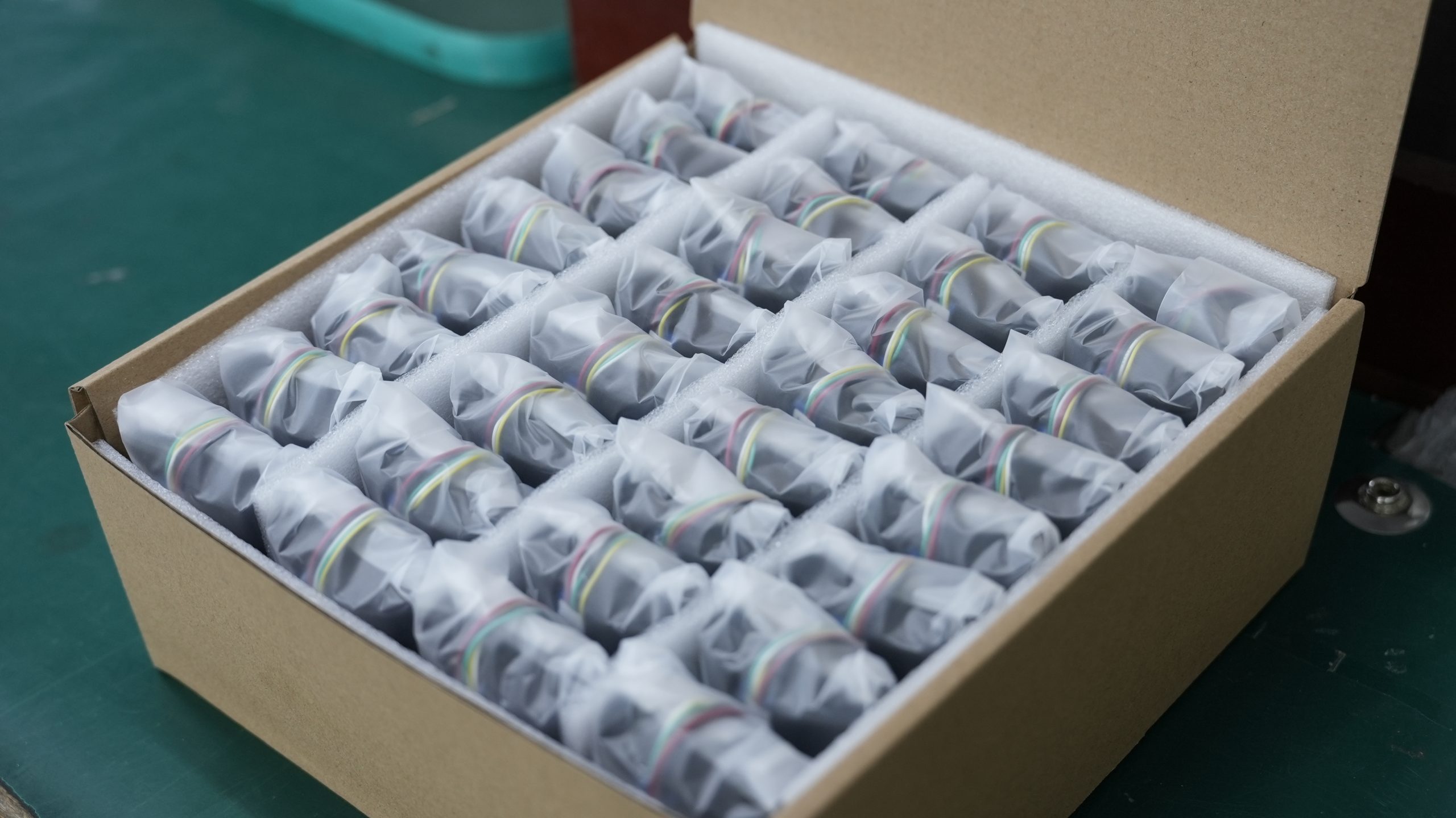
You need efficient power management to support wireless operation in remote patient monitoring terminals. The 2S2P Lithium Battery Pack delivers high discharge rates and stable voltage, which are essential for medical devices that require continuous data transmission. This configuration minimizes downtime and maximizes device reliability. You benefit from advanced chemistries such as lithium-ion and lithium polymer, which offer high energy density and long cycle life.
Chemistry | Nominal Voltage | Cycle Life | Safety | Energy Density | Medical Suitability |
|---|---|---|---|---|---|
Lithium Polymer (LiPo) | 3.6V | 700–1500 | High | Very High | Wearables & portable devices |
Li-ion | 7.4V | 4000–6000 mAh | Medium | N/A | Portable Patient Monitor (2S2P) |
You can see that lithium-ion packs, especially in 2S2P configuration, provide the voltage and capacity needed for portable patient monitors. Lithium polymer batteries excel in wearables and biosensors due to their compact size and safety profile.
2.2 Role of Battery Management Systems (BMS)
You rely on battery management systems (BMS) to ensure safe and reliable operation of your Lithium Battery Pack. The BMS protects against overvoltage, overload, and short circuit incidents. It uses resettable positive temperature coefficient (PTC) thermistors to limit current during overloads and semiconductor-based devices to guard against surge events and electrostatic discharge.
Safety Feature | Description |
|---|---|
Over-charge protection | Prevents the battery from being charged beyond its capacity. |
Over-discharge protection | Ensures the battery does not discharge below a safe level. |
Over-current protection | Limits the current to prevent overheating and damage. |
Short-circuit protection | Disconnects the battery in case of a short circuit. |
Thermal management | Manages temperature to prevent overheating. |
Cell balancing | Ensures all cells are charged and discharged evenly. |
Balancing functions | Extends battery lifespan by ensuring even charge distribution. |
PTC components | Protects against overheating by disconnecting the battery. |
NTC components | Monitors temperature and responds to abnormal conditions. |
Tip: You should always select a Lithium Battery Pack with an integrated BMS for medical devices. This ensures compliance with safety regulations and protects both patients and equipment.
2.3 Best Practices for Integration
You must follow best practices for charging, monitoring, and maintaining your Lithium Battery Pack to achieve optimal performance in medical devices. Start by preparing each battery for charging, ensuring all cells reach the same voltage and cleaning terminals for low-resistance connections. Use a star topology for wiring to avoid daisy chaining, and install Class T fuses for added safety. Select chargers with a constant current/constant voltage (CC/CV) profile rated for your battery bank’s total amp-hour capacity.
Step | Description |
|---|---|
Pre-Charge Preparation | Charge each battery individually to the same voltage (±0.1V). Clean terminals for low-resistance connections. |
Wiring the Bank | Use a star topology to connect batteries to a central busbar, avoiding daisy chaining. |
Fuse Installation | Attach a Class T fuse to each positive terminal for safety. |
Charger Setup | Use a charger with a CC/CV profile rated for the total Ah of the battery bank. |
Post-Charge Validation | Measure individual battery voltages; deviations >0.2V indicate issues with connections or aging batteries. |
You should implement advanced monitoring techniques to maintain battery health. Optical fiber-based temperature sensing detects hot spots more effectively than traditional thermocouples. Real-time monitoring and cell balancing algorithms extend battery life and improve performance consistency. Battery management systems estimate state of charge (SoC) and state of health (SoH) using intelligent algorithms, neural networks, and Kalman filters.
Optical fiber-based temperature sensing provides improved sensitivity to hot spots.
Advanced cell balancing algorithms enhance longevity and consistency.
Real-time monitoring enables predictive maintenance and reduces unexpected failures.
Instrumentation of Li-ion cells for core temperature measurement supports accurate modeling and analysis.
You can apply these best practices across medical, robotics, security, infrastructure, consumer electronics, and industrial sectors. By following these protocols, you achieve improved uptime, reliability, and patient safety in your remote patient monitoring terminals.
You gain reliable wireless power and enhanced safety with 2S2P lithium battery packs. These packs deliver longer operational times, energy savings, and flexible integration.
Benefit | Description |
|---|---|
Improved reliability | Ensures longer operational times for devices. |
Energy savings | Reduces overall power consumption. |
Flexibility in design | Allows integration into various device designs. |
Enhanced safety | Maintains safety standards with high power density. |
B2B buyers value on-time delivery, fast response, and high reorder rates.
Price should not be the sole decision driver.
Value-based selection improves device performance and patient safety.
FAQ
What advantages does a 2S2P lithium battery pack offer for medical devices?
You gain stable voltage, high energy density, and extended cycle life. Large Power provides custom battery solutions for medical, robotics, and security applications.
How does Large Power ensure safety and reliability in lithium battery packs?
You benefit from advanced Battery Management Systems (BMS) that protect against overvoltage, overload, and short circuits. Large Power integrates BMS in every lithium battery pack.
Can you compare lithium-ion and lithium polymer batteries for remote monitoring terminals?
Chemistry | Voltage | Energy Density | Cycle Life | Application Scenario |
|---|---|---|---|---|
Lithium-ion | 7.4V | High | 4000–6000 | |
Lithium Polymer | 3.6V | Very High | 700–1500 |
Tip: Choose lithium-ion for higher cycle life in medical and industrial sectors.


