

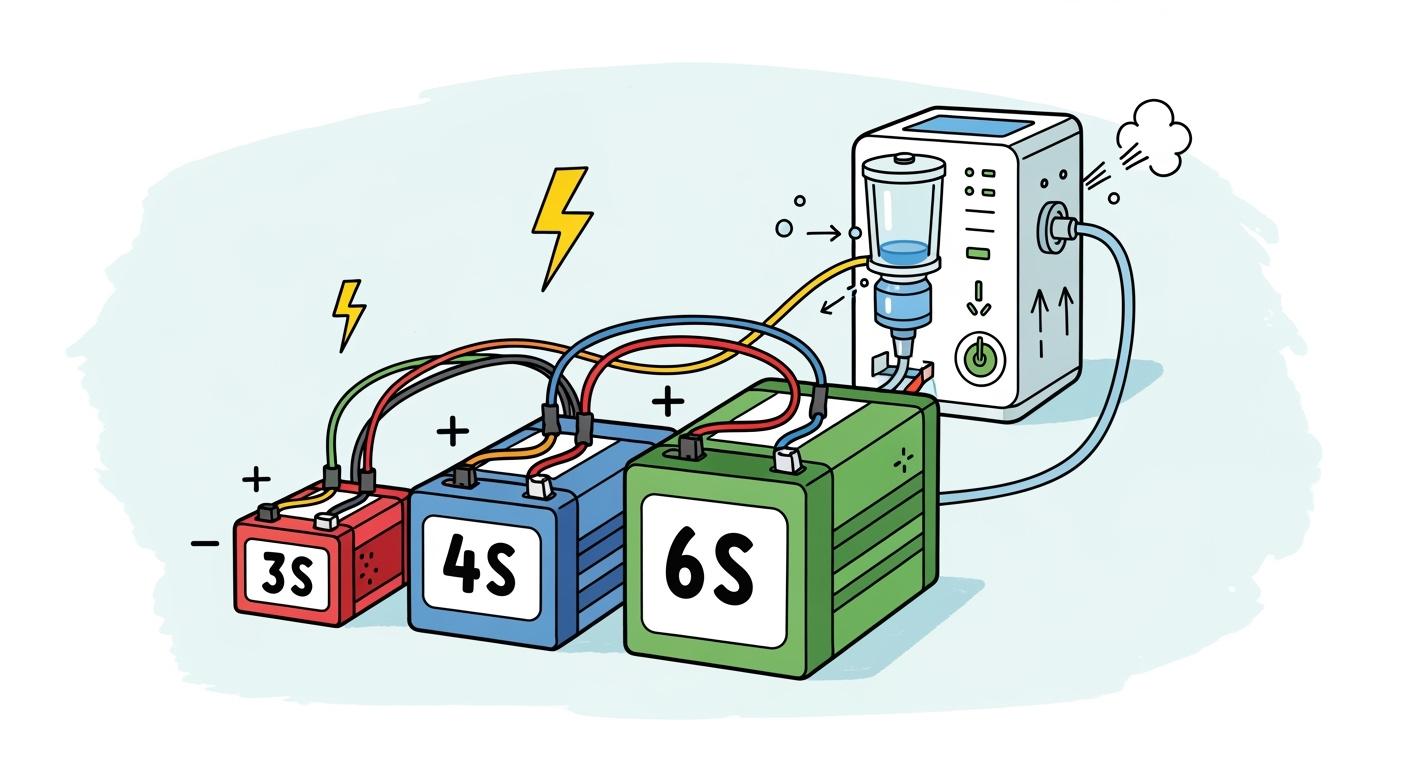
You often find that the 4S lithium battery pack matches oxygen concentrator needs best. It delivers the right voltage and stays under the FAA’s 160 Wh limit for safe air travel. When you address Battery Design Questions, prioritize voltage match, runtime, and compliance for reliable operation in medical applications.
Key Takeaways
Choose a 4S lithium battery pack for most oxygen concentrators. It provides the right voltage and meets FAA travel limits.
Consider battery capacity and runtime. Higher capacity packs extend usage time but may add weight, impacting portability.
Ensure safety features are in place. Look for overcharge protection and thermal management to maintain battery health and reliability.
Part 1: Battery Design Questions & Comparison

1.1 Voltage and Capacity
You need to address Battery Design Questions by comparing voltage and capacity across 3S, 4S, and 6S lithium packs. Each configuration delivers a different voltage range, which impacts compatibility with oxygen concentrators.
3S packs typically provide 11.1V (nominal), 4S packs deliver 14.8V, and 6S packs reach 22.2V.
Capacity options vary, but most medical devices require packs between 2,000 mAh and 6,000 mAh.
FAA regulations limit battery packs to 160 Wh for air travel, so you must calculate watt-hours based on voltage and capacity.
Battery Configuration | Voltage (Nominal) | Capacity Range | FAA Compliance |
|---|---|---|---|
3S | 11.1V | 2,000–6,000 mAh | Yes |
4S | 14.8V | 2,000–6,000 mAh | Yes |
6S | 22.2V | 2,000–6,000 mAh | Sometimes |
1.2 Size and Weight
Battery Design Questions often focus on size and weight, which affect portability and runtime. You must balance these factors for optimal device performance.
Battery Configuration | Battery Capacity | Weight |
|---|---|---|
Single Battery | 2,000 mAh | 3.3 lbs |
Double Battery | 4,000 mAh | 4 lbs |
Triple Battery | 6,000 mAh | 4.4 lbs |
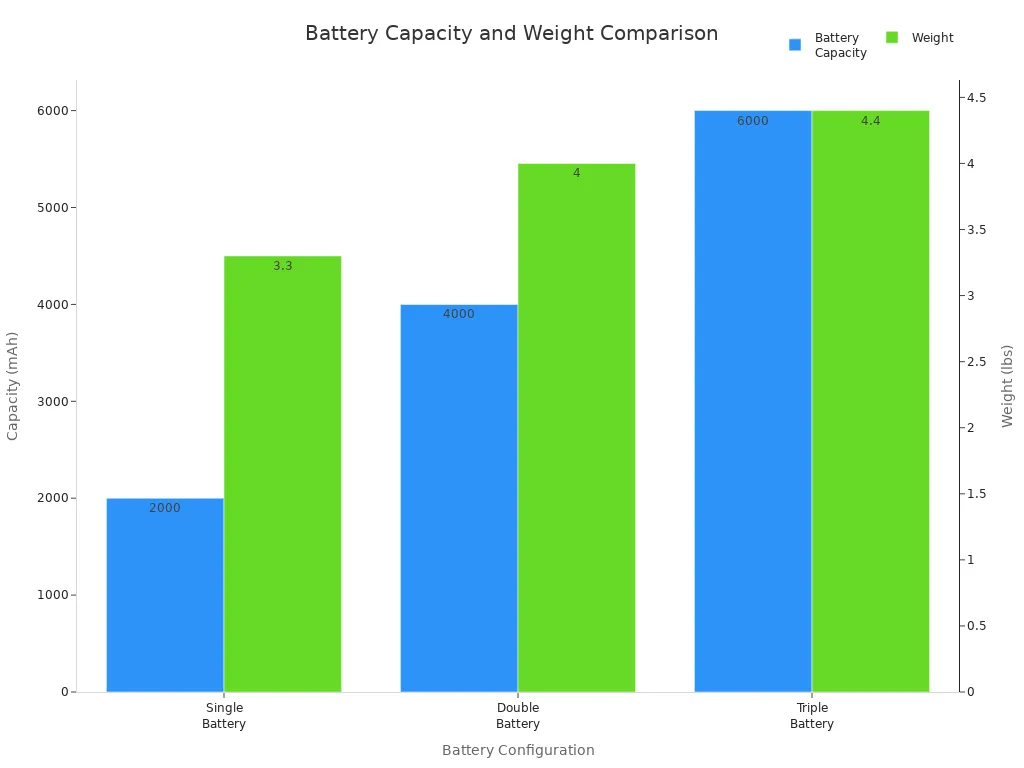
You see that lighter packs improve portability. Oxygen concentrators under 2 pounds offer high portability and longer battery life. Devices over 6 pounds provide moderate portability.
1.3 Pros and Cons
You must weigh the advantages and disadvantages of each lithium pack configuration when addressing Battery Design Questions.
Tip: Choose a configuration that matches device voltage and maximizes runtime without exceeding FAA limits.
Configuration | Pros | Cons |
|---|---|---|
3S | Lightweight, easy to carry, FAA compliant | Lower voltage, may not suit high-power devices |
4S | Optimal voltage for most concentrators, FAA compliant | Slightly heavier, but manageable |
6S | High voltage, supports high-flow devices | May exceed FAA limits, heavier |
You gain efficiency and energy density with lithium packs compared to NiMH. Lithium packs deliver higher cell voltage and specific energy, which supports longer runtimes and lighter designs. You must consider these factors for medical, industrial, and security applications.
Part 2: Key Selection Criteria
2.1 Voltage Matching
You must match the battery pack voltage to your oxygen concentrator’s requirements. Most portable oxygen concentrators operate best with a 4S lithium pack, which provides a nominal 14.8V. Some high-flow or stationary units may require a 6S pack (22.2V), while compact models can use a 3S pack (11.1V). Always check the device’s input voltage before selecting a pack.
A compatible Battery Management System (BMS) is essential. The BMS protects the lithium cells and the sensitive electronics inside medical devices. It prevents overcharge, over-discharge, and short circuits, ensuring long-term reliability. The table below summarizes key BMS features:
Feature | Description |
|---|---|
Overcharge & Over-discharge | Preserves the chemical health of the cells for years of daily use. |
Short Circuit & Over-current | Shields the oxygen generator’s sensitive compressor and electronic valves. |
Thermal Monitoring | Ensures the battery remains cool during continuous operation in carry bags. |
Tip: Always confirm that your BMS supports the chosen lithium chemistry, such as LiFePO4, NMC, or LCO, and matches the voltage and current profile of your device.
2.2 Runtime & Capacity
You need to consider how battery capacity affects operational duration. Higher capacity (measured in mAh or Wh) extends runtime, but actual performance depends on the oxygen flow rate and environmental conditions. The following table outlines the main factors:
Factor | Impact on Runtime |
|---|---|
Battery Life and Capacity | Higher energy capacity allows for longer runtimes, but actual duration depends on oxygen production draw. |
Oxygen Flow Rate | Higher flow rates increase power consumption, reducing runtime. |
Ambient Conditions | Extreme temperatures can reduce battery efficiency and runtime. |
Proper battery maintenance, such as avoiding full depletion and partial charging, helps preserve runtime.
Ambient conditions like temperature impact battery efficiency, with cold reducing runtime and heat increasing strain on the device.
When you address Battery Design Questions, always balance capacity with FAA watt-hour limits for air travel. For most medical applications, a 4S pack with 4,000–6,000 mAh offers a good compromise between runtime and compliance.
2.3 Portability Factors
Portability remains a top concern for oxygen concentrator users. Battery life is crucial—short runtimes limit mobility, while longer runtimes support active lifestyles. Lithium-ion batteries, such as NMC or LCO, offer high energy density, allowing some portable units to last up to 13 hours on a single charge.
Weight also plays a significant role. Lightweight packs, often under 2 pounds, are easier to carry, especially for older adults or those with mobility challenges. Heavier packs, sometimes exceeding 10 pounds, can hinder portability and user comfort.
Modern oxygen concentrators have evolved to be compact and easy to transport. The size, weight, and form factor of lithium battery packs directly influence user experience. Lighter and more compact designs allow you to carry your device easily, which is essential for frequent travelers or those who need mobility in medical, security, or industrial settings.
2.4 Safety & Reliability
Safety is non-negotiable in medical battery design. You must ensure that lithium battery packs comply with international standards and include robust safety features. The table below highlights essential protections:
Safety Feature | Function | Risk Mitigated | Recommended Standard |
|---|---|---|---|
Overheat Protection | Monitors temperature and cuts power if too high | Fire, battery swelling, component damage | UL 2054, IEC 62133 |
Short Circuit Protection | Stops current flow during electrical faults | Explosion, fire, equipment failure | UL 1973, UN 38.3 |
Low Voltage Warning | Alerts user before critical discharge | Unexpected shutdown, oxygen interruption | Manufacturer-specific thresholds |
Overcharge Protection | Prevents excessive charging beyond capacity | Cell degradation, leakage, overheating | IEC 61215, IEEE 1625 |
ISO 13485: Quality management standard for medical devices
IEC 62133: Safety requirements for portable sealed batteries
UL 2054 or UL 62133: Safety certification for battery packs
FDA 510(k) clearance: Required for many medical devices in the U.S.
CE Marking (EU MDR): Indicates conformity with health, safety, and environmental standards in Europe
Note: Always verify that your battery supplier provides documentation for these certifications. This ensures compliance and reduces risk in medical and infrastructure applications.
2.5 Charging Compatibility
Charger compatibility directly affects both safety and battery longevity. You must use chargers that match the voltage and current requirements of your lithium battery pack. Certified chargers with overcharge protection and thermal management features help prevent overheating and extend battery life.
Charger compatibility is essential for ensuring that lithium battery packs operate safely and last longer in oxygen concentrators.
Using chargers that are not certified or of low quality can lead to safety risks and affect the functionality of the device.
Proper voltage and current from the charger help prevent overheating and damage to the battery.
Features like overcharge protection and thermal management are vital for maintaining battery health over time.
When you address Battery Design Questions, always confirm that your charger is approved for the specific lithium chemistry and configuration you select. This step protects your investment and ensures reliable performance in medical and consumer electronics environments.
Part 3: Usage Scenarios & Recommendations
3.1 Portable Units
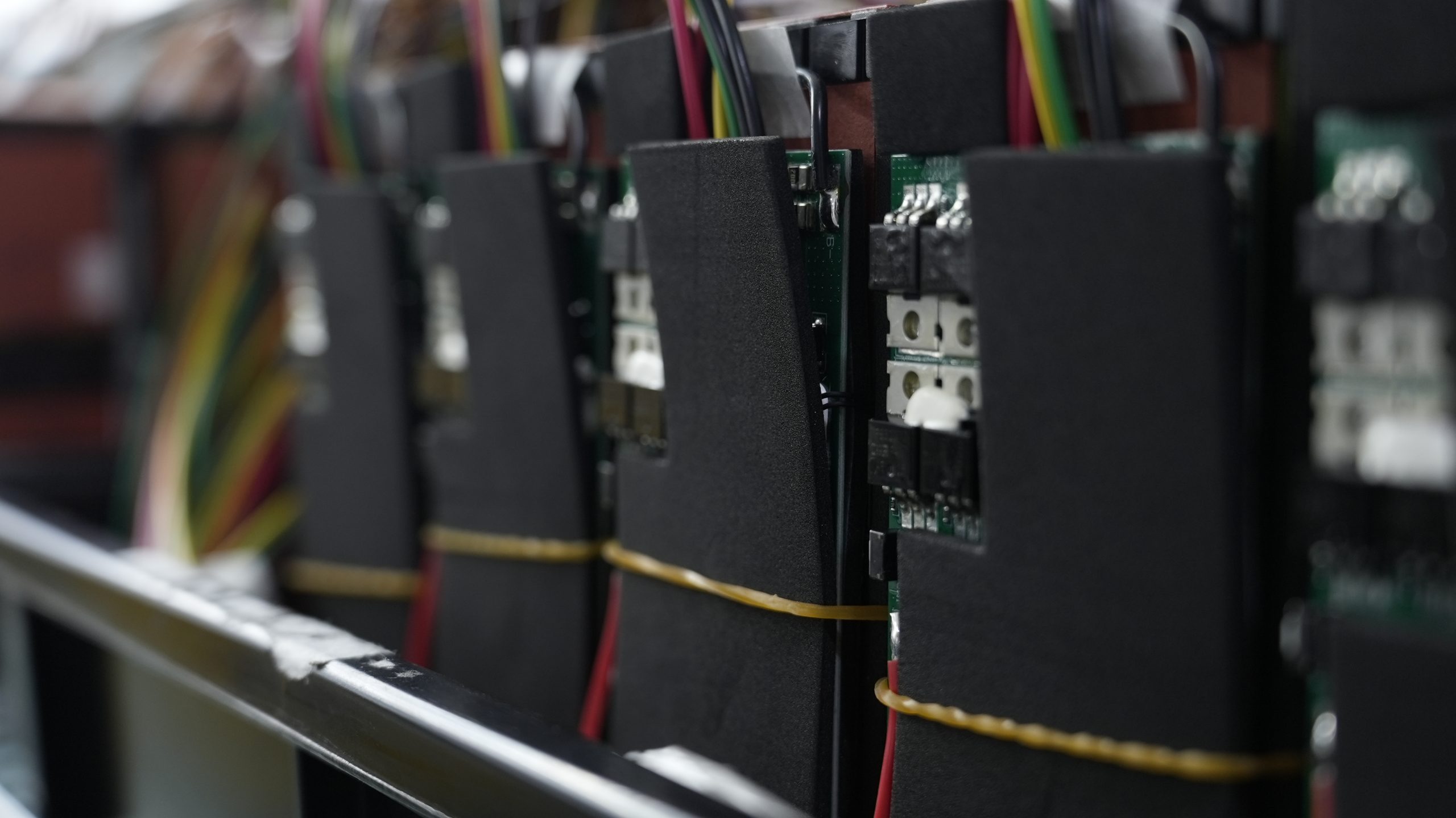
You need a battery solution that maximizes mobility and runtime for portable oxygen concentrators. Most units rely on lithium-ion chemistries like NMC or LCO due to their high energy density and lightweight design. You can choose between internal batteries, which keep the device compact, or external batteries, which extend runtime for travel or emergencies.
Internal batteries charge within the device, supporting seamless portability.
External batteries connect externally, allowing you to carry spares for longer trips.
Tip: Higher capacity batteries last longer but may add weight. Balance runtime with portability for optimal user experience in medical and consumer electronics applications (medical, consumer electronics).
3.2 Home Units
Home oxygen concentrators require reliable power for continuous operation. You often plug these units into electrical outlets, but lithium battery packs provide essential backup during outages.
Lithium-ion packs deliver long-lasting power and fast charging.
Digital displays help you monitor battery status.
Concentrator Load | UDPOWER C600 (596Wh) | UDPOWER S1200 (1191Wh) | UDPOWER S2400 (2083Wh) |
|---|---|---|---|
50W | 10.1 hrs | 20.2 hrs | 35.4 hrs |
85W | 6.0 hrs | 11.9 hrs | 20.8 hrs |
150W | 3.4 hrs | 6.7 hrs | 11.8 hrs |
250W | 2.0 hrs | 4.0 hrs | 7.1 hrs |
350W | 1.4 hrs | 2.9 hrs | 5.1 hrs |
585W | N/A | 1.7 hrs | 3.0 hrs |
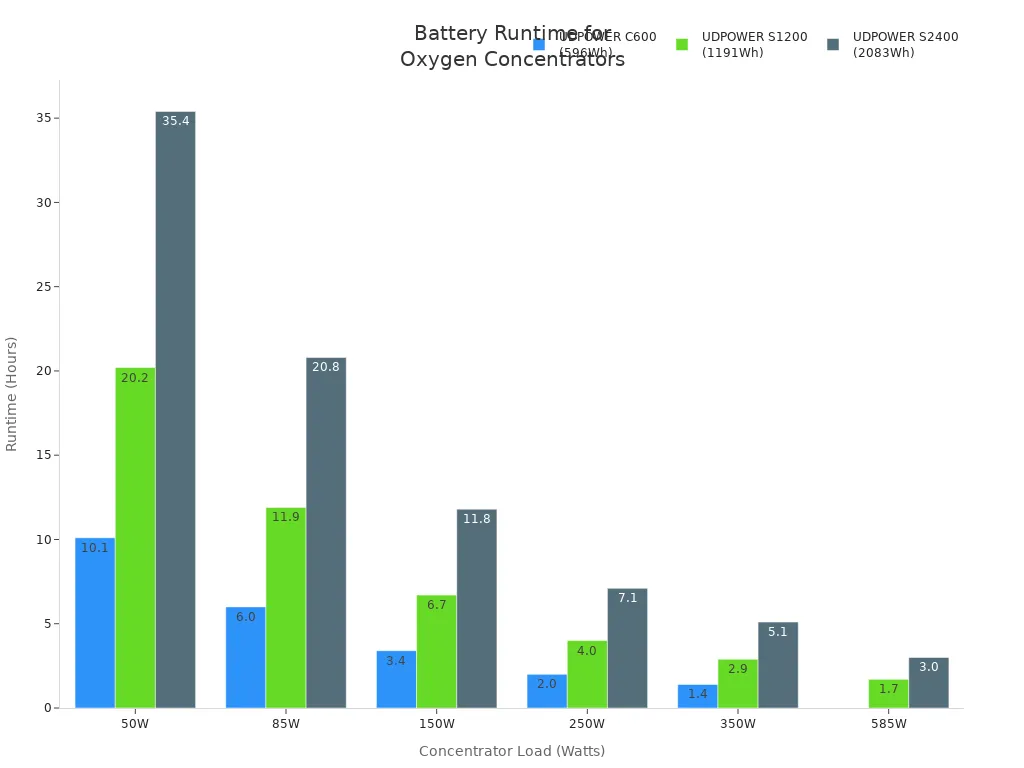
Note: Lithium battery packs ensure continuous therapy during outages, supporting infrastructure and medical reliability.
3.3 High-Flow Devices
High-flow oxygen concentrators demand batteries with high energy density and robust reliability. You should select modular multi-cell lithium packs, such as 8-cell or 16-cell configurations, to double runtime and support extended use.
Specialized lithium-ion packs, including Li-Po and NMC, offer cycle longevity and flexible form factors.
Dual battery systems enable hot-swapping, minimizing downtime.
Feature | High-Flow Models | Standard Models |
|---|---|---|
Oxygen Output | High (8 pulse settings) | Moderate |
Battery Life | Shorter, higher output | Longer |
Portability | Compact, lightweight | Lightweight |
Selection Criteria | Flow rate, performance | Battery life, affordability |
For custom battery solutions tailored to your application, consult with experts.
You achieve the best results with a 4S lithium pack for most medical oxygen concentrators, balancing voltage, capacity, and FAA compliance. Use this checklist:
Voltage match
Runtime
Safety features
Size/weight
BMS compatibility
Charger fit
Regulatory Requirement | Impact on Battery Pack Selection |
|---|---|
FAA criteria | Ensures safe, compliant travel |
IEC 60601, ISO 13485 | Guarantees medical safety |
Consult battery suppliers or engineers for custom battery solutions and regulatory compliance.
FAQ
What lithium battery chemistry suits oxygen concentrators best?
You achieve optimal performance with LiFePO4 or NMC packs. These chemistries offer high energy density, stable platform voltage, and long cycle life.
How does Large Power support custom battery solutions?
You receive tailored lithium battery packs from Large Power. The engineering team designs solutions for medical, robotics, security, infrastructure, consumer electronics, and industrial sectors.
What factors affect FAA compliance for lithium battery packs?
You must select packs under 160 Wh. Platform voltage and capacity determine compliance. Large Power ensures all medical lithium packs meet FAA and safety standards.


