

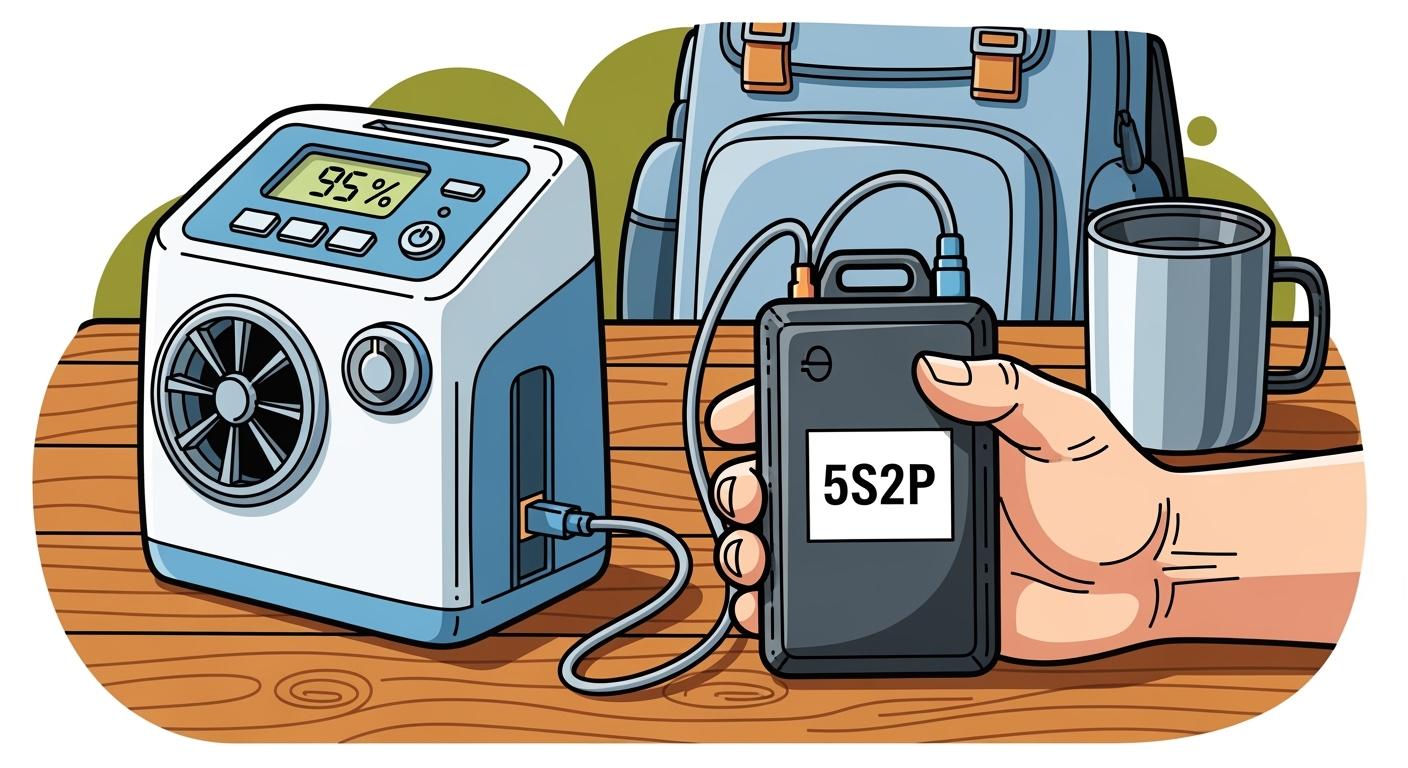
You need reliable backup power for your oxygen concentrator, especially in critical environments. Safety, compliance, and supplier reliability matter when choosing lithium battery solutions. The table below highlights top concerns for B2B buyers:
Concern Type | Description |
|---|---|
Cost | Evaluate upfront cost and Total Cost of Ownership. |
Supplier Reliability | Assess supplier quality and support capabilities. |
Compliance and Safety Standards | Ensure batteries meet healthcare safety standards. |
Key Takeaways
5S2P lithium-ion battery packs provide reliable backup power for oxygen concentrators, ensuring consistent operation during outages or travel.
Safety is crucial; always verify that battery packs meet healthcare standards and include advanced battery management systems for protection.
Understanding runtime calculations helps you plan for emergencies; use the formula to estimate how long your battery will last based on device power consumption.
Part1: 5S2P Lithium-Ion Battery Packs for Backup Power

1.1 Battery Configuration and Key Specs
You rely on backup power to keep your concentrator running in critical situations. The 5S2P lithium-ion battery packs deliver reliable performance by combining five cells in series and two in parallel. This configuration boosts voltage and capacity, making these packs ideal for portable medical devices. Review the technical specifications below:
Specification | Value |
|---|---|
Nominal Voltage | 18.5V |
Full Charge Voltage | 21.0V |
Capacity | 4,000mAh (4.0Ah) |
Energy Storage | 74 Watt-hours (Wh) |
Continuous Discharge Current | 4.0A typical, up to 8.0A peak |
Charge Current | 2A–4A (0.5C to 1C) |
These packs provide enough power for extended use, supporting your devices during outages or travel.
1.2 Why 5S2P Is Ideal for Medical Devices
You need reliable backup power that meets strict requirements. The 5S2P lithium-ion battery packs offer high energy density and stable voltage, which ensures consistent operation for medical devices. You benefit from lightweight packs that simplify portability. These packs operate within a safe temperature range of 0°C to 45°C (32°F to 113°F), so you avoid performance issues in most environments. You can trust these packs for medical, robotics, and security applications.
1.3 Safety, BMS, and Compliance
You must prioritize safety when selecting backup power. The 5S2P lithium-ion battery packs include advanced battery management systems (BMS) that monitor temperature, voltage, and current. These packs feature thermal protection, fault condition safety, leakage prevention, and flammability mitigation. You ensure compliance with FDA, IEC 60601, UL 2054, UL 1642, and UN 38.3 standards. FAA regulations limit lithium-ion battery packs to 100 watt-hours for air travel. You must store packs at a state of charge below 30% and protect them from short circuits. You avoid regulatory delays by using packs that meet consensus standards and maintain traceability with serial numbers and lot tracking.
Tip: Always verify your battery packs meet all regulatory and safety standards before deploying them in medical devices.
Part2: Setup, Runtime, and Practical Use
2.1 Connecting Battery Packs to Oxygen Concentrators
You need a reliable connection between your battery pack and oxygen concentrator to ensure uninterrupted power for critical applications. Begin by verifying the voltage and connector type match your device specifications. Most portable oxygen concentrators accept 18.5V input, which aligns with the 5S2P lithium-ion battery pack platform voltage. Use quick-connect terminals for fast installation and removal, especially in medical, robotics, and security applications. Secure the battery in the designated compartment and lock it to prevent accidental disconnection. If your device requires AC input, select a pure sine wave inverter rated for the concentrator’s wattage and surge requirements. Always check the inverter’s compatibility with lithium-ion battery packs to avoid power loss or device malfunction.
Tip: Quick-connect terminals simplify installation for users with limited dexterity and reduce setup time in industrial and infrastructure applications.
2.2 Calculating Runtime and Power Needs
You must estimate runtime to plan for emergencies and daily use. Calculate runtime using the formula:
Runtime (hours) = Battery Capacity (Wh) ÷ Device Power Consumption (W)
For example, a 74Wh battery powering a concentrator drawing 20W provides approximately 3.7 hours of operation. Device power consumption varies based on flow rates, oxygen concentration, and operating environment. Review the table below for factors affecting power consumption:
Factor | Effect on Power Consumption |
|---|---|
Flow Rates | Higher flow rates lead to increased energy consumption. |
Oxygen Concentration | Higher concentration settings require more energy to operate. |
Operating Environment | Extreme temperatures and high humidity can increase power usage. |
You should consult your device manual or request a custom consultation to ensure compatibility with your specific applications. Use runtime tables to compare different devices and battery packs for medical, consumer electronics, and industrial applications.
2.3 Using Inverters and Ensuring Compatibility
You may need an inverter to convert DC battery output to AC for certain devices. Choose a pure sine wave inverter with a continuous power rating above your concentrator’s maximum draw. Account for surge power during startup. Verify the inverter supports lithium-ion battery chemistry and includes safety features such as overcurrent and thermal protection. Test the setup before deployment in medical, robotics, or security applications. Use compatibility tables to match inverters with battery packs and devices for infrastructure and industrial applications.
Note: Always check inverter specifications and ensure compliance with FAA and IEC standards for portable medical devices.
2.4 Portability, Storage, and Emergency Use
You maximize portability by selecting lightweight lithium-ion battery packs with compact form factors. Features like handles, straps, and ergonomic design improve transportability for medical and consumer electronics applications. Review the strategies below:
Strategy | Benefit |
|---|---|
Weight | Lithium-ion packs are lighter than lead-acid alternatives, improving portability. |
Size & Form Factor | Compact designs fit easily in bags or under seats, enhancing transportability. |
Quick-Connect Terminals | Simplifies installation and removal for users with limited dexterity. |
Airline Compliance | Ensures battery meets FAA regulations for travel. |
Ergonomic Design | Features like handles and straps improve ease of transport. |
Estimated Runtime | Understanding runtime helps in planning for daily use. |
Recharge Time | High-quality batteries recharge quickly, minimizing downtime. |
Pass-Through Charging | Allows use while charging, ideal for various settings. |
Solar Charging Options | Provides flexibility for outdoor use or emergencies. |
Battery Management System | Optimizes charging and extends battery lifespan. |
Store your battery packs in a cool, dry environment between 15°C and 25°C. Maintain a state of charge between 20% and 80% for long-term storage. Avoid high heat and freezing conditions to protect internal chemistry. Use smart chargers and avoid deep discharging below 2.5V per cell. Ensure protective casing to prevent short circuits and impacts.
Guideline | Description |
|---|---|
Storage Conditions | Store in a cool, dry environment, away from sunlight and moisture (15°C to 25°C). |
State of Charge (SoC) | Maintain charge between 20% and 80% for long-term storage. |
Temperature Exposure | Avoid high heat and freezing conditions to protect internal chemistry. |
Charge Management | Use smart chargers and avoid deep discharging below 2.5V per cell. |
Physical Protection | Ensure protective casing to prevent short circuits and impacts. |
Alert: Proper storage extends battery lifespan and ensures safe operation in emergency applications.
2.5 Troubleshooting and Common Issues
You must address common issues to maintain reliable power for your devices. Follow these troubleshooting steps:
Step | Action | Common Issues |
|---|---|---|
Installation | Secure battery in compartment | Forgetting to lock compartment |
Charging | Connect to power source | Overcharging, using incorrect voltage |
Power Settings | Select battery mode and set flow rate | Incorrect mode selection |
Monitoring | Check battery level frequently | Ignoring warning lights |
Patient Use | Deliver prescribed oxygen safely | Adjusting flow without guidance |
Check battery level indicators and warning lights regularly. Use the prescribed flow rate and avoid adjusting settings without guidance. Secure the battery compartment and verify connections before use. If you encounter issues, consult your supplier or request a custom consultation for support in medical, robotics, security, infrastructure, consumer electronics, and industrial applications.
Tip: Routine monitoring and proper setup prevent most power-related issues in portable applications.
You gain significant advantages by choosing 5S2P lithium-ion battery packs as backup power for oxygen concentrators and other medical devices. These solutions deliver strong performance, long cycle life, and robust BMS protection. You ensure safety and compliance by selecting solutions from reliable suppliers with medical electronics experience. Review the key considerations for B2B buyers below:
Consideration | Description |
|---|---|
Safety | Aluminum plastic soft packaging reduces risks. |
Performance | High current discharge capability supports demanding solutions. |
Customization | Flexible thickness and shape fit various solutions. |
Supplier Reliability | Experienced suppliers meet industry standards for critical solutions. |
Long Cycle Life | Up to 5000 cycles for dependable solutions. |
Strong BMS | Protection against overcharging and temperature extremes. |
Note: Proper setup and regular monitoring maximize the reliability of your battery solutions in medical, robotics, and industrial applications.
FAQ
What makes lithium 5S2P battery packs suitable for medical monitoring devices and wearable medical electronics?
You benefit from high energy density, stable voltage output, and long battery life. These features ensure a reliable energy supply for medical monitoring devices and wearable medical electronics in demanding environments.
How do I select the right battery pack voltages and capacity for a portable power station or backup power supply?
You should match battery pack voltages and capacity to your device’s requirements. Large Power offers custom battery consultation to help you confidently use medical devices with long operational time and long life.
Can lithium battery packs provide long life and support for industrial, robotics, and security applications?
Yes. Lithium battery packs deliver long cycle life, long operational time, and reliable backup power supply. You can deploy them in industrial, robotics, and security scenarios for consistent performance.


