

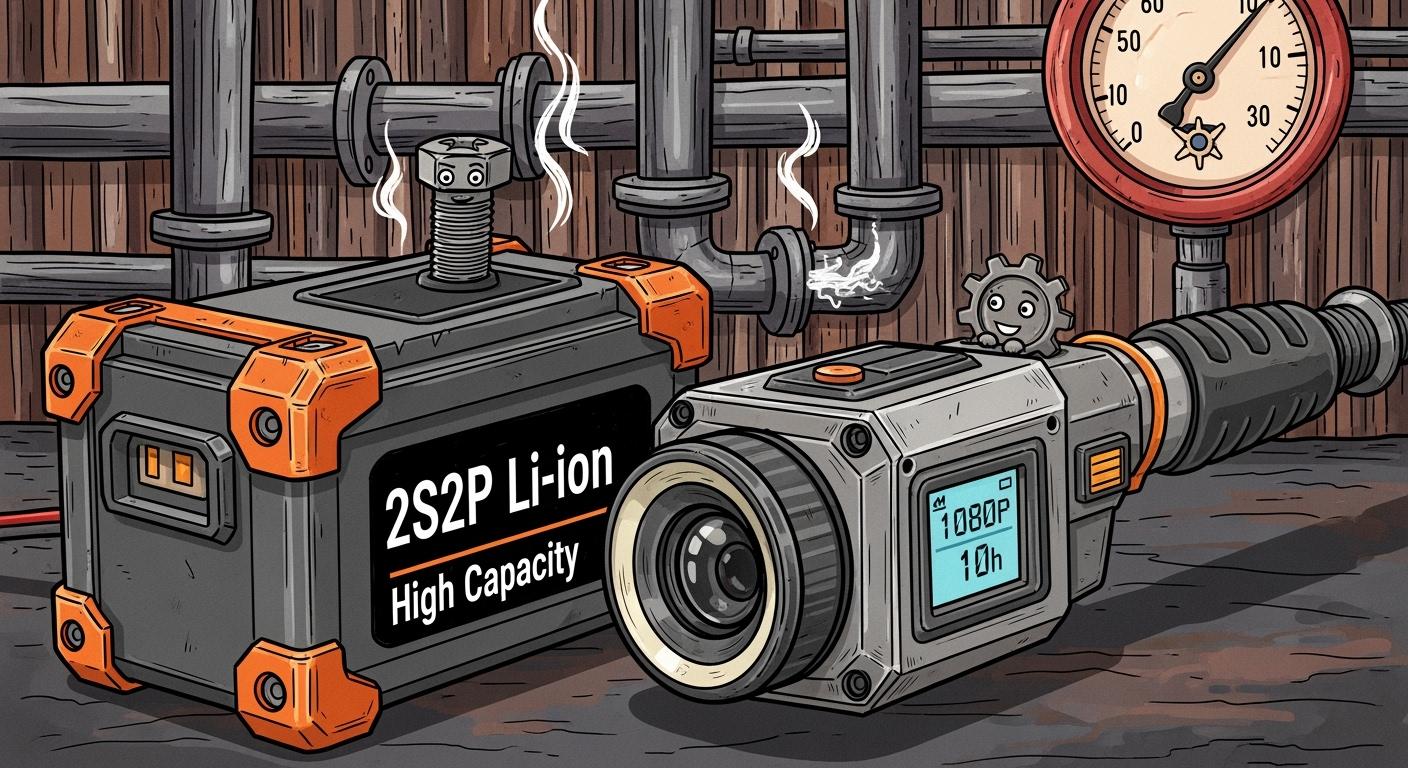
Industrial borescopes and inspection cameras require compact battery packs that can deliver stable power throughout demanding field inspections. A properly designed 2S2P battery pack combines two cells in series to increase voltage and two parallel strings to increase capacity and current capability. The actual voltage, runtime, and energy capacity depend on the selected cell chemistry and specifications.
NMC lithium-ion cells provide high energy density for lightweight, portable inspection equipment, while LiFePO4 batteries offer excellent thermal stability and extended cycle life. Battery selection should also account for operating temperature, peak current, charging time, enclosure protection, equipment dimensions, and required runtime.
By balancing capacity, safety, weight, and environmental durability, you can develop a reliable power system for borescopes and other industrial inspection equipment used in confined or challenging environments.
Key Takeaways
Choose 2S2P battery configurations for higher voltage and capacity, ensuring stable power for industrial tools.
Select batteries with a 10-hour runtime to minimize downtime and enhance productivity during long inspections.
Prioritize high energy density batteries to improve portability and reduce the weight of your inspection equipment.
Ensure battery compatibility with your devices by checking voltage, size, and chemistry requirements for optimal performance.
Look for safety certifications like UN38.3 and UL to guarantee compliance and protect your equipment and operators.
Part1: High-Capacity Li-ion Batteries for Industrial Borescopes

1.1 2S2P Configuration Benefits
You need reliable power for industrial borescopes and inspection cameras. The 2S2P configuration combines two lithium cells in series and two in parallel. This setup increases both voltage and capacity. You get a stable power supply for demanding industrial applications. The 2S2P arrangement supports high energy density and high power output. It also helps maintain consistent performance during long inspections. Many industrial devices use this configuration to balance battery size and runtime. You can trust the 2S2P design to deliver the performance your equipment requires.
1.2 10-Hour Runtime
Industrial inspections often last several hours. You need a battery that can support a full shift without interruption. A 10-hour runtime ensures your borescope or inspection camera stays operational in the field. This extended runtime reduces downtime and increases productivity. You avoid frequent battery changes, which can disrupt critical industrial applications. Lithium batteries with high capacity provide the endurance needed for continuous performance. You can focus on inspection tasks, knowing your equipment will not lose power.
1.3 Energy Density and Portability
You want your industrial inspection tools to be portable and easy to handle. High energy density in lithium batteries makes this possible. Typical energy density values for li-ion batteries in portable industrial devices range from 160 to 220 Wh/kg. Higher energy density means you get more power without adding extra weight or bulk. This feature improves portability and user comfort during long industrial applications.
High energy density reduces device weight.
Compact battery packs fit easily into handheld inspection cameras.
You can carry your equipment to remote or hard-to-reach industrial sites.
Tip: Choose lithium batteries with high energy density to maximize both performance and portability for your industrial applications.
You benefit from advanced battery technology that supports demanding industrial environments. High-capacity li-ion batteries ensure your inspection cameras deliver reliable performance, even in harsh conditions.
Part2: Application Requirements
2.1 1080p Power Needs
You must assess the power requirements for 1080p video in your industrial applications. High-definition video places a heavy demand on battery capacity and performance. Industrial borescopes and inspection cameras need stable voltage and high energy output to support clear imaging. Different industries have unique requirements for battery capacity and runtime. The table below compares typical power needs for 1080p video across several applications:
Industry | Typical Battery Capacity (Wh) | Runtime Requirement (Hours) | Notes |
|---|---|---|---|
Medical | 20–30 | 8–10 | Continuous monitoring, high reliability |
Robotics | 25–40 | 6–12 | High discharge rate, frequent cycles |
Security System | 15–25 | 10–24 | Long standby, moderate discharge |
Infrastructure | 20–35 | 8–10 | Field inspections, rugged use |
Consumer Electronics | 10–20 | 4–8 | Lightweight, portable |
Industrial | 25–40 | 10–12 | Extended runtime, harsh environments |
You should select a lithium battery with enough capacity to meet your runtime requirements. For industrial applications, you need a battery that supports frequent charge and discharge cycles without losing performance.
2.2 Environmental Challenges
Industrial environments create many challenges for battery performance and safety. You must consider how temperature, vibration, and moisture affect lithium battery operation in your applications.
High temperatures can accelerate degradation of li-ion batteries.
Moisture can damage internal components, increasing internal resistance and reducing discharge capacity.
Vibration can cause mechanical stress, impacting battery stability and performance.
Severe weather conditions can accelerate battery degradation.
High humidity can lead to increased internal resistance and lower capacity.
Water ingress can pose risks to battery safety and performance.
You should manage temperature to prevent lithium plating and electrode damage. Use manufacturer-recommended chargers and maintain low discharge rates for safety. Optimize depth of discharge to extend battery cycle life and reduce costs in industrial applications.
2.3 Equipment Compatibility
You must ensure your battery meets the requirements of your industrial borescope or inspection camera. Compatibility affects both performance and safety. Check the following:
Voltage and current requirements for your equipment.
Supported lithium battery chemistries (LiFePO4, NMC, LCO, LMO).
Physical size and connector type.
Integration with battery management systems for cycle tracking and protection.
You should verify that your battery supports the expected number of cycles and maintains capacity throughout its service life. Proper compatibility ensures reliable performance in all industrial applications.
Part3: Battery Selection Criteria
3.1 Capacity and Discharge Rate
You must select batteries that match the requirements of your industrial borescopes and inspection cameras. Capacity and discharge rate determine how long your device operates and how much power it delivers. Industrial applications demand high capacity and reliable discharge rates to support continuous operation and high-definition imaging. You can compare popular cell models using the table below:
Cell Model | Max Capacity | Continuous Discharge | Best Strategic Use |
|---|---|---|---|
Mottcell 18650-35E | 3500mAh | 2C (8A – 10A) | Medical Sensors, GPS Trackers |
Mottcell 18650-26V | 2600mAh | 10C (25A – 30A) | Power Tools, Vacuum Cleaners |
Mottcell 21700-50E | 5000mAh | 3C (15A) | E-mobility, Long-range Drones |
Mottcell 21700-40P | 4000mAh | 10C (40A) | High-drain Industrial Robotics |
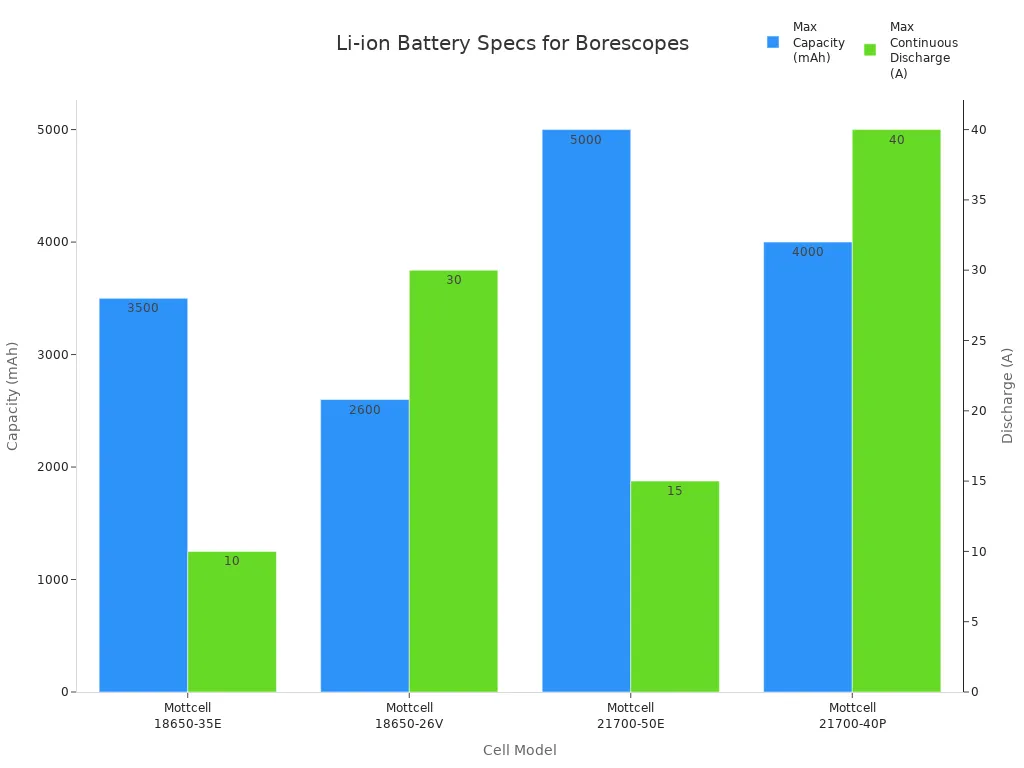
You must choose lithium battery solutions that deliver the right balance of capacity and discharge rate. Extended capacity batteries support longer runtime and higher performance. Industrial devices often require batteries with high discharge rates to power motors, sensors, and cameras. You must match battery performance characteristics to your application requirements.
3.2 Cycle Life and Longevity
You need batteries that last through many charge and discharge cycles. Cycle life measures how many times you can recharge a battery before it loses capacity. Industrial borescopes and inspection cameras benefit from lithium battery solutions with long cycle life. LiFePO4 batteries can reach up to 3,500 cycles while retaining 80% of their original capacity. Traditional lithium-ion batteries, such as NMC, LCO, and LMO, typically offer 500 to 1,500 cycles.
Chemistry | Platform Voltage | Energy Density (Wh/kg) | Typical Cycle Life | Application Scenario |
|---|---|---|---|---|
LiFePO4 | 3.2V | 90-140 | 3,500 | Industrial, Medical, Marine |
NMC | 3.7V | 150-220 | 1,000 | Robotics, E-mobility, Power Tools |
LCO | 3.7V | 150-200 | 800 | Consumer Electronics, Cameras |
LMO | 3.7V | 100-150 | 1,000 | Power Tools, Security Systems |
You must consider factors that affect battery longevity in harsh industrial environments:
Sealants, adhesives, and structural components protect batteries from severe weather.
Battery pack assembly and enclosure design shield cells from environmental stress.
Lithium-ion batteries perform best between 15°C and 35°C.
High temperatures accelerate degradation and increase safety risks.
Moisture control prevents damage to the SEI film and maintains discharge capacity.
Store and operate batteries in dry, clean environments for optimal performance.
Fast charging reduces battery lifetime.
Store batteries at partial charge (40-60%) in cool conditions to extend life.
Tip: Choose lithium battery solutions with high cycle life and robust enclosure design to maximize longevity in industrial applications.
3.3 Safety Features
You must meet strict safety requirements when selecting batteries for industrial borescopes and inspection cameras. Safety features protect your equipment and operators from hazards. Overcharge protection and thermal management are essential for preventing failures.
Safety Feature | Description |
|---|---|
UN38.3 | Required for transportation safety of lithium batteries. |
UL/CSA Standards | Necessary for compliance in North American installations. |
IEC Certifications | Ensures compliance with safety standards in the European market. |
ABYC E-13 | Specific requirement for marine applications, ensuring safety in that industry. |
Testing Requirements | Includes altitude simulation, thermal cycling, vibration, shock, external short circuit, impact, overcharge, and forced discharge conditions. |
You must use certified lithium battery chargers that monitor cell voltage and prevent overcharging. Thermal management prevents thermal runaway, which can cause catastrophic failures. Thermal cameras detect early signs of overheating by converting infrared radiation into temperature data for real-time monitoring. This technology helps you take early action to reduce risks of fires and explosions.
Note: Always verify that your lithium battery solutions meet all safety requirements and certifications for your industry.
3.4 Weight and Size
You must balance capacity with portability to ensure usability in industrial applications. Weight and size directly affect how easy it is to handle and transport your inspection equipment. A standard 1 kWh lithium-ion battery weighs between 10 to 15 kg (22 to 33 lbs). Lighter batteries improve efficiency and performance in portable devices.
Lighter lithium battery solutions increase usability in mobile and wearable tech. In the automotive sector, reducing battery weight improves efficiency and extends range. Industrial borescopes and inspection cameras benefit from compact battery packs that fit easily into handheld devices.
Choose batteries with high energy density to reduce weight.
Select compact designs for easier integration into industrial equipment.
Balance extended capacity batteries with portability for optimal performance.
Callout: Custom battery solutions can help you meet unique requirements for weight, size, and capacity in industrial applications.
You must evaluate battery performance characteristics, safety requirements, and compatibility with your equipment. Selecting the right lithium battery solutions ensures reliable operation and safety in demanding industrial environments.
Part4: Battery Pack Design
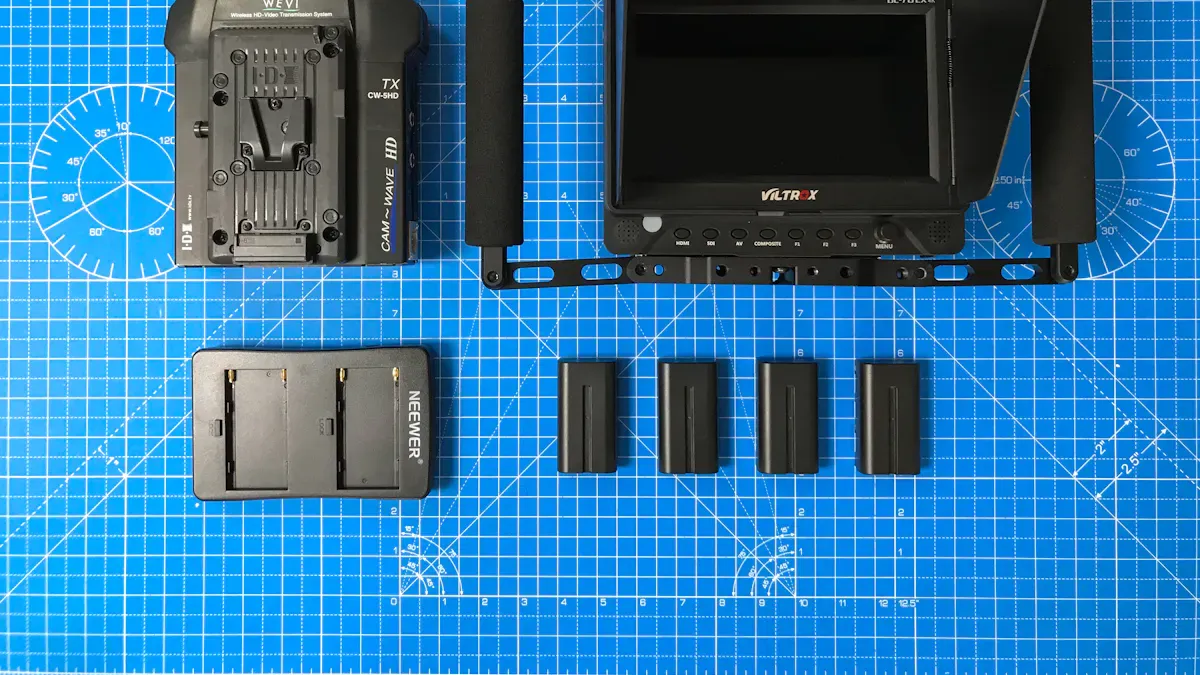
4.1 2S2P Structure
You need a battery pack design that meets the requirements of industrial borescopes and inspection cameras. The 2S2P structure connects two lithium cells in series and two in parallel. This arrangement increases both voltage and capacity. You get a battery pack that delivers stable power and meets the requirements for long runtime. The 2S2P structure supports high energy density and fits into compact devices. You can use this design with LiFePO4, NMC, LCO, or LMO chemistries. Each chemistry offers different platform voltage, energy density, and cycle life. The table below compares these chemistries for your battery pack:
Chemistry | Platform Voltage | Energy Density (Wh/kg) | Typical Cycle Life |
|---|---|---|---|
LiFePO4 | 3.2V | 90-140 | 3,500 |
NMC | 3.7V | 150-220 | 1,000 |
LCO | 3.7V | 150-200 | 800 |
LMO | 3.7V | 100-150 | 1,000 |
You should select the chemistry that matches your requirements for cycle life, energy density, and safety. Custom battery pack development allows you to tailor the 2S2P structure to your specific requirements.
4.2 Battery Management System (BMS)
You must include a battery management system in your battery pack design. The battery management system monitors operational parameters and predicts battery health. It prevents hazardous conditions by managing energy storage and transfer. You get protection against overcharging and undercharging. The battery management system also assesses faults, which increases the battery’s lifespan and operational efficiency. You can learn more about BMS in our Battery Management System Guide. Advanced battery management systems provide real-time data and improve safety for your lithium battery pack. You should always match the BMS to your application’s requirements for voltage, current, and safety.
Tip: Use a battery management system that supports your custom battery pack development and meets all industrial requirements.
4.3 Mechanical Protection
You must protect your battery pack from harsh environments. Mechanical protection shields the lithium cells from vibration, moisture, and impact. You should use strong enclosures, sealants, and shock-absorbing materials. These features help your battery pack meet the requirements for industrial use. Custom battery pack development lets you design enclosures that fit your equipment and meet all requirements for durability. You should always test your battery pack for resistance to water, dust, and mechanical stress. Proper mechanical protection extends the life of your lithium battery and ensures safe operation.
Use rugged enclosures for industrial battery packs.
Add seals and gaskets to prevent water and dust ingress.
Test your battery pack to verify it meets all requirements for your application.
Note: Mechanical protection is a key part of battery pack design for industrial lithium applications.
Part5: Standards and Checklist
5.1 Safety Certifications
You must understand the importance of safety certifications when selecting lithium batteries for industrial borescopes and inspection cameras. These certifications confirm that your battery packs meet strict safety and quality standards. Regulatory bodies require manufacturers to follow specific guidelines to ensure product reliability and reduce liability risks. Safety certifications help you avoid costly recalls and protect your business reputation.
The table below summarizes key regulatory standards and their impact on lithium battery selection:
Standard/Directive | Region | Focus Area | Impact on Selection and Deployment |
|---|---|---|---|
UN38.3 | Global | Transport Safety | Ensures batteries can be shipped safely |
UL 2054, UL 62133 | North America | Product Safety | Confirms compliance for market acceptance |
IEC 62133, IEC 62619 | Europe/Global | Product Safety | Guides manufacturers for reliability and safety |
Europe | Product Liability | Increases demand for failure investigations |
Regulatory standards guide you in choosing lithium batteries that meet both safety and legal requirements. The push for circular economies also affects product safety and reliability, especially for companies placing products on the EU market.
Tip: Always verify that your lithium battery packs carry the necessary safety certifications before deployment.
5.2 Quick-Reference Checklist
You can use a checklist to evaluate lithium battery options for your industrial applications. This approach helps you compare products quickly and ensures you do not overlook critical factors.
Checklist Item | Description | Yes/No |
|---|---|---|
Safety certifications present | UN38.3, UL, IEC, or equivalent | |
Chemistry type (LiFePO4, NMC, etc.) | Matches application requirements | |
Cycle life and energy density | Meets runtime and longevity needs | |
BMS integration | Includes advanced monitoring and protection | |
Mechanical protection | Rugged enclosure, seals, and shock absorption | |
Environmental resistance | Withstands temperature, moisture, and vibration | |
Equipment compatibility | Voltage, size, and connector match | |
Documentation and traceability | Complete records for compliance and liability |
Note: Use this checklist during procurement to ensure your lithium battery packs meet all safety and performance standards.
You can select the right high-capacity Li-ion battery for your industrial borescope or inspection camera by following these steps:
Assess application requirements, including voltage, current, and temperature range.
Compare energy density and power density for your runtime needs.
Analyze duty cycles and runtime expectations.
Check battery size and mounting options.
Evaluate performance across LiFePO4, NMC, LCO, and LMO chemistries.
Factor | Why It Matters |
|---|---|
Energy Density | Ensures long runtime and meets power needs. |
Safety | Protects equipment and operators with certified features. |
Compatibility | Matches voltage and size for seamless integration. |
Portability | Improves usability with lighter, compact battery packs. |
Tip: Use this checklist to guide your battery selection and ensure reliable performance in harsh environments.
FAQ
What is the main advantage of using a 2S2P Li-ion battery pack?
You get higher voltage and capacity in a compact size. The 2S2P structure supports longer runtime and stable power for industrial borescopes. This design fits well in portable inspection cameras.
How do LiFePO4, NMC, LCO, and LMO chemistries compare?
Platform Voltage | Energy Density (Wh/kg) | Cycle Life | |
|---|---|---|---|
LiFePO4 | 3.2V | 90–140 | 3,500 |
NMC | 3.7V | 150–220 | 1,000 |
LCO | 3.7V | 150–200 | 800 |
LMO | 3.7V | 100–150 | 1,000 |
Why do you need a Battery Management System (BMS)?
You need a BMS to monitor voltage, current, and temperature. The BMS protects your battery from overcharge, deep discharge, and overheating. This system extends battery life and improves safety.
What safety certifications should you check for industrial Li-ion batteries?
You should look for UN38.3, UL 2054, UL 62133, IEC 62133, and IEC 62619. These certifications confirm that your battery meets global safety and transport standards.
How can you maximize battery life in harsh environments?
You should store batteries in cool, dry places. Use rugged enclosures and avoid fast charging. Monitor temperature and humidity to prevent damage. Regular maintenance helps extend service life.


