

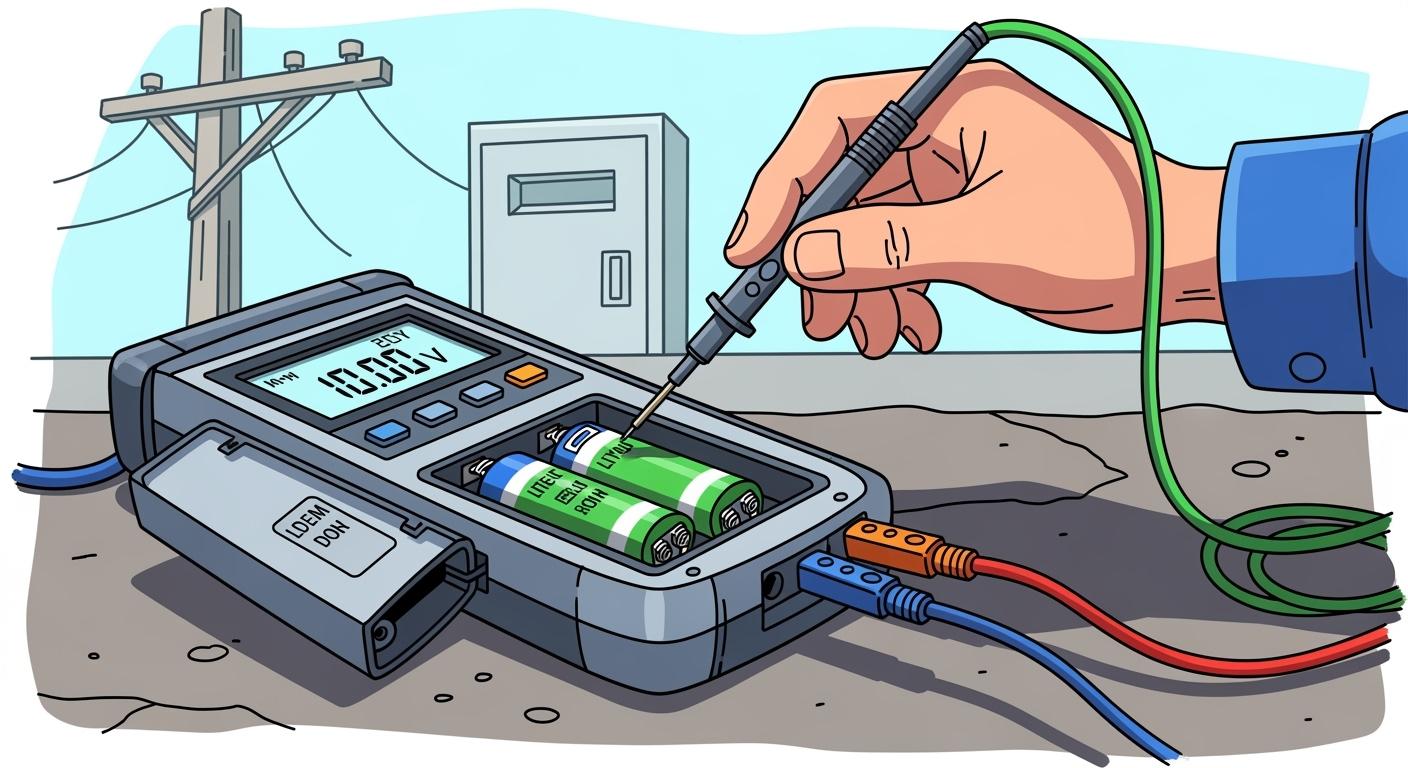
Lithium battery packs deliver stable power, which boosts accuracy in portable calibration equipment. You benefit from high energy density and lightweight design, making field work easier. Custom engineering adapts these battery packs for tough industrial environments. Regulatory compliance matters for safety and performance.
Lithium batteries must pass transport-specific tests for UN 38.3 compliance.
ISO Standard | Focus Area |
|---|---|
ISO 9001 | Quality management systems, ensuring consistent product performance. |
ISO 14001 | Environmental management for sustainable battery production. |
ISO/IEC 17025 | Requirements for testing and calibration laboratories. |
ISO 26262 | Functional safety in automotive applications. |
ISO 12405 | Test procedures for evaluating lithium-ion batteries for electric vehicles. |
IEC/EN 61960: Safety requirements for secondary lithium cells and batteries for portable applications.
IEC/EN 62133: Safety requirements for portable sealed secondary lithium cells.
Key Takeaways
Lithium battery packs provide stable power, ensuring accurate measurements in portable calibration equipment.
High energy density and lightweight design make field work easier and more efficient.
Regular battery testing and self-calibration routines reduce measurement errors and improve accuracy.
Compliance with safety standards and regulations ensures safe transportation and handling of lithium battery packs.
Advanced protection features in lithium battery packs enhance safety and durability in harsh environments.
Part1: Battery Packs & Accuracy
1.1 Stable Power for Precision
You rely on lithium battery packs to deliver stable power for portable calibration equipment. Consistent voltage output is essential for accurate measurement and calibration results. Fluctuations in battery power can cause reference voltage instability, which leads to errors in measurement. Battery management integrated circuits (BMICs) play a key role in maintaining power stability. These systems monitor voltage in real time and adjust charging and discharging parameters to prevent voltage drops or spikes. Overvoltage protection and undervoltage lockout features help keep your equipment running at optimal performance.
Power supply stability within BMICs is crucial because fluctuations affect reference voltage stability.
Sophisticated voltage monitoring systems ensure stable operation across varying load conditions.
Real-time voltage regulation, overvoltage protection, and undervoltage lockout features maintain optimal battery performance.
Advanced control algorithms adjust charging and discharging parameters to prevent voltage fluctuations.
Stable battery power supports precise calibration and reliable measurement, especially during critical testing procedures.
1.2 Reducing Measurement Errors
You can reduce measurement errors by maintaining battery health and performing periodic battery testing. Regular calibration of portable devices ensures long-term measurement accuracy and compliance with industry standards. All electronic components and mechanical devices experience drift over time. This drift makes regular self-calibration and battery testing necessary to keep your equipment within published specifications.
Regular calibration of handheld devices is essential for maintaining measurement accuracy and meeting ISO and GMP standards.
Proper calibration and maintenance lead to reliable measurement and calibration data, which is crucial for strict environmental conditions and product quality.
Self-calibration routines and battery testing help detect and correct drift, ensuring your equipment operates accurately.
You improve measurement and calibration accuracy by scheduling battery testing and self-calibration routines. This practice supports reliable results and reduces the risk of errors in field applications.
Part2: Advantages of Lithium Battery Packs

2.1 Consistent Voltage Output
You depend on lithium battery packs to deliver consistent voltage output for portable calibration equipment. Stable voltage keeps your measurement devices operating within their optimal range. This prevents performance degradation and supports accuracy during critical calibration tasks. When you use lithium battery packs, you reduce the risk of errors caused by voltage fluctuations. Consistent voltage output also improves battery performance and reliability, which is essential for sensitive measurement applications.
Consistent voltage output ensures your calibration instruments maintain accuracy and reliability in every testing scenario.
2.2 Long Runtime & Durability
Lithium battery packs offer long runtime and durability. You can complete extended measurement and testing sessions without frequent recharging. These battery packs have a longer lifespan compared to other battery chemistries. You benefit from fewer replacements and lower maintenance costs. Lithium battery testing confirms that these packs withstand repeated charge and discharge cycles, maintaining capacity and performance over time.
Advantage | Description |
|---|---|
Energy Density | High energy density is crucial for portable devices, enhancing usability. |
Power Density | Essential for quick charging and high power applications. |
Durability/Lifetime | Longer lifespan aligns with the needs of portable calibration equipment. |
Safety | Generally safe with proper use, reducing risks in portable applications. |
Useable Temperature Range | Performance is optimized across various temperatures, suitable for diverse environments. |
Controllability | Better control over battery operation enhances performance in calibration tasks. |
Cost | Competitive pricing impacts overall system affordability. |
You can see that lithium battery packs provide advantages in energy density, durability, and safety. These features support reliable measurement and testing in demanding environments.
Comparison of Lithium Battery Chemistries
Chemistry | Nominal Voltage (V) | Energy Density (Wh/kg) | Cycle Life (cycles) |
|---|---|---|---|
LiFePO4 | 3.2 | 90-120 | 2000-5000 |
NMC | 3.7 | 150-220 | 1000-2000 |
LCO | 3.7 | 150-200 | 500-1000 |
LMO | 3.7 | 100-150 | 300-700 |
Solid-State | 3.7 | 250-350 | 2000-5000 |
Lithium Metal | 3.7 | 300-400 | 1000-2000 |
You can select the chemistry that best fits your capacity and performance needs. LiFePO4 offers high cycle life and safety. NMC and solid-state batteries provide higher energy density for longer runtime.
2.3 Lightweight & Portable
Lithium battery packs are lightweight and portable. You can carry your calibration equipment easily during field measurement tasks. The high energy density allows you to use smaller battery packs without sacrificing capacity. Field technicians benefit from reduced fatigue and increased mobility. You can power handheld devices and remote monitoring units efficiently. This makes lithium battery packs ideal for portable applications where mobility and efficiency matter.
Tip: Choose lightweight lithium battery packs to improve technician efficiency and reduce downtime during field measurement.
2.4 Fast Charging & Low Self-Discharge
You experience fast charging and low self-discharge rates with lithium battery packs. Quick charging lets you resume measurement and testing tasks without long delays. Low self-discharge means your battery packs retain capacity even when stored for extended periods. You avoid the ‘memory’ effect found in other battery chemistries. This enhances battery pack charge and discharge performance and supports reliable operation in portable calibration equipment.
Transportation Safety and Watt-Hour Limits
Size limits: The Watt-hour rating may not exceed 20 Wh for a lithium ion cell or 100 Wh for a lithium ion battery. Each lithium ion battery must be marked with the Watt-hour rating on the outside case.
Air transportation: Lithium cells and batteries have specific limits on the maximum number of batteries and maximum net quantity of batteries per package.
Packaging: Packages must withstand a 1.2 meter drop test without damage to the cells or batteries, without shifting contents, and without release of the contents.
Hazard communication: Packages must be marked with indications of lithium content, handling care, flammable hazard, special procedures if damaged, and a contact number for more information.
You must comply with these regulations to ensure safe transportation and handling of lithium battery packs. Proper lithium battery testing and battery testing routines help you meet safety standards and maintain battery performance.
Note: Always check watt-hour ratings and follow transportation guidelines to protect your equipment and ensure regulatory compliance.
Part3: Field Applications Impact

3.1 Reliability in Remote Locations
You depend on lithium battery packs to power portable calibration equipment in remote locations. These battery packs deliver up to 148Whr of power, which supports about 8 hours of continuous measurement. You can carry a battery that weighs only 2.5 pounds and fits easily in a custom backpack. The compact size and cable connection make it simple to use with portable instruments. Overnight charging ensures you start each day with a fully charged battery. You maintain measurement accuracy even in challenging environments, such as medical field testing, robotics deployment, security system installation, infrastructure monitoring, and industrial maintenance.
You achieve reliable operation for portable devices in areas without access to mains power.
You support critical measurement tasks in sectors like medical diagnostics, robotics, and transportation infrastructure.
You reduce the risk of power interruptions during field calibration.
Reliable lithium battery packs help you maintain measurement accuracy in remote and demanding locations.
3.2 Less Downtime & Maintenance
You minimize downtime and maintenance by using lithium battery packs. These batteries offer long runtime and durability, so you spend less time replacing or recharging them. You benefit from fewer interruptions during measurement and calibration tasks. The included charger allows you to recharge batteries overnight, which keeps your portable equipment ready for the next day. You avoid frequent battery swaps, which improves workflow in consumer electronics testing, security system calibration, and industrial applications.
You reduce maintenance costs by extending battery life.
You keep your portable measurement devices operational for longer periods.
You streamline field operations and improve productivity.
You save time and resources by choosing lithium battery packs with high energy density and long cycle life.
3.3 Technician Efficiency
You increase technician efficiency with lightweight and portable lithium battery packs. Technicians carry less weight, which reduces fatigue and improves mobility. You complete measurement and calibration tasks faster because you do not need to stop for frequent battery changes. You comply with FAA and transportation regulations by using battery packs that meet watt-hour limits and safety standards. You ensure safe handling and transport for field applications in medical, robotics, infrastructure, and industrial sectors.
You enhance technician productivity by reducing equipment downtime.
You support efficient field measurement in diverse environments.
You meet regulatory requirements for battery transport and use.
Efficient lithium battery packs empower technicians to deliver accurate results and maintain high measurement accuracy in the field.
Part4: Safety & Durability
4.1 Protection Features
You depend on lithium battery packs with advanced protection features to ensure safe operation during calibration and measurement tasks. Built-in systems guard against overcharge, over-discharge, over-current, short circuit, reverse wiring, and excessive temperature rise. Cell balancing functions improve charging efficiency and extend battery life. Real-time cell state monitoring tracks voltage, current, internal resistance, and temperature. Some boards include auxiliary protection components for extra safety. These features help you maintain battery performance and protect your equipment.
Protection Feature | Description |
|---|---|
Charge and Discharge Protection | Prevents overcharge, over-discharge, over-current, short circuit, reverse wiring, and excessive temperature rise. |
Cell Balancing Function | Balances cells in multi-cell packs to improve charging efficiency and long-term durability. |
Real-Time Cell State Monitoring | Continuously monitors cell voltage, pack voltage, current, internal resistance, and temperature. |
Auxiliary Protection Components | Some boards may include additional safety devices for enhanced protection. |
You can rely on a battery management system for safe handling and compliance with industry standards. Regular lithium battery testing and battery testing routines help you detect issues early and maintain optimal battery pack charge and discharge cycles.
Tip: Use a battery analyzer to check battery health and ensure safe operation during measurement and calibration.
4.2 Environmental Resistance
Lithium battery packs withstand harsh environmental conditions, which is essential for field calibration and measurement. Moisture protection keeps internal components reliable in humid environments. Vibration resistance ensures robust performance during transportation and field use. Advanced temperature management prevents overheating and maintains capacity in extreme temperatures.
Feature | Description |
|---|---|
Moisture Protection | Internal components are safeguarded from moisture, ensuring reliability in humid conditions. |
Vibration Resistance | Robust construction withstands mechanical stress and vibration, crucial for field applications. |
Temperature Management | Advanced thermal management prevents overheating, maintaining performance in extreme temperatures. |
Mechanical cell holders prevent internal shorts caused by vibration.
Enclosures have expansion gaps to avoid casing cracks during high-load operations.
Calibration of battery charging and insulation ensures stability in extreme environments.
Standardized lithium battery testing protocols assess resistance to vibration, shock, and thermal abuse. You can improve battery performance and extend battery life by following proper maintenance and calibration procedures:
Charge when power drops to 20%, stop at 90% to avoid long-term full charge.
Use the original charger to prevent overcharging.
For long-term storage, charge to 50%, disconnect the device, and store in a dry environment below 25°C.
Recharge to 50% every 3 months.
Avoid extreme temperatures, as high temperatures accelerate aging and low temperatures reduce capacity.
Routinely check battery charge status and replace batteries when run time drops below 80% of original capacity.
Note: Regular self-calibration and testing battery pack routines help you maintain safety and longevity in field applications.
Part5: Choosing Lithium Battery Packs
5.1 Capacity & Compatibility
You need to select the right battery for your portable calibration equipment. Start by checking the battery specifications. Look at the label or datasheet for details like nominal voltage, chemistry, and battery capacity. These numbers help you match the battery to your device’s needs. Use this checklist to guide your selection:
Confirm battery specs. Make sure the voltage and chemistry fit your calibration device.
Verify charger output spec. The charger should state the exact output voltage. Avoid chargers with vague claims.
Check physical compatibility. Look at the size, connector type, and cable length. These must fit your equipment.
Review safety behavior. Choose batteries with features like overtemperature response and automatic restart.
Avoid red flags. Stay away from batteries with missing specs or broad, unclear claims.
You can use a battery analyzer to test battery health before field deployment. This step helps you avoid unexpected failures during calibration or testing. For devices that require self-calibration, always ensure the battery supports stable power delivery. Custom battery packs are available for industrial environments. These packs often include integrated safety electronics, communication interfaces, and temperature protection. You can request design reviews and compliance checks to make sure your battery meets all regulations.
Tip: Always match battery capacity to your device’s runtime needs. This ensures you complete calibration and self-calibration routines without interruption.
5.2 Quality Standards
You should choose batteries from manufacturers who follow strict quality standards. Look for these certifications:
ISO 9001:2015 for quality management systems.
ISO 14001:2015 for environmental management.
ISO 45001:2018 for occupational health and safety.
ISO 50001:2018 for energy management.
ISO/IEC 27001:2022 for information security.
Manufacturers must manage all regulatory requirements, including UL and IEC standards. They should comply with national and international rules, including transportation laws. You benefit from complete battery pack solutions, from design to assembly to regulatory compliance. These solutions work well for metrology, calibration tools, and field-testing units. A strong battery management system ensures safety and performance in every application.
Note: Quality standards protect your investment and support reliable calibration in the field.
You achieve greater accuracy and reliability in portable calibration by using lithium battery packs. Regular battery testing and battery analyzer checks help you maintain measurement precision. You follow standardized testing protocols and schedule inspections to prevent overheating. The table below highlights key safety considerations:
Safety Consideration | Description |
|---|---|
High Voltage Safety | Prevents electrical hazards in battery pack systems. |
Functional Safety | Minimizes risk to personnel and equipment. |
Measurement Reliability | Supports accurate measurement and performance. |
You benefit from advancements in lithium technology, such as longer battery life, enhanced safety, and faster charging. These improvements support efficient portable measurement and sustainable practices.
FAQ
What makes lithium battery packs ideal for portable calibration equipment?
You get high energy density and lightweight design with lithium battery packs. These features make your portable calibration equipment easier to carry and use in the field. You also benefit from long runtime and reliable performance during measurement tasks.
How do I maintain battery health for accurate calibration?
You should charge your battery when it drops to 20% and stop at 90%. Use the original charger. Store the battery at 50% charge in a dry place below 25°C. Regular testing helps you keep your portable device accurate.
Are lithium battery packs safe for use in harsh environments?
You can use lithium battery packs in tough conditions. They have moisture protection, vibration resistance, and advanced temperature management. These features help your portable calibration equipment work safely in the field.


