
Custom Lithium Battery Packs for Toys, Ride-On Vehicles, and Companion Robots
For these products, the battery is part of the child’s or the family’s experience. We treat safety architecture, the certification path, and Amazon or big-box readiness as the product — not as paperwork added at the end.
Request a compliance-ready pack review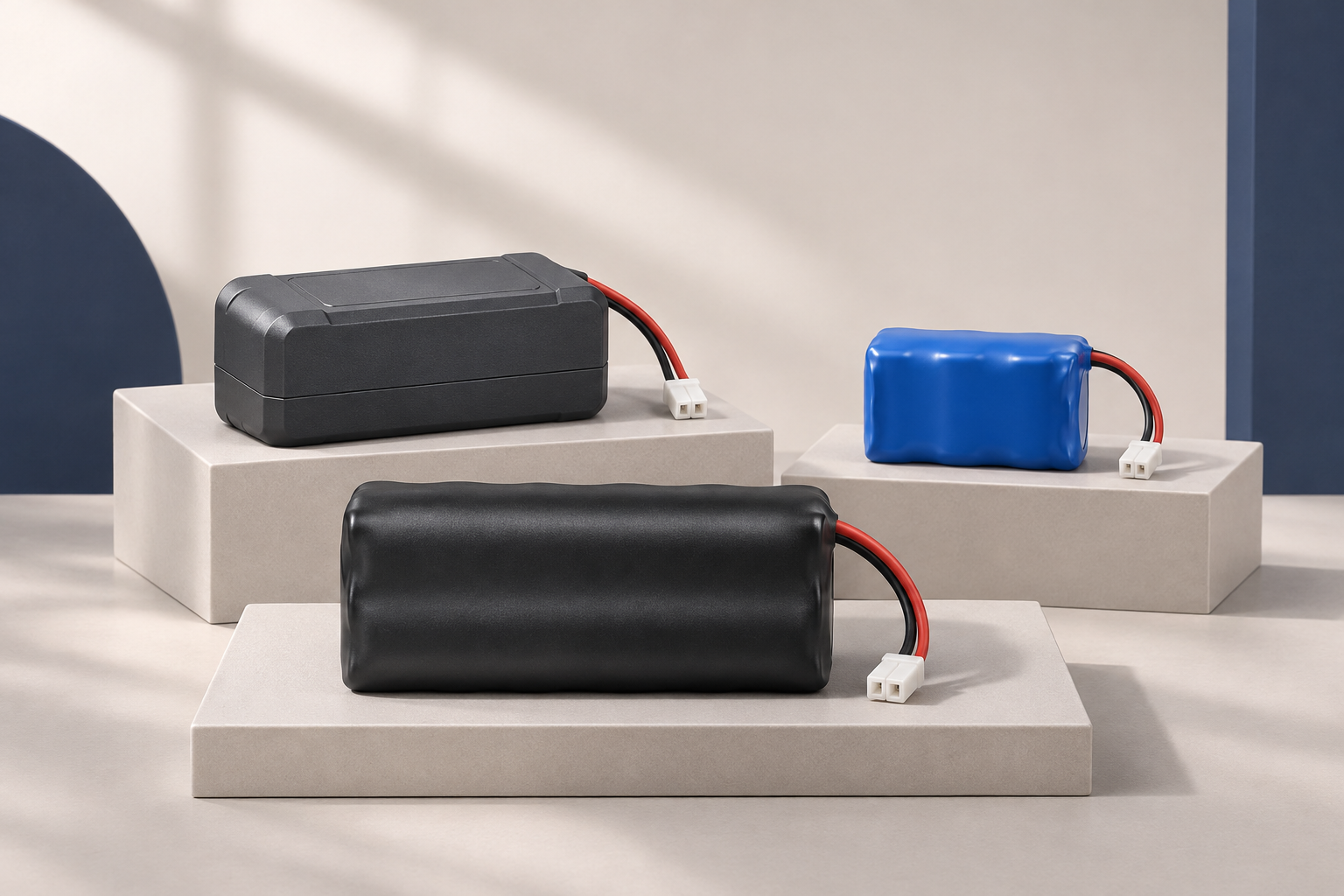
Large Power designs and manufactures custom lithium battery packs for toys, kids’ ride-on vehicles, companion robot pets, and other kids’ electronics at its own factory in Dongguan, Guangdong, China.
For these products, the battery is part of the child’s or the family’s experience. We treat safety architecture, the certification path, and Amazon or big-box readiness as the product — not as paperwork added at the end.
Looking for industrial, AGV, AMR, or service-robot packs? See our robot battery solutions. This page covers toys, kids’ ride-on vehicles, and consumer companion robot pets.
Three pillars
Safety architecture
Multi-layer BMS protection, a specified enclosure, host communication where needed, and warning labels designed for the intended market.
Certification pathfinding
We help you choose the document set for the actual sales channel — transport, North America, Europe, or retail — before samples go out. Packs are designed to meet the selected standards. We help packs get ready to pass the relevant reviews.
Amazon and big-box readiness
Support for Amazon dangerous-goods / Direct Validation (DV) listing review, and for U.S. big-box WERCS registration with English and French SDS.
Factory facts at a glance
Founded in August 2002. Large Power designs and builds these packs at its own factory in Dongguan, Guangdong, China.
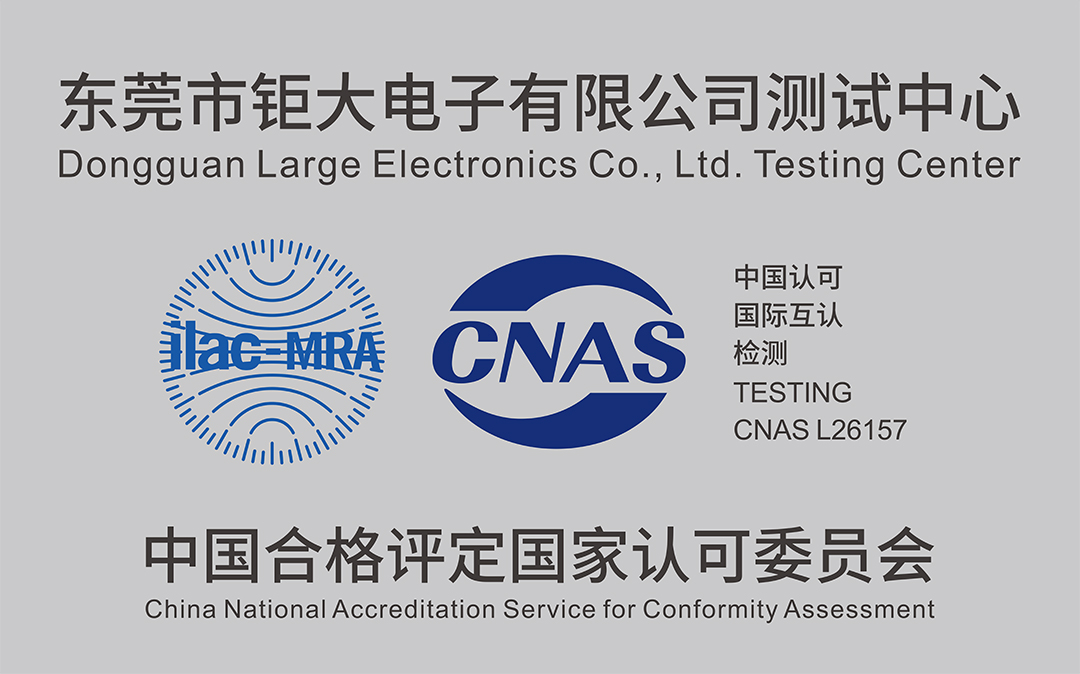
Company quality systems include ISO 9001 and ISO 14001. Product documents such as UN38.3, UL, CB / IEC 62133, CE, RoHS and others are model-specific and are planned for the target market; they are not implied for every pack on this page.
Why Battery Safety Is the Product
A toy, a kids’ ride-on vehicle, or a companion robot is handled differently from industrial equipment. Packs may be charged with the wrong adapter, shorted at the terminals, dropped, left in a hot car, or used by a child who cannot be expected to follow a manual.
Those conditions are design inputs, not after-the-fact tests.
- Foreseeable misuse. Overcharge, short-circuit, drop and high temperature are expected events in this category. Protection thresholds, enclosure design and a designated charger path are specified around them.
- Ride-on current demand. Kids’ ride-on vehicles draw substantial continuous and pulse current. The pack has to deliver that current without an unsafe temperature rise, and recover in a defined way if a protection event occurs.
- Companion robots need more than a cutoff. A robot pet is a host system. Fuel gauging, I2C communication, charge-status reporting and a complete retail label are part of making the pack usable and reviewable.
- Retail and platform rules sit on top of pack safety. A pack that works on the bench still has to travel under UN38.3, follow the destination market’s pack-safety path, and satisfy Amazon or big-box document checks.
We do not treat a certificate as a substitute for this architecture, and we do not claim that any one report makes a pack suitable for every toy or every sales channel. For a broader walk-through of EU and U.S. toy-battery rules, see EU and US toy battery regulations.
What We Design In
Every project starts with the host voltage window, continuous and peak current, installation space, charging method, target market and sales channel. The items below are the usual building blocks. The released specification defines what is actually included in a given pack. More detail on protection boards is on our BMS and PCM page; the overall process is on custom battery solutions.
Cell selection and pack architecture
We select the cell model and the series/parallel arrangement from the energy, current and temperature requirements of the toy or robot. The example platforms on this page use Samsung 21700 cells in 2S2P and 6S configurations. Specific cell model numbers are not published on this page. Other cell formats can be used when the duty requires them. Cell-level ratings and finished-pack ratings are specified separately.
When a project needs it, Large Power can also supply a matching custom charger. The reference cases below are specified for use with a designated charger and do not themselves include a charger.
Multi-layer BMS and protection
A typical protection set includes overcharge, over-discharge, overcurrent and short-circuit protection, plus charge and discharge temperature protection with defined recovery points. Where the application needs it, we add:
- a fuel-gauge IC (the companion-robot-pet example uses a BQ28Z610 gauge)
- cell balancing during charge
- an NTC temperature sensor
- a secondary overvoltage protection device, in addition to the primary overcharge threshold
- I2C communication with the host
Protection thresholds, delays and recovery behavior are agreed in the pack specification and validated with the host. They are not identical on every BMS.
Enclosure and mechanical design
Children’s and consumer-robot products usually need a custom plastic enclosure, a controlled overall size and weight, and a connector arrangement that matches the toy or ride-on wiring. Retention, strain relief and service access are part of the mechanical design, not accessories added later.
I2C communications and status display
Companion-robot packs often use I2C so the host can read state of charge and status. Ride-on platforms can use a shared charge/discharge connector with I2C on dedicated pins, and a four-segment LED state-of-charge display with a push-button (the display turns off after a few seconds; the active segment flashes during charge). Connector part numbers are project-specific and are confirmed in the drawing pack.
Labels and warnings
Label artwork is part of the certification path. A complete label typically includes electrical ratings, chemistry, weight, warning text (use only the specified charger; do not disassemble, puncture, crush, heat, short-circuit or dispose of in fire; stop using a severely swollen pack), recycling and waste marking, and manufacturer or importer information when the destination market requires it. Label revisions are controlled. We do not treat artwork as decoration.
Certification and Market-Access Path
Decide the sales channel first, then the certificate combination. A pack sold on a brand’s own site, on Amazon, and through U.S. big-box retail will not always need the same document set.
Large Power supports and handles the certification and retail-compliance items below for custom toy, ride-on and companion-robot packs. The table is here to show the paths we work with. We help plan the combination, prepare the pack and the supporting file, and submit samples for the selected tests. Scope and schedule depend on the design and the target market; they are confirmed per project. We do not publish certification prices on this page, and we do not guarantee a first-pass laboratory result or an Amazon listing outcome.
Wording rule. “Passed” or “certified” is used only for items tied to a named reference project, as project experience. For the list itself, and for any path not tied to that project, we use “we support” or “we handle.” This is not a claim that every Large Power pack, or Large Power as a company, already holds each item. Large Power does not claim to hold CPSIA, ASTM F963, or EN 71 certificates.
| Item | Main purpose | Typical market or scene |
|---|---|---|
| UN38.3 + sea/air transport identification | Lithium-battery transport and shipment classification | Global shipping |
| UL 2054 | Common North American pack-safety path; often requested for retail and Amazon | United States |
| CA65 (Proposition 65) | California hazardous-substance warning | California, United States |
| FCC | EMC / RF-related equipment compliance, depending on the pack or host electronics | United States |
| CB / IEC 62133 | International safety path for rechargeable cells and packs; often used as a basis for other marks | Europe and other markets that accept CB |
| Heavy-metal testing (lead, cadmium, mercury) | Additional restricted-element checks for lead, cadmium and mercury. | As required by the customer or regulation |
| REACH Annex 17 | Chemical restrictions / substances of concern | European Union |
| REACH SVHC | Substances of Very High Concern assessment and disclosure | European Union |
| CE-EMC | EMC as a common part of a CE declaration | European Union |
| RoHS | Restriction of hazardous substances | European Union and aligned markets |
| WERCS + English/French SDS | U.S. big-box hazardous-chemical registration and bilingual safety data sheets | U.S. big-box retail |
| Amazon DV / listing review | Amazon dangerous-goods and document validation (parent and child listings) | Amazon |
Project experience (Case 1). A companion-robot-pet custom pack — a reference project, now listed as platform 41AQ024-01 — has passed UN38.3, CB / IEC 62133, UL 2054, REACH (including SVHC) and RoHS.
Regulatory and industry background (not Large Power company certificates, and not implied as already passed on every project):
- CCC. China compulsory product certification. Specifications require a CCC certificate from a CNCA-designated laboratory before use in a CCC-scope product.
- (EU) 2023/1542. EU Battery Regulation. Specifications require a Declaration of Conformity issued by Large Power before EU market entry.
- CPSIA, ASTM F963 and EN 71. Finished-toy safety standards. These are typically the toy brand’s responsibility for the complete product. Large Power can supply pack safety data and material information to support that work. They are not Large Power certificates.
Related reading on our site: UN38.3 testing, UL certification for lithium batteries, CB certification, CE requirements, RoHS, FCC / EMC, and our testing and certification capability page. The article global compliance guide (IEC 62133, UL 2054) explains UL and IEC paths; its ISO 13485 discussion is a medical-quality-system topic and is not a toy-page claim.
Amazon, WERCS and Retail Compliance
Amazon listing review and big-box onboarding are platform or retailer processes. They sit alongside — and do not replace — pack safety tests and transport documents.
Amazon DV and dangerous-goods listing review. When a seller is notified, Amazon may require Direct Validation (DV) of lithium-battery evidence through an authorized provider. A UL test report or a UN38.3 record is evidence, not automatic approval. The file has to match the delivered pack, the ASIN, and the store policy. Parent listings and child (variation) listings are often reviewed as separate line items. Large Power can support the pack specification, configuration map, label artwork and available test records. The brand or seller remains responsible for the Seller Central workflow and the deadline. See our guide to Amazon TIC Direct Validation for lithium batteries.
WERCS and English / French SDS. U.S. big-box retailers commonly require WERCS product registration and safety data sheets in English and French, in addition to transport and pack-safety documents. We support the battery-side data needed for that registration. Retailer acceptance is confirmed with the retailer, not assumed from a test report.
Case Studies
These are anonymized reference cases based on customer-custom projects. Customer, brand and importer names are omitted. Figures come from the released pack specifications. They illustrate design and certification experience; the same ratings are not a guarantee on a new project. The packs below are listed as product platforms and can be reviewed or customized on request.
Case 1 — Companion robot pet battery
A rechargeable lithium-ion pack for a companion robot pet, using Samsung 21700 cells. This platform is listed as 41AQ024-01.
| Item | Specified value |
|---|---|
| Configuration | Samsung 21700 cells, 2S2P lithium-ion pack |
| Voltage and capacity | Nominal 7.26 V; nominal capacity 9.8 Ah; rated capacity 9.5 Ah |
| Energy | Rated energy 68.97 Wh |
| Charge and discharge current | Standard charge and discharge: 0.2C. Maximum charge 4.9 A (0–45 °C). Maximum discharge 7.0 A (−20–60 °C). Pulse discharge 20 A (20 ms, 0–55 °C). |
| Cycle life | ≥500 cycles, ending when three consecutive discharge capacities are below 70% of the initial capacity. |
| Size, weight, enclosure | 128.98 × 78 × 28.5 mm; about 400 g; black plastic housing |
| Charge and discharge window | Charging 0–45 °C; discharging −20–60 °C. The pack is specified for use with a designated charger (the pack specification does not include a charger). |
| Smart BMS | Fuel gauge (BQ28Z610), I2C communication, NTC, and charge balancing; overcharge, over-discharge, overcurrent, short-circuit, and charge/discharge temperature protection. A later revision added a secondary overvoltage protection device. |
| Project certifications passed | As project experience, this custom project has passed UN38.3, CB / IEC 62133, UL 2054, REACH (including SVHC) and RoHS. Reports belong to that project; a new build of this platform is tested for the target market. |
| Label | Artwork was revised to certification-label requirements and includes warning, chemistry and recycling information, consistent with the project documents above. |
Case 2 — Kids’ ride-on battery platform (two energy versions)
A 21.6 V platform for kids’ ride-on toys, using Samsung 21700 cells and sharing one black plastic housing (183 × 67 × 86 mm), a shared charge/discharge connector, I2C communication, and a four-segment LED state-of-charge display. Two energy versions are listed as 41AQ024-02 / 41AQ024-03.
| Version | Energy | Weight |
|---|---|---|
| Higher-capacity, Samsung 21700 6S2P | Nominal 10 Ah; rated 9.4 Ah; rated energy 203.04 Wh | About 1,100 g |
| Lighter, Samsung 21700 6S1P | Nominal 5 Ah; rated 4.7 Ah; rated energy 101.52 Wh | About 650 g |
| Version | Standard charge / discharge (0.2C) | Maximum charge | Continuous discharge | Pulse discharge |
|---|---|---|---|---|
| Higher-capacity, 6S2P | 0.2C | 4.7 A (0.5C) | 50 A | 60 A (<500 ms) |
| Lighter, 6S1P | 0.2C | 2.35 A (0.5C) | 20 A | 25 A (<500 ms) |
Shared platform details:
- Nominal 21.6 V; charge voltage 25.2 V; discharge cutoff 15.6 V; charging 0–45 °C; discharging −20–60 °C.
- Cycle life: ≥300 cycles, ending when three consecutive discharge capacities are below 80% of the initial capacity.
- BMS functions include overcharge, over-discharge, overcurrent, short-circuit and charge/discharge temperature protection, plus the on-pack state-of-charge display.
- The specification is designed with reference to GB31241-2022. Reliability testing includes temperature cycling, vibration and drop tests, with acceptance criteria of no fire, no explosion and no leakage. This is not a statement that the packs already hold CCC certification.
- For this platform we support and can handle a certification combination covering transport, North America, Europe, U.S. big-box retail and Amazon, according to the destination channel — including the items in the certification table above. That is a path we handle, not a statement that this ride-on project has already passed those reviews.
FAQ
What documents does a toy or ride-on lithium battery usually need to sell on Amazon?
The usual evidence set includes UN38.3 transport testing, a pack-level safety report often requested in the UL 2054 path, a safety data sheet, and, when the seller is notified, Amazon Direct Validation (DV) of that file. The exact list depends on the store, the product policy and the ASIN notification. A test report is evidence, not automatic listing approval. Amazon TIC Direct Validation for lithium batteries explains how reports have to match the delivered pack.
What is the difference between UL 2054 and IEC 62133 / CB? Do we need both for the United States and the EU?
They are different paths. UL 2054 is a common North American pack-safety standard and is often requested for U.S. retail and Amazon. IEC 62133, often obtained through the CB scheme, is the usual international / EU pack-safety path and is frequently used as a basis for other marks. Many brands selling in both regions plan both. The combination is decided from the sales channel; it is not a single global certificate. See UL certification and CB certification.
What is Amazon DV, and how do parent and child listings differ?
DV means Direct Validation: an Amazon-authorized provider reviews lithium-battery compliance evidence for a notified product. It is a platform process, not a substitute for UL, IEC or UN38.3 testing. Parent (main) listings and child (variation) listings are often reviewed as separate line items, so the configuration map has to identify each one. Large Power can support the pack file; the seller remains responsible for the Seller Central workflow.
Why do U.S. big-box retailers also ask for WERCS and English / French SDS?
Many U.S. big-box retailers require WERCS registration of the product as a hazardous chemical, plus safety data sheets in English and French, in addition to transport and pack-safety documents. These are retailer onboarding requirements. We support the battery-side data. Retailer acceptance is confirmed with the retailer.
Why do battery labels need warnings, importer information, certification marks, and recycling symbols?
Because the label is part of how a pack is identified in transport, retail and market-access reviews. Ratings, chemistry, warnings, recycling or waste marking, and manufacturer or importer information are often required by the destination market or by the certification-label rules that apply to that pack. Artwork should match the released specification and the documents in the file. A mark printed on a drawing is not, by itself, a company-wide certificate. Where a named reference project has already passed specific tests — for example UL 2054 on the companion-robot-pet case — that is stated in the case study as project experience.
How do companion-robot and ride-on-toy BMS designs differ?
A companion-robot pack usually emphasizes fuel gauging, host communication (I2C in the example on this page), charge-status reporting and a complete retail label. A ride-on pack usually emphasizes higher continuous and pulse discharge current, a shared charge/discharge connector, and an on-pack state-of-charge display. Both still need overcharge, over-discharge, overcurrent, short-circuit and temperature protection. The protection set is written into each specification; it is not copied from one pack to the other.
Do finished-toy standards such as ASTM F963, EN 71, or CPSIA mean the battery pack is already certified?
No. Those standards are general industry context for the finished toy and are typically the toy brand’s responsibility for the complete product. Pack-level paths such as UN38.3, UL 2054 or IEC 62133 are separate. Large Power can supply pack safety data and material information to support the brand’s finished-toy file. We do not describe CPSIA, ASTM F963 or EN 71 as Large Power certificates.
Can you propose a certification path and a testing sequence for our target market?
Yes. Share the target markets, the intended channel (Amazon, big-box retail, or the brand’s own channel), the voltage, capacity and current, and any documents you already have. We will propose a path and a sample-submission sequence for that design. Scope and schedule are confirmed per project. We do not publish certification prices on this page, and we do not guarantee a first-pass result or a listing outcome. You can also start from our custom battery pack RFQ checklist.
Get a certification-path review for your toy or robot battery
If you are planning a toy, kids’ ride-on, or companion-robot pack, send the basics below. An engineer at our Dongguan factory will review the safety architecture and the document path for your sales channel.
Please include:
- Target market (for example United States, EU, China, or more than one)
- Intended channel: Amazon, big-box retail, and/or your own channel
- Voltage, capacity or energy, and continuous / peak current
- Estimated annual volume
- Documents or reports you already have
Request a compliance-ready pack review — Contact us
Talk to an engineer, or download the custom battery pack RFQ checklist. For the broader OEM process, see custom battery solutions.
MOQ is 100–1,000 pcs depending on battery specifications. Small-batch, multi-batch orders are supported. In-stock standard products are available from 7 days; custom samples typically take 15–45 days after the solution is confirmed.


