

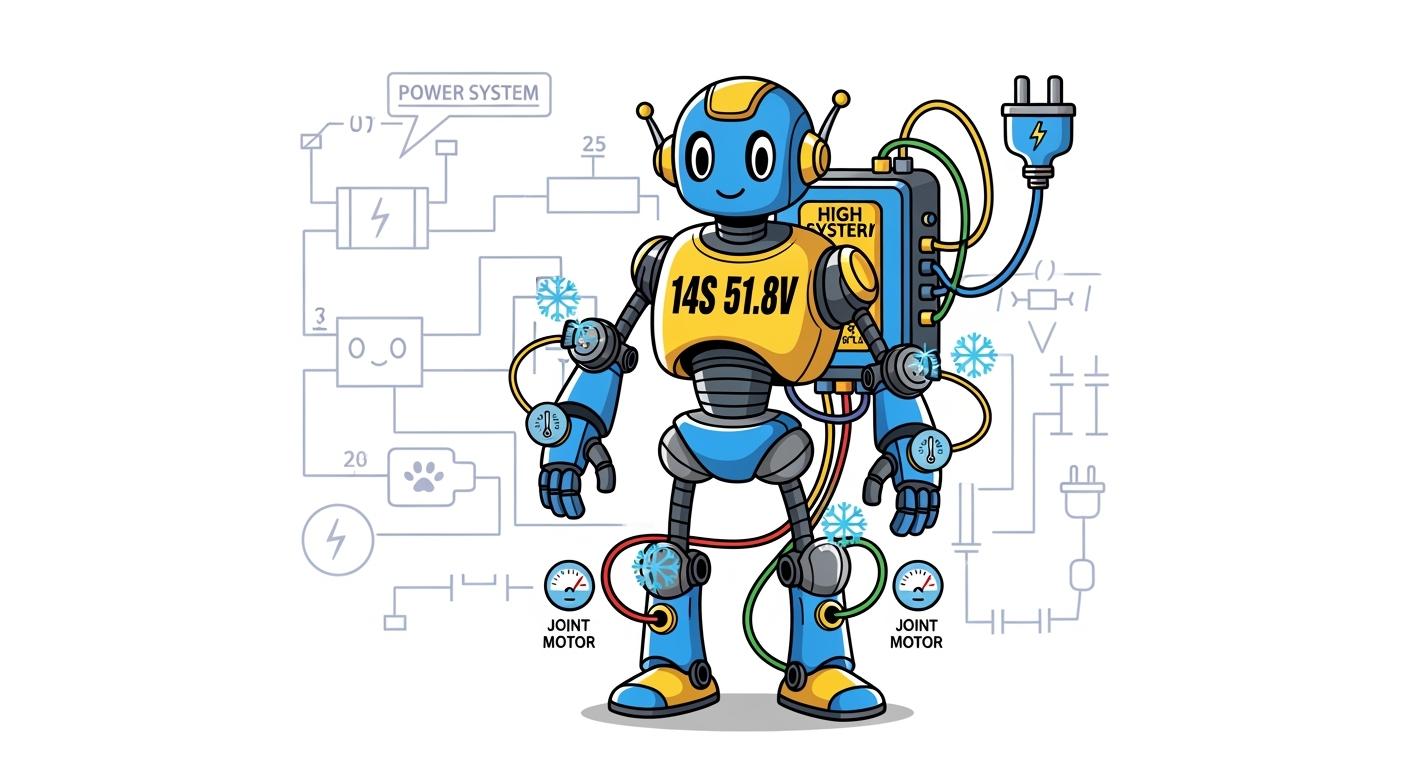
You can improve Humanoid Robot Efficiency by adopting a 14S 51.8V high-voltage lithium battery system. This approach lowers current through joint motors, which directly reduces heat generation. Efficient thermal management plays a vital role in robot performance and reliability. Industry studies show that heat can degrade performance, shorten component life, and even cause hardware failure or fire. You must consider battery weight and cooling methods, especially in compact humanoid robots with limited airflow.
Heat degrades performance and shortens component life.
Active cooling is crucial for compact robot bodies.
Battery temperatures can spike above 100°C during peak use.
Key Takeaways
Adopting a 14S 51.8V lithium battery system reduces heat in joint motors, enhancing robot efficiency and performance.
Effective thermal management extends the lifespan of motors, reducing maintenance costs and downtime.
Higher voltage systems lower current, which minimizes heat loss and improves energy efficiency in robotic operations.
Using lithium batteries increases energy density, allowing robots to operate longer without adding weight.
Implementing smart Battery Management Systems (BMS) ensures safety and optimizes battery performance in demanding environments.
Part1: Joint Motor Heat Issues
1.1 Impact on Performance
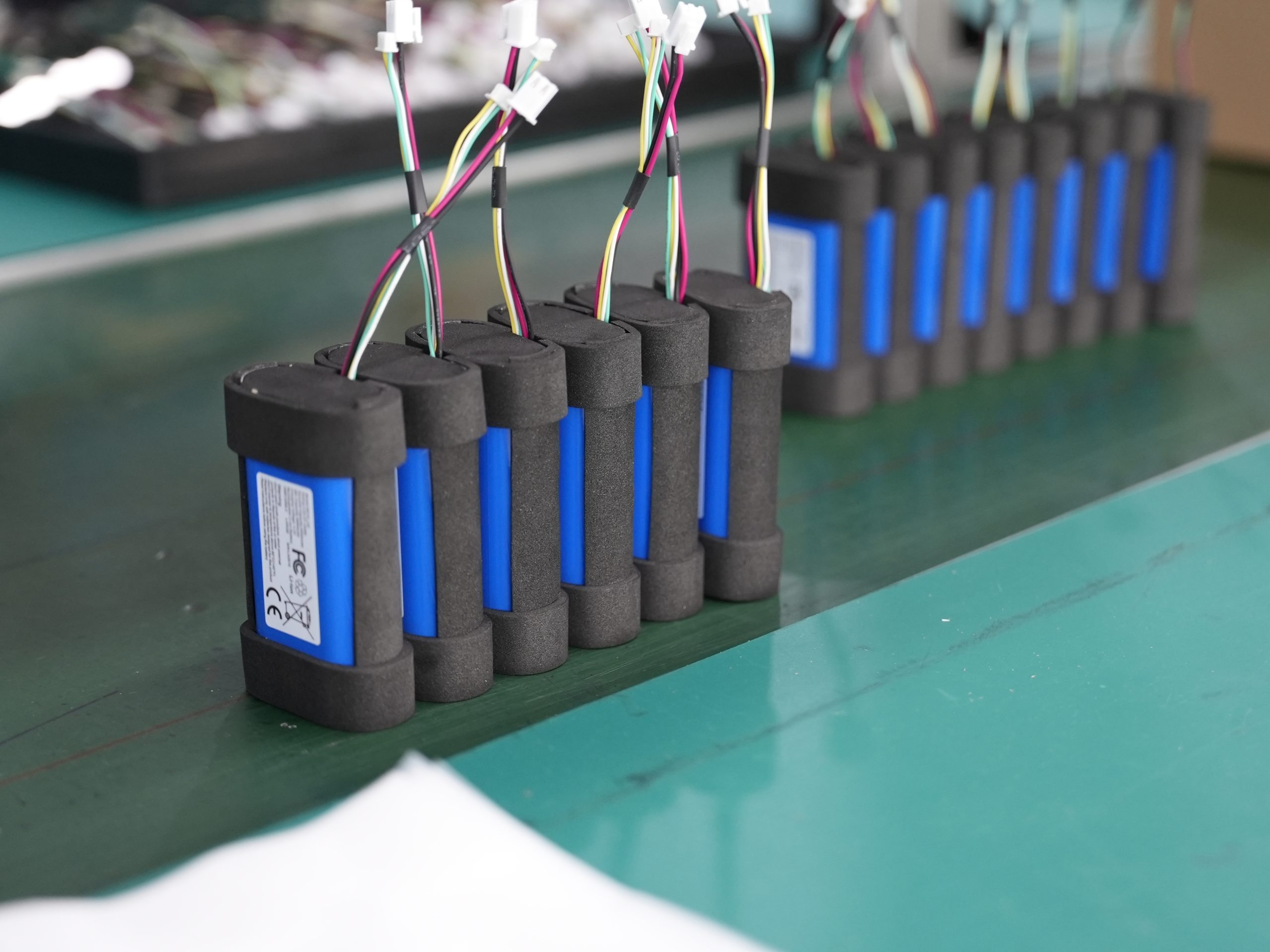
You face significant challenges when joint motors in humanoid robots overheat. High temperatures accelerate the breakdown of insulation materials inside the motor. This process reduces motor efficiency and can cause the robot to lose precise positioning. Axial deformations and drifts may occur, which disrupt the robot’s ability to perform accurate movements. In industrial settings, these problems often lead to unexpected shutdowns. Production lines may halt, and the risk of collisions during human-robot interactions increases. If you rely on robots for tasks in medical, security, or infrastructure sectors, overheating can compromise safety and productivity.
Tip: Monitoring joint motor temperatures helps you prevent sudden failures and maintain consistent performance.
1.2 Reliability and Longevity
Thermal management is critical for ensuring your robots operate reliably over long periods. Excessive heat not only shortens the lifespan of motors but also increases maintenance needs. You may find yourself replacing components more often, which raises operational costs. Lithium battery groups with high-voltage platforms, such as 14S 51.8V systems, help reduce current flow and limit heat generation. This approach supports Humanoid Robot Efficiency by keeping joint motors cooler and extending their service life. In industrial and robotics applications, efficient cooling and battery management systems allow you to schedule maintenance less frequently and avoid costly downtime.
Issue | Effect on Robot | Impact on Operations |
|---|---|---|
Motor Overheating | Reduced accuracy | Unexpected shutdowns |
Poor Thermal Control | Shorter lifespan | Increased maintenance |
You improve reliability and longevity by prioritizing advanced thermal management and high-voltage lithium battery solutions.
Part2: High-Voltage System Advantages
2.1 Voltage, Current, and Heat
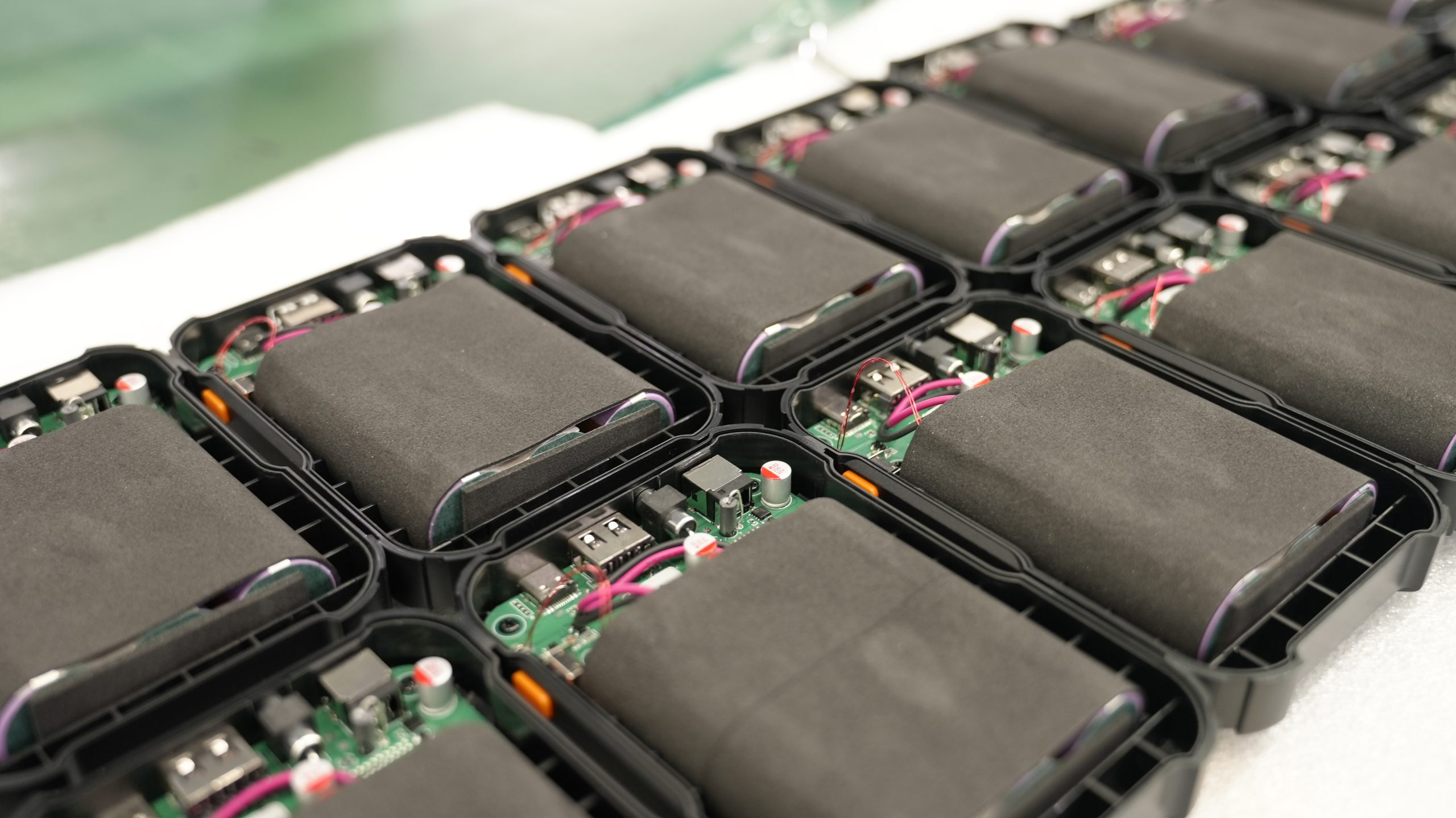
You can boost Humanoid Robot Efficiency by increasing the system voltage in your robots. When you use a 14S 51.8V high-voltage lithium battery system, you lower the current needed for the same power output. This change directly reduces the heat generated in joint motors. For example, a 10kW system at 48V draws only 208A, while the same system at 24V would draw 417A. Lower current means less heat loss due to resistance, which engineers call I²R losses. This reduction in heat helps your robots maintain stable performance, even during demanding tasks.
Raising the voltage allows you to deliver more power without a significant increase in heat. This advantage is crucial for robots that operate in tight spaces or must run for long periods. You can see the benefits in sectors like industrial automation, medical robotics, and security systems, where reliability and uptime matter most.
Note: Lower current not only reduces heat but also allows you to use thinner wires and lighter connectors, which further improves overall system efficiency.
2.2 Effects on Joint Motors
When you reduce current through the joint motors, you protect the motor windings and insulation from thermal stress. This protection leads to longer motor life and fewer failures. Your robots can move with greater precision because the motors stay cooler and maintain their magnetic properties. In medical and infrastructure robots, this stability ensures safe and accurate operation.
You also minimize the risk of sudden shutdowns caused by overheating. This reliability is especially important in industrial and security applications, where downtime can lead to safety risks or lost productivity. By keeping joint motors cool, you support continuous operation and reduce the need for frequent maintenance.
Battery life and performance depend on temperature control.
Effective thermal management systems are essential for safety and longevity.
Maintaining optimal temperature ranges is crucial for efficiency.
2.3 Lithium Battery Benefits
Lithium battery groups offer several advantages for high-voltage applications in humanoid robots. You gain higher energy density, which means you can store more energy in a smaller, lighter package. This feature allows your robots to operate longer without increasing their weight. The batteries can also serve as part of the robot’s structure, adding multifunctionality to your design.
Advantage | Description |
|---|---|
Energy Density | Lithium-ion batteries provide high energy density, allowing for more energy storage in less weight. |
Weight Efficiency | Increased energy density means lighter batteries, enabling robots to carry more power without excess weight. |
Multifunctionality | Batteries can serve structural roles in robots, contributing to their design and functionality beyond just energy storage. |
You can also customize lithium battery packs for different voltages and shapes, which is useful for robots in medical, security, and industrial sectors. Smart Battery Management Systems (BMS) let you monitor battery health in real time, improving safety and performance. Features like modularity and built-in thermal fuses help you manage heat and prevent failures.
Longer run time increases operational efficiency.
Lighter weight reduces the load on robotic systems.
Fast charging enhances productivity.
Thermal control capabilities improve performance in extreme temperatures.
Custom battery packs offer flexibility in design and power.
Smart BMS enables real-time monitoring and protection.
By choosing high-voltage lithium battery groups, you improve Humanoid Robot Efficiency, extend operational life, and reduce maintenance costs. These benefits make lithium batteries the preferred choice for advanced robotics in industrial, medical, and security environments.
Part3: Humanoid Robot Efficiency Gains
3.1 Performance Improvements
You can achieve higher speed and precision in your robots by reducing joint motor heat. Lower temperatures help motors maintain their magnetic properties, which supports accurate movement. When you use a 14S 51.8V lithium-ion battery group, you deliver consistent power to each joint. This stability allows your robots to perform complex tasks in medical, security, and industrial environments.
Cooler motors also extend operational lifespan. Heat causes insulation breakdown and accelerates wear on moving parts. By managing thermal loads, you protect motor windings and bearings. Your robots can operate for longer periods without interruption. In medical robotics, this reliability ensures safe patient care. In security systems, it supports continuous monitoring. Industrial robots benefit from fewer shutdowns and improved productivity.
Tip: Regularly monitor motor temperatures with integrated sensors. This practice helps you detect issues early and maintain peak performance.
Application Scenario | Performance Benefit | Impact on Operations |
|---|---|---|
Medical Robotics | Precise movement | Safe patient handling |
Security Systems | Stable operation | Reliable surveillance |
Industrial Sector | Extended runtime | Higher productivity |
3.2 Energy and Maintenance Savings
You save energy by using high-voltage lithium battery groups. Lower current reduces I²R losses, which means less energy turns into heat. Your robots use power more efficiently, so you can run them longer on a single charge. Lithium-ion batteries with a 14S 51.8V platform offer high energy density and long cycle life. For example, lithium iron phosphate (LiFePO₄) batteries provide over 2,000 cycles at 51.8V, while nickel manganese cobalt (NMC) batteries deliver even higher energy density for compact designs.
Battery Chemistry | Platform Voltage | Energy Density (Wh/kg) | Cycle Life (cycles) |
|---|---|---|---|
Lithium Iron Phosphate | 51.8V | 120-160 | 2,000+ |
NMC | 51.8V | 180-220 | 1,000-2,000 |
Efficient thermal management also lowers maintenance costs. You replace fewer components because motors and batteries stay within safe temperature ranges. Smart Battery Management Systems (BMS) track battery health and temperature in real time. This technology helps you schedule maintenance based on actual usage, not fixed intervals. You avoid unexpected downtime and reduce labor costs.
Lower energy consumption increases uptime.
Fewer repairs mean less disruption to your operations.
Smart BMS improves safety and reliability.
You see these gains in medical robots that require long shifts, security robots that patrol large areas, and industrial robots that work in demanding environments. Efficient lithium battery groups support Humanoid Robot Efficiency and help you maintain a competitive edge.
Part4: Implementation Considerations
4.1 Safety and Design
When you implement high-voltage lithium battery groups in humanoid robots, you must address several safety and integration challenges. High-voltage systems require careful planning to ensure both operator and equipment safety. You need to select between wireless and contact-based charging designs. Each method offers unique benefits and limitations for mobile robots in industrial, medical, and security applications.
Charging Method | Advantages | Limitations |
|---|---|---|
Wireless | No exposed contacts, safer in wet settings | Lower efficiency, higher cost |
Contact-based | Higher efficiency, faster charging | Exposed contacts, potential wear |
You must also consider the following design factors:
Choose charge output power, voltage, and current based on your robot’s energy needs.
Integrate a robust Battery Management System (BMS) to monitor charging accuracy, balance cells, and prevent damaging energy spikes.
Use fire-retardant materials and automated fire suppression to prevent fire or explosion.
Ensure compliance with regulations, such as limiting battery State of Charge (SOC) during storage and verifying BMS safety cut-off mechanisms.
Plan for early integration of battery systems to improve performance and regulatory compliance.
You should also evaluate sustainability and conflict minerals sourcing when selecting lithium battery chemistries for your robots. These considerations support responsible manufacturing and long-term reliability.
Tip: Always verify that your battery packs meet cycle life and capacity retention standards through rigorous testing.
4.2 Real-World Cases
Field deployments in industrial and medical robotics show that high-voltage lithium battery groups reduce joint motor heat and improve uptime. You can track performance using metrics such as junction temperature, thermal resistance, and airflow. For example, robots with 14S 51.8V lithium iron phosphate (LiFePO₄) or nickel manganese cobalt (NMC) battery groups maintain lower component temperatures during heavy use. This stability leads to fewer shutdowns and longer operational cycles.
You should monitor:
Junction temperature (Tj) and temperature rise above ambient.
Thermal resistance of motor assemblies.
Airflow and static pressure to optimize cooling.
Fan performance using measured PQ curves.
In security and infrastructure robots, robust BMS and voltage monitoring systems prevent overcharging and short circuits. Smart charging circuits cut off power at full charge, while protective circuit modules (PCM) add another layer of safety. These features help you meet industry standards and extend battery lifespan, supporting efficient and sustainable robot operations.
By focusing on safety, design, and real-world performance, you ensure your robots deliver reliable service in demanding environments.
You gain clear advantages by adopting a 14S 51.8V high-voltage lithium battery system. This upgrade reduces joint motor heat, which improves Humanoid Robot Efficiency, reliability, and operational lifespan.
You enhance automation efficiency and precision, making it easier to integrate advanced technologies like AI.
You support scalability and modularity in production lines, which streamlines operations and lowers costs.
You align with industry trends that favor sustainability, cost reduction, and smart factory concepts.
Improved thermal management with high-voltage systems leads to more capable robots that perform complex tasks and operate longer. Consider high-voltage upgrades to stay competitive in robotics.
FAQ
What are the main benefits of using a 14S 51.8V lithium battery group in humanoid robots?
You gain lower joint motor heat, higher energy density, and longer operational cycles. These advantages improve uptime and reliability in industrial, medical, and security robots.
How does high voltage reduce maintenance needs in robotic applications?
High voltage lowers current, which reduces heat and wear on motors. You replace fewer components and schedule maintenance less often, saving time and operational costs.
Which lithium battery chemistry is best for long cycle life in industrial robots?
Lithium iron phosphate (LiFePO₄) offers over 2,000 cycles at 51.8V. You get stable performance and enhanced safety, making it ideal for demanding industrial and infrastructure environments.
Can you customize lithium battery groups for different robot designs?
You can tailor battery packs for voltage, shape, and energy needs. This flexibility supports specialized robots in medical, security, and industrial sectors.
What safety features should you include when integrating high-voltage lithium batteries?
You should use smart Battery Management Systems (BMS), fire-retardant materials, and automated fire suppression. These features protect your robots and meet industry safety standards.


