

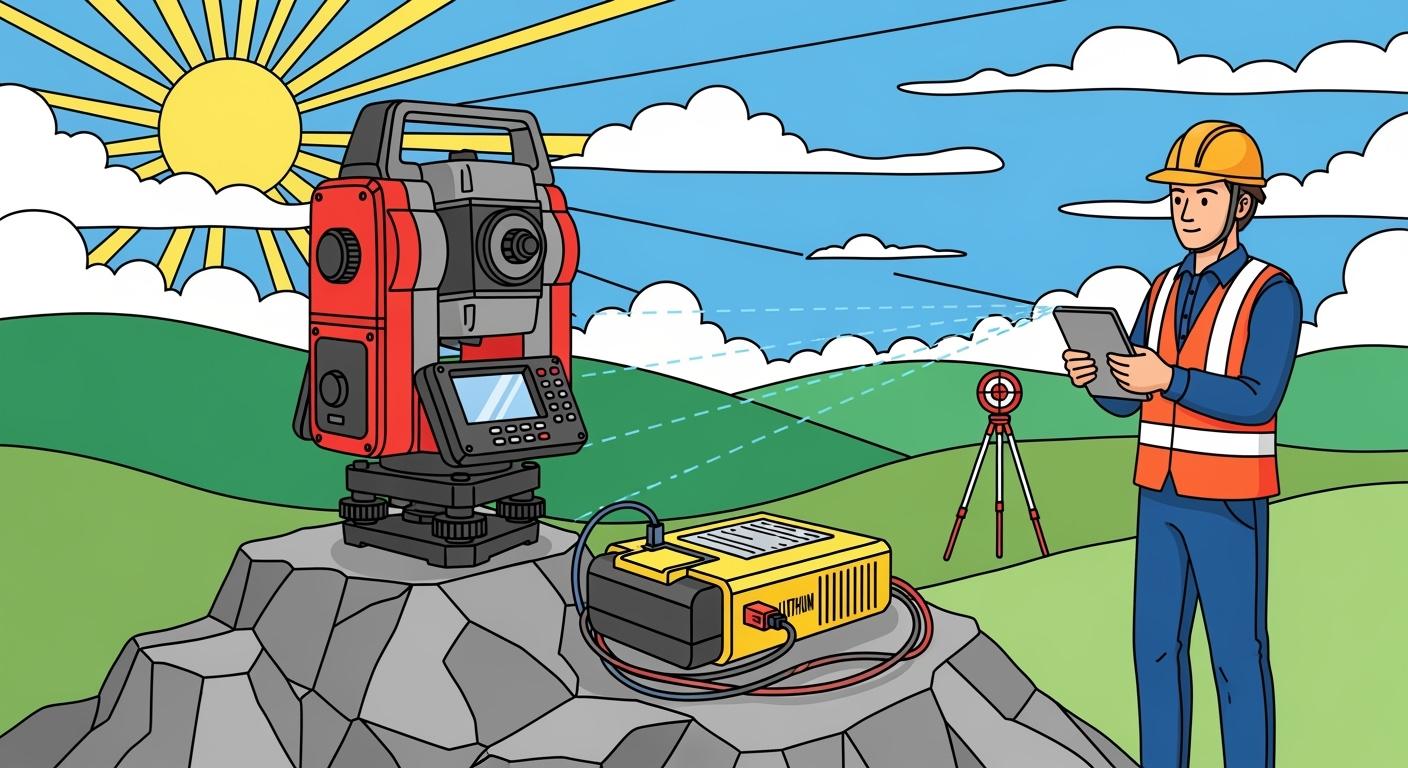
You rely on lithium battery solutions to deliver consistent performance when you survey industrial sites or measure critical infrastructure. Immediate readiness lets you deploy equipment without delay, and long-term storage ensures batteries stay reliable between projects. You benefit from flexibility in the field since lithium battery packs eliminate hard-wiring requirements. Safety features and advanced battery management systems protect your devices and support dependable operation. Lithium battery systems achieve high charging efficiency, require minimal maintenance, and offer custom configurations to match your needs.
Key Takeaways
Choose high-quality lithium batteries for consistent voltage output. This ensures accurate measurements and prevents unexpected shutdowns during surveys.
Utilize lithium batteries with low self-discharge rates. This feature allows for long-term storage without losing charge, ensuring immediate readiness for fieldwork.
Select compact and lightweight lithium battery packs. Their design eliminates hard-wiring, making transport and installation easier in remote locations.
Match battery capacity and voltage to your equipment needs. This ensures optimal performance and extends the runtime of your devices during surveys.
Prioritize suppliers with strong quality control and certifications. This guarantees reliable performance and safety for your lithium battery solutions.
Part1: Lithium Battery Solutions for Field Accuracy

1.1 Consistent Power for Surveying Devices
You depend on stable power to achieve accurate results during every survey. Lithium battery solutions deliver consistent voltage output, which supports the precise operation of your measurement instruments. When you use high-quality lithium battery packs, you avoid unexpected shutdowns and signal interruptions. These interruptions can compromise the accuracy of your survey data. If you rely on a weak or damaged battery, you may experience GNSS signal loss and reduced operating time. Reliable power ensures your total station lithium battery maintains performance throughout the survey process.
Consistent voltage output supports precision instruments.
High-quality batteries prevent shutdowns and signal interruptions.
Reliable power maintains GNSS signal and operating time.
Tip: Always check the health of your lithium battery before starting a survey. This practice helps you avoid disruptions and ensures accurate measurements.
1.2 Immediate Use and Storage Benefits
You often need your equipment to be ready at a moment’s notice. Lithium battery solutions offer a low self-discharge rate, so you can store your batteries for weeks and still retain most of their charge. This feature makes lithium battery packs ideal for intermittent use in industrial and infrastructure surveys. When you deploy a total station lithium battery after storage, you experience immediate readiness. You do not waste time waiting for charging or replacing batteries. This advantage increases your efficiency and supports rapid response in field operations.
Low self-discharge rate keeps batteries charged during storage.
Immediate readiness supports quick deployment.
Ideal for intermittent use in industrial and infrastructure surveys.
Note: Lithium battery packs outperform older chemistries like NiMH or lead-acid in storage performance. You gain more flexibility and reliability for your survey equipment.
1.3 Eliminating Hard-Wiring for Flexibility
You need flexibility when you work in remote or challenging environments. Lithium battery solutions remove the need for hard-wired power sources. You can transport and install your survey equipment easily because lithium battery packs are compact and lightweight. This design supports deployment in locations where traditional fuel-based generators are not practical. You benefit from scalable and maintenance-free power, which allows you to focus on your survey tasks. Total station lithium battery packs operate effectively in extreme conditions, so you can trust your equipment in harsh environments.
No hard-wiring required for field deployment.
Compact and lightweight design improves transport and installation.
Scalable and maintenance-free power supports remote surveys.
Feature | Benefit for Survey Equipment |
|---|---|
No hard-wiring | Flexible deployment |
Lightweight design | Easy transport |
Extreme condition use | Reliable performance |
Callout: Lithium battery solutions help you deploy industrial measurement equipment in medical, robotics, security systems, and infrastructure sectors. You gain reliable power and flexibility across diverse applications.
Part2: Power and Compatibility in Industrial Applications
2.1 Capacity and Runtime Needs
You must select lithium battery solutions that match the capacity and runtime requirements of your survey equipment. Capacity determines how long your devices operate in the field before recharging. Industrial applications demand batteries with high capacity to support extended survey missions. You can predict total energy consumption by considering motors, sensors, and photovoltaic panels. Smart energy management systems optimize your equipment’s path and speed. Adding a safety margin—usually 20%—ensures you have enough energy at the end of your survey. Real-time monitoring of motor voltage, battery status, and environmental data helps you maintain safety and performance.
Use Case | Typical Voltage | Capacity Range | Application Notes |
|---|---|---|---|
Small fishing boats | 12V | ~60Ah LiFePO₄ | Powers sonar and small motors for several hours |
Mid-size cruisers | 24V | ~100Ah bank | Supports multiple loads like fridge, navigation, lights |
Liveaboard / extended use | 24V or higher | 2× 100–200Ah | Hybrid charging setups with engine, solar, shore power |
Tip: Factor in energy from photovoltaic panels. This can increase available battery capacity by up to 21% during survey missions.
2.2 Voltage and Discharge Rate
You need to match the voltage and discharge rate of your lithium battery to your survey equipment. Voltage affects device compatibility and performance. Discharge rate determines how quickly your equipment draws power. Lithium battery solutions provide stable voltage output and high discharge rates, which support demanding industrial applications. You must monitor voltage and current to maintain safety and prevent equipment damage. Choosing the right platform voltage ensures your total station lithium battery operates efficiently.
Battery Chemistry | Platform Voltage | Energy Density | Cycle Life | Application Scenario |
|---|---|---|---|---|
LiFePO₄ | 3.2V | 90–160 Wh/kg | 2,000–5,000 cycles | Medical, robotics, infrastructure |
NMC | 3.7V | 150–220 Wh/kg | 1,000–2,000 cycles | Security systems, industrial |
LCO | 3.7V | 150–200 Wh/kg | 500–1,000 cycles | Consumer electronics |
LMO | 3.7V | 100–150 Wh/kg | 300–700 cycles | Industrial, infrastructure |
2.3 Custom Fit for Equipment
You benefit from lithium battery customization options that fit your survey equipment. Manufacturers offer battery cell customization, battery management system customization, and battery structure customization. These services ensure your lithium battery integrates seamlessly with your devices. Custom lithium battery solutions deliver high energy density, lightweight design, fast charging, built-in safety protection, and long cycle life. You gain improved compatibility and performance for specialized measurement devices.
Customization Type | Description |
|---|---|
Battery Cell Customization | Tailoring the battery cells to specific needs |
BMS Customization Services | Customizing the Battery Management System |
Battery Structure Customization Services | Modifying the physical structure of the battery |
Note: Custom lithium battery solutions are essential for survey equipment in medical, robotics, security systems, infrastructure, and industrial sectors.
2.4 Total Station Lithium Battery Use Cases
You rely on total station lithium battery packs for uninterrupted survey operations. These batteries eliminate mid-day downtime, maintain stable voltage in cold weather, and reduce risk of damage in high temperatures. Low self-discharge rates keep your equipment ready for weeks. Enhanced durability ensures your lithium battery lasts longer with no memory effect. You improve project timelines and operational efficiency by using batteries with 300 to 500 discharge-charge cycles and a lifespan of 2 to 3 years. Maintaining a moderate charge state preserves battery health and safety features.
Use Case | Benefit |
|---|---|
Eliminating Mid-Day Downtime | No need for battery swapping and recharging, allowing projects to flow smoothly. |
Superior Performance in Cold Weather | Maintains stable voltage output in freezing conditions, ensuring reliable operation. |
Heat Resilience | Reduces risk of damage and capacity loss in high temperatures, suitable for diverse climates. |
Low Self-Discharge Rate | Holds charge for weeks, ensuring equipment is always ready for use. |
Enhanced Durability | Built to endure field conditions with no memory effect, leading to longer lifespan. |
Periodic cycling: Charge to 50% capacity, discharge to around 20% every few months.
Maintain a moderate charge state to preserve battery health and safety features.
Callout: You achieve reliable survey results and maximize efficiency by selecting lithium battery solutions with advanced safety features and custom fit options.
Part3: Safety and Performance Features

3.1 Built-in Safety Features
You need reliable safety features in lithium battery packs to protect your survey equipment and ensure uninterrupted operations. Protection circuit modules (PCM) safeguard against overcharging, over-discharging, short circuits, and excessive current. High-grade lithium-ion cells from reputable manufacturers deliver better performance and safety. Battery management systems (BMS) monitor and control each cell, reducing risks of failure.
Safety Feature | Description |
|---|---|
Protection Circuit Module (PCM) | Safeguards against overcharging, over-discharging, short circuits, and excessive current. |
Cell Quality | High-grade lithium-ion cells from reputable manufacturers ensure better performance and safety. |
Protection Type | Description |
|---|---|
Over-current | |
Over-discharge | Protects against under-voltage conditions that can damage the battery. |
Over-charge | Prevents over-voltage situations that can lead to battery failure. |
Monitors temperature to avoid thermal runaway and potential fires. | |
Cell unbalance | Ensures even charge distribution in multi-cell packs to prevent failure. |
Tip: Choosing lithium battery solutions with advanced protection circuits and high-quality cells helps you meet sustainability goals and avoid conflict minerals.
3.2 Temperature and Environmental Resistance
You often work in environments with extreme temperatures and challenging conditions. Lithium battery packs must operate reliably in deep-well, high-temperature settings and cold, high-altitude locations. You depend on robust enclosure designs to protect against moisture and dust. Sealed construction and moisture management techniques help mitigate humidity effects. Advanced battery management systems monitor environmental stressors and maintain performance.
Robust enclosure design protects against moisture and dust exposure.
Moisture management prevents battery swelling and leakage.
Hydrofluoric acid from moisture can corrode battery components and degrade performance.
Callout: Lithium battery solutions with environmental resistance support survey operations in medical, robotics, security systems, infrastructure, and industrial sectors.
3.3 Battery Management and Testing
You rely on battery management systems for real-time monitoring of voltage, current, and temperature. High-precision measurement systems use techniques like electrochemical impedance spectroscopy to assess battery health. Automated testing solutions enable continuous monitoring and testing under various conditions. Regular battery testing helps maintain health and extends lifespan. Monitoring voltage levels and discharge rates allows you to predict capacity and prevent safety hazards. Proactive testing can extend battery life by 52%. Proper charging habits and storage conditions improve field productivity and reliability.
Battery management systems ensure safe operation and accurate survey results.
High-precision measurement systems provide detailed battery health assessments.
Automated testing solutions maintain performance and safety standards.
Regular testing prevents hazards and extends battery life.
Note: Reliable lithium battery packs and regular maintenance help you achieve efficient and accurate survey operations across all industrial applications.
Part4: Selecting the Right Lithium Battery Solution
4.1 Size, Weight, and Portability
You need to consider size and weight when choosing a lithium battery for industrial surveying equipment. Portable batteries help you move devices easily between job sites. You can see how different battery types compare in the table below:
Battery Type | Weight (grams) | Energy Density (Wh/kg) |
|---|---|---|
Typical cell | 30-40 | N/A |
Laptop battery | 240-960 | 80-120 |
Smartphone battery | 20-40 | N/A |
400Whr pack | 4000 | N/A |
18650 cell | 50 | N/A |
A lightweight lithium battery increases fieldwork efficiency. You can carry more equipment and reduce fatigue. Portable batteries also function in extreme conditions, which supports operations in medical, robotics, security systems, infrastructure, and industrial sectors.
Reliable power ensures accurate measurement.
High-quality portable batteries improve productivity and project completion time.
Poor maintenance can cause shutdowns and costly downtime.
Tip: Choose a lithium battery pack that matches your device’s energy needs and supports easy transport.
4.2 Supplier Quality and Certifications
You should evaluate supplier quality and certifications before purchasing a lithium battery. Reliable suppliers use strict quality control measures, traceability systems, and long-term supply agreements. These practices ensure consistent performance and support ongoing projects. The table below highlights key aspects:
Aspect | Impact on Reliability |
|---|---|
Quality Control Measures | Ensures consistent performance across batches |
Traceability Systems | Maintains battery system integrity over time |
Long-Term Supply Reliability | Supports stable lead times and technical support |
Certifications like UL and ISO 9001 show that a supplier meets safety and quality standards. UL 2580 certification, for example, means the lithium battery can withstand harsh conditions and maintain safety. You should also review supplier policies on conflict minerals to support responsible sourcing.
UL certification ensures safety and performance.
ISO 9001 compliance shows strong quality management.
Reliable suppliers perform capacity grading, resistance testing, and batch tracking.
4.3 Integration with Surveying Equipment
You must ensure that your lithium battery integrates smoothly with your surveying equipment. Legacy systems may not support modern battery management or communication protocols. This can lead to suboptimal charging and reduced battery life. You should select batteries that match your equipment’s voltage, chemistry (LiFePO4, NMC, LCO, LMO), and energy management needs. Integration supports real-time analytics and predictive maintenance, which are essential for medical, robotics, and industrial applications.
Note: Consider sustainability when selecting and integrating lithium battery solutions.
You enhance reliability and accuracy in industrial surveying when you choose advanced lithium battery solutions. These batteries support flexible deployment in medical, robotics, security systems, infrastructure, and industrial sectors. You benefit from features like monitoring state of charge, voltage regulation, and cell balancing, which ensure consistent performance. The table below highlights how lithium battery technology improves field operations:
Key Functionality | Description |
|---|---|
Monitoring State of Charge | Prevents overcharging or over-discharging for optimal performance. |
Regulating Voltage | Avoids deep discharges, enhancing reliability. |
Balancing Cell Performance | Ensures consistent energy output in all conditions. |
High Forecasting Precision | Enables timely interventions for battery health. |
You should evaluate safety features, compatibility, and supplier quality before selecting a lithium battery. Battery management systems and performance testing help you maintain dependable field performance. Prioritize robust lithium battery solutions to achieve accurate results and long-term value.
FAQ
What makes lithium battery packs ideal for industrial surveying equipment?
You get high energy density, long cycle life, and stable voltage from lithium battery packs. These features support accurate measurements in industrial, medical, and robotics applications. You also benefit from lightweight design and flexible deployment.
How do you choose the right lithium battery chemistry?
You should match battery chemistry to your equipment needs. LiFePO4 offers long cycle life and safety. NMC provides high energy density. LCO suits consumer electronics. LMO works well in industrial and infrastructure sectors.
Can lithium battery packs operate in extreme temperatures?
Yes. You can use lithium battery packs in high or low temperatures. Robust enclosure designs and advanced battery management systems protect against moisture, dust, and temperature swings. This ensures reliable performance in security systems and outdoor infrastructure projects.
Why is a Battery Management System (BMS) important?
A BMS monitors voltage, current, and temperature. You prevent overcharging, over-discharging, and cell imbalance. This system extends battery life and ensures safe operation in medical, robotics, and industrial applications.
How do you maintain lithium battery packs for best performance?
You should store batteries at moderate charge, avoid deep discharges, and test regularly. Use automated testing solutions to monitor health. Proper maintenance increases reliability and reduces downtime in all industrial sectors.


