

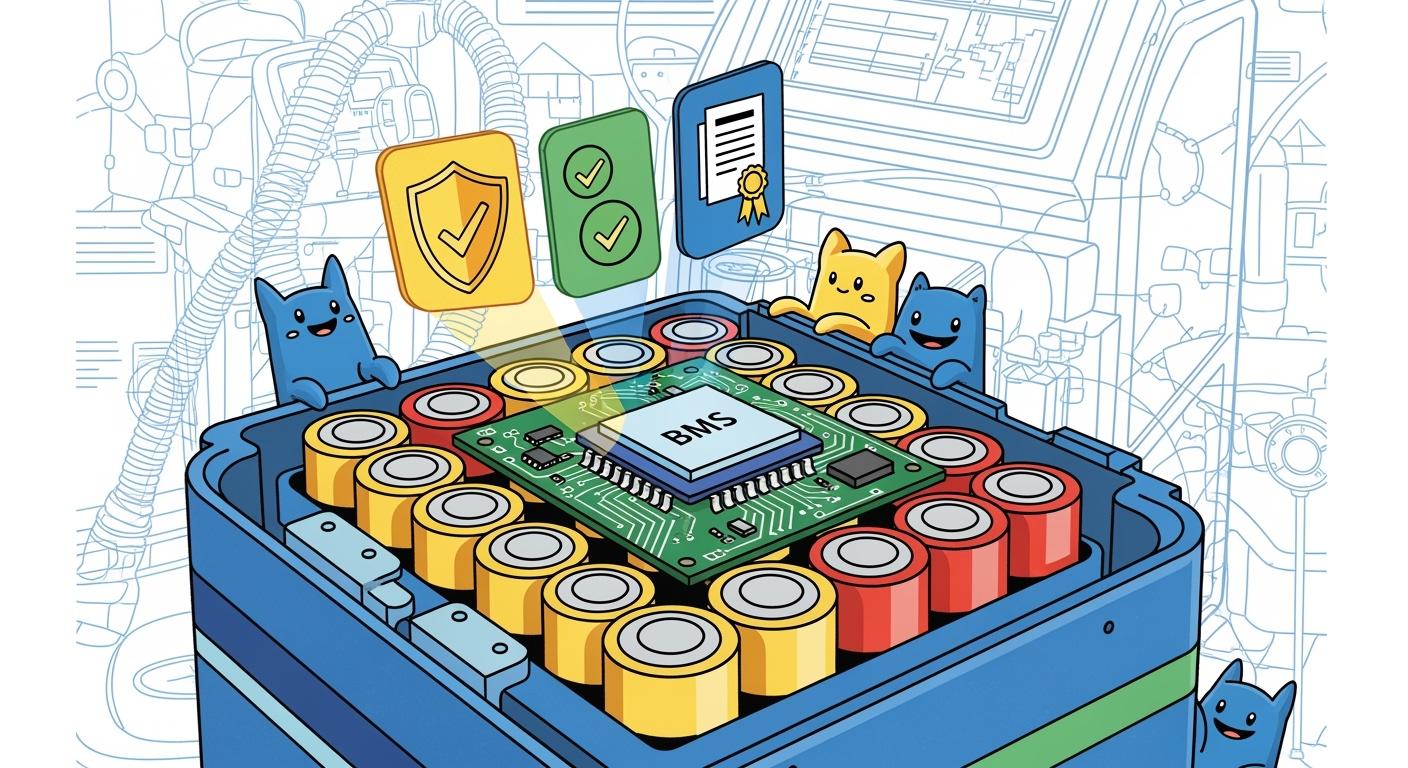
You must ensure Safety and Compliance when selecting lithium battery packs for ventilators. Custom battery design plays a critical role in medical applications. You benefit from:
Certifications such as UL, CE, or IEC 62133, which prove safety.
Integrated protections that guard against overcharge, over-discharge, short circuits, and thermal runaway.
If you overlook robust protection circuits or global certification, you risk device failure and patient safety. Reliable battery management systems and redundancy help you meet strict medical standards.
Key Takeaways
Ensure your Battery Management System (BMS) includes essential safety functions like monitoring, cell balancing, and fault management to protect patients and devices.
Integrate redundancy in your battery design to prevent total failure. Backup circuits and sensors enhance reliability in critical medical applications.
Achieve IEC 62133 certification to meet global safety standards. This certification ensures your battery packs are tested for overcharging, short circuits, and thermal runaway.
Follow strict handling and storage guidelines for lithium battery packs. Proper training and safe practices help maintain compliance and prevent accidents.
Stay updated on regulatory changes and advancements in battery technology. Continuous education and audits ensure ongoing safety and compliance.
Part1: BMS Design Essentials
1.1 Safety Functions in BMS
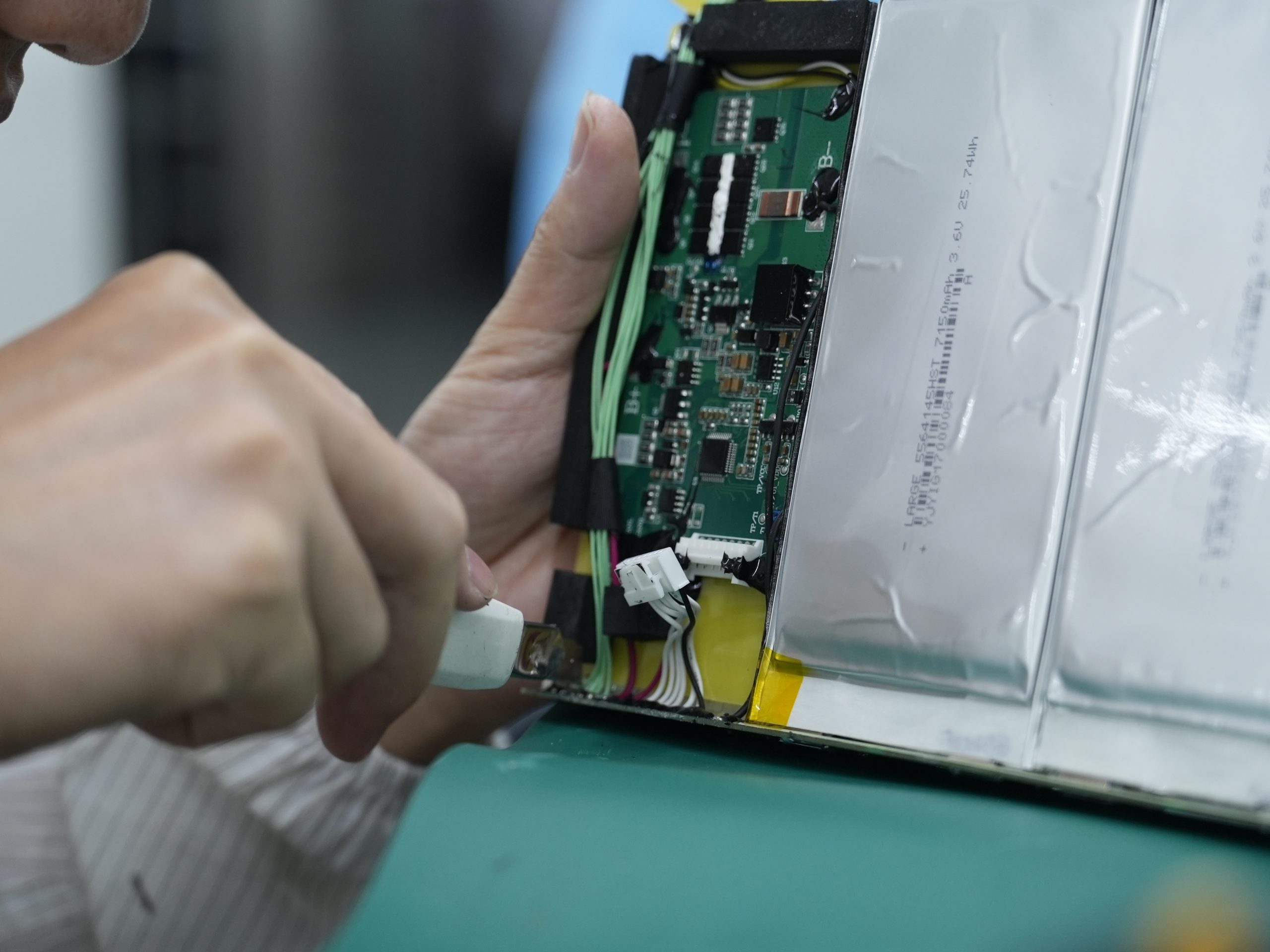
You need a robust Battery Management System (BMS) to ensure the safety and reliability of ventilator lithium battery packs. The BMS acts as the central control unit, constantly monitoring and managing the battery’s performance. This system protects your equipment and patients by minimizing risks such as overcharging, over-discharging, and thermal runaway.
The most critical safety functions in a BMS include:
Safety Function | Description |
|---|---|
Monitoring Parameters | The BMS tracks voltage, current, and temperature to keep the battery within its safe operating area. |
Cell Balancing | The system ensures all cells charge at the same rate, preventing unsafe imbalances. |
Protection Mechanisms | The BMS guards against abusive charging, extreme temperatures, and hazardous conditions. |
Fault Condition Management | The system triggers alerts or safe modes if safety parameters are exceeded. |
Hazard Identification and Risk Analysis | The BMS identifies potential hazards and evaluates risks to meet safety standards. |
You benefit from these safety functions in several ways:
You minimize faults and short circuits.
You prevent overcharging and over-discharging.
You avoid thermal runaway.
You insulate cell terminals to prevent accidental contact.
You monitor temperature, voltage, and current continuously.
A modern BMS also detects electrical faults, insulation problems, and thermal issues. For example, it can identify bad connections, blown fuses, or sensor errors. The BMS uses graded warning levels to respond to faults, from simple alerts to immediate shutdowns. This approach ensures that your ventilator battery packs operate safely and reliably in critical medical environments.
1.2 Compliance Features in BMS
You must design your BMS to meet international medical device safety standards. These standards require specific compliance features that protect both the device and the patient. The following table summarizes the essential compliance features for ventilator lithium battery packs:
Compliance Feature | Description |
|---|---|
Overcharge protection | The BMS cuts off charging at 4.25V per cell. |
Over-discharge protection | The system stops discharging at 2.75V per cell. |
Temperature monitoring | The BMS operates safely from -20°C to 60°C. |
Short-circuit protection | The system prevents damage from short circuits. |
Compliance with UL 2054 | The BMS meets recognized safety standards. |
PTC thermistor | The thermistor suppresses thermal runaways. |
Aluminum-laminated polymer film | The film prevents leaks and punctures. |
Compliance with IEC 60601-1 | The BMS meets medical-grade requirements. |
You enhance Safety and Compliance by integrating redundant protection circuits. Secondary protection circuits provide an extra layer of safety, which is crucial for medical applications. For example, you can use both temperature cutoffs and current interrupt devices. This redundancy ensures that if one protection method fails, another will activate to maintain safety.
Recent advancements in BMS technology also improve Safety and Compliance. Continuous monitoring detects abnormalities early. Effective cooling systems prevent overheating. Strict adherence to regulatory standards ensures your ventilator battery packs meet the highest safety requirements.
Note: Always verify that your BMS design includes all required compliance features and redundant safety mechanisms. This practice protects your business, your clients, and the patients who rely on your medical devices.
Part2: Redundancy for Reliability
2.1 Importance of Redundancy
You must prioritize redundancy when designing lithium battery packs for ventilators. Redundancy means that your system includes backup components or circuits. If one part fails, another takes over. This approach prevents total battery failure, which is critical in medical devices like ventilators. Patients depend on continuous operation, so you cannot risk a single point of failure.
Redundant systems increase the reliability of your battery packs. You reduce the risk of unexpected shutdowns. You also improve patient safety by ensuring that power remains available during emergencies. In the medical field, even a brief interruption can have serious consequences. You need to meet strict Safety and Compliance standards, and redundancy helps you achieve this goal.
Tip: Always test your redundant systems under real-world conditions. This practice helps you identify weak points before deployment.
2.2 Redundant Circuits in Battery Packs
You can implement redundancy in several ways. The most common method involves adding extra protection circuits to your Battery Management System (BMS). For example, you might use dual temperature sensors or parallel current interrupt devices. If one sensor fails, the other continues to monitor the battery.
Here is a comparison of common redundancy approaches:
Redundancy Method | Description | Application Example |
|---|---|---|
Dual BMS Controllers | Two controllers manage battery safety | Ventilators, robotics |
Parallel Fuses | Multiple fuses protect against overcurrent | Security systems, medical |
Redundant Cell Strings | Extra cell strings provide backup power | Infrastructure, industrial |
You should know that adding redundancy increases both the complexity and the cost of your battery packs. You need more components and more advanced safety features. However, the benefits outweigh these challenges in critical applications. You ensure that your ventilator battery packs meet the highest standards for Safety and Compliance.
Note: Choose the right level of redundancy based on your application’s risk profile and regulatory requirements.
Part3: IEC 62133 Compliance
3.1 IEC 62133 Overview
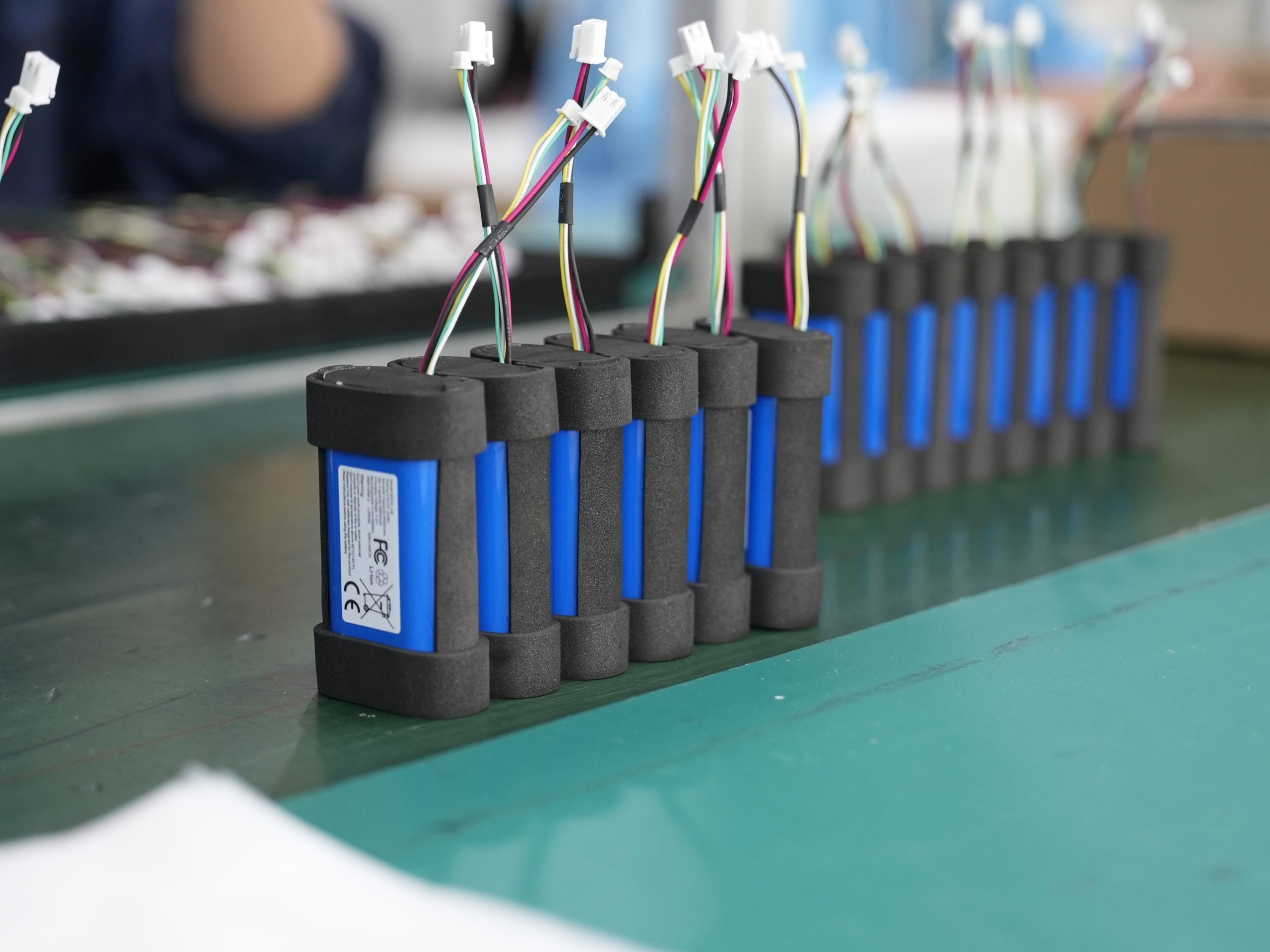
You must understand IEC 62133 if you want to achieve global Safety and Compliance for lithium battery packs in medical ventilators. IEC 62133 sets the international benchmark for rechargeable battery safety. This standard covers LiFePO4 Lithium battery, NMC Lithium battery, LCO Lithium battery, and LMO Lithium battery chemistries. You see IEC 62133 referenced in regulatory submissions and device approvals across medical, industrial, and infrastructure sectors.
The scope of IEC 62133 includes both cell-level and battery pack-level requirements. You need to show compliance at the device battery pack level, especially for medical and industrial handheld applications. The table below explains why IEC 62133 is essential for ventilator battery packs:
Product area | Typical battery form | Why IEC 62133 shows up |
|---|---|---|
Medical and industrial handheld | Device battery pack | Often used as part of safety compliance evidence for device-level approvals |
You benefit from IEC 62133 because it harmonizes safety requirements worldwide. You reduce risks such as overcharging, over-discharging, short-circuiting, and thermal runaway. The following table summarizes how IEC 62133 addresses key safety aspects:
Safety Aspect | Description |
|---|---|
Overcharging | Prevents excessive charging that can lead to battery failure or fire. |
Over-discharging | Ensures batteries do not discharge below safe levels, preventing damage. |
Short-circuiting | Addresses risks of electrical shorts that can cause overheating. |
Thermal runaway | Mitigates risks of uncontrolled temperature increases leading to fires. |
You see fewer battery-related safety incidents in the medical device industry because IEC 62133 enforces strict testing and documentation. You must also consider sustainability and responsible sourcing when selecting battery packs. If you want to learn more about sustainable practices, visit our approach to sustainability. For information on conflict minerals, review our conflict minerals statement.
3.2 Steps for Certification
You must follow a structured process to achieve IEC 62133 certification for ventilator lithium battery packs. You start by selecting the right battery chemistry, such as LiFePO4 Lithium battery or NMC Lithium battery, based on platform voltage, energy density, and cycle life. You then prepare samples for testing and documentation.
The certification process includes several steps:
Sample Preparation
You provide at least 5 cells and 5 battery packs for each test. You ensure samples represent the final product.Safety Testing
You submit samples to an ISO 17025-accredited laboratory. Tests simulate normal use and foreseeable misuse. You must test at both cell and battery pack levels. Destructive testing means samples are consumed.Testing Duration and Cost
You expect testing to last 6-12 weeks. Costs range from $15,000 to $40,000 depending on complexity.Documentation
You collect detailed test reports, safety data sheets, and compliance statements. The FDA requires you to demonstrate compliance with IEC 62133-2 as part of premarket submissions.Regulatory Review
You submit all documentation to regulators for approval. You must use accredited labs or risk rejection.
The table below summarizes key requirements:
Requirement | Details |
|---|---|
Testing Duration | 6-12 weeks due to cycling and abuse tests |
Sample Size | Minimum of 5 cells and 5 battery packs per test |
Test Costs | Range from $15,000 to $40,000 depending on complexity |
Lab Accreditation | Use an ISO 17025-accredited laboratory for acceptance by regulators |
You face several challenges during certification. You must test both cells and packs, not just cells. You must use accredited labs. You must transition to IEC 62133-2 Edition 1.1 after July 2028. You must test batteries in the context of the final device. You must not skip UN 38.3 if you want to ship products internationally. You must avoid counterfeit cells and verify BMS software.
Challenge | Consequence |
|---|---|
Testing cells only, not packs | Incomplete compliance — pack-level protections not verified |
Using non-accredited test labs | Test reports rejected by regulators |
Ignoring the transition to Edition 1.1 | FDA will reject Edition 1.0 declarations after July 2028 |
Not testing battery in context of final device | IEC 62133 alone is insufficient for medical device approval |
Skipping UN 38.3 | Cannot legally ship products internationally |
Counterfeit or unverified cells | Safety failures in the field — FDA recalls |
Ignoring BMS software | Software bugs can disable protection functions |
You must stay updated with IEC 62133 revisions. The table below shows acceptance deadlines:
Standard Edition | Acceptance Deadline |
|---|---|
IEC 62133-2 Edition 1.0 (2017) | July 2, 2028 |
IEC 62133-2 Edition 1.1 (2021) | After July 2, 2028 |
You ensure Safety and Compliance by following these steps and addressing common challenges. You protect your business and patients by maintaining rigorous standards and ongoing regulatory updates.
Part4: Safety and Compliance Integration
4.1 Best Practices for Medical Battery Packs
You need to combine strong BMS design, redundancy, and IEC 62133 compliance to achieve reliable ventilator battery packs. Leading manufacturers align their processes with FDA, ISO, and IEC standards. They document, validate, and test every step to ensure Safety and Compliance. You should also use robust risk management and traceability systems.
The table below summarizes the key functions and their regulatory relevance:
Function | Purpose | Regulatory Relevance |
|---|---|---|
Overvoltage protection | Prevents cells from exceeding safe voltage | Required by IEC 62133-2 |
Undervoltage protection | Prevents cells from dropping below safe voltage | Required by IEC 62133-2 |
Overcurrent protection | Limits discharge current to safe levels | Required by IEC 62133-2 |
Short circuit protection | Detects and interrupts short circuits | Required by IEC 62133-2 |
Temperature monitoring | Monitors cell and pack temperature | IEC 62133-2, IEC 60601-1 |
Cell balancing | Ensures uniform charge across cells | Industry best practice |
SoC estimation | Reports remaining capacity | Recommended for critical devices |
SoH monitoring | Tracks battery degradation | Recommended for critical devices |
You should implement redundancy for all critical protection functions. Backup mechanisms, such as dual sensors or parallel fuses, help prevent single-point failures. The BMS must disconnect the battery and alert you if it detects an unresolved fault. You also need to validate BMS software according to IEC 62304 and ensure the system is immune to electromagnetic interference.
Tip: Regularly update your compliance documentation and train your engineering team on evolving standards.
4.2 Handling and Storage Guidelines
You must follow strict guidelines for handling and storing lithium battery packs. Regulatory agencies require UN 38.3 certification for international shipping. This certification covers altitude, vibration, thermal cycling, shock, short circuit, and overcharge tests. Without UN 38.3, you cannot legally transport lithium batteries by air, sea, or land.
Follow these best practices for safe handling and storage:
Store battery packs in a cool, dry, and well-ventilated area.
Keep batteries away from direct sunlight and heat sources.
Use insulated containers to prevent accidental short circuits.
Train staff in safe battery handling, including PPE and emergency procedures.
Dispose of damaged or expired batteries according to local regulations.
Continuous education in battery safety is essential. Training programs, such as EV Battery Safety Fundamentals, teach your team about workstation hazards and emergency response. These steps help you maintain Safety and Compliance throughout the battery lifecycle.
You can ensure Safety and Compliance in ventilator lithium battery packs by following these steps:
Prioritize leadership commitment and regular safety audits.
Identify hazards with real-time monitoring and risk assessments.
Standardize procedures and provide ongoing safety training.
Foster a reporting culture for continuous improvement.
Objective | Description |
|---|---|
Redundancy | Use multiple safety layers for reliability and fault tolerance. |
Monitoring | Maintain real-time, precise monitoring of voltage and temperature. |
Compliance | Design BMS to meet IEC 62133 and other standards from the start. |
Stay updated on new technologies and regulations to keep your battery packs safe and compliant.
FAQ
What makes a BMS essential for ventilator lithium battery packs?
You need a BMS to monitor voltage, current, and temperature. The BMS prevents overcharge, over-discharge, and short circuits. This system ensures your ventilator battery packs operate safely and reliably in medical environments.
How does redundancy improve battery safety in medical devices?
You add redundancy by using backup circuits or sensors. If one part fails, another takes over. This approach reduces the risk of power loss and keeps your medical devices running without interruption.
Which lithium battery chemistry suits ventilators best?
Chemistry | Platform Voltage | Cycle Life (cycles) | |
|---|---|---|---|
LiFePO4 Lithium battery | 3.2V | 90–120 | 2000+ |
NMC Lithium battery | 3.7V | 150–220 | 1000–2000 |
You often choose LiFePO4 Lithium battery for long cycle life and safety.
Why do you need IEC 62133 certification for battery packs?
You need IEC 62133 certification to meet global safety standards. This certification proves your battery packs pass strict tests for overcharge, short circuit, and thermal events. Regulators require this for medical and industrial applications.
What are the main steps for safe battery storage?
You store lithium battery packs in cool, dry places. You keep them away from heat and direct sunlight. You use insulated containers and train staff in safe handling. These steps help you prevent accidents and extend battery life.


