

You need batteries that deliver reliable energy storage in cold climates. LiFePO4 and NMC lithium battery packs offer strong performance for solar street lights. If you choose the wrong battery, you risk system failure and costly maintenance. Heating systems and high-efficiency panels help protect your investment and improve cold climate energy storage.
Decision-makers and engineers can use these solutions to ensure street lights stay bright in extreme cold.
Key Takeaways
Choose LiFePO4 batteries for long-term reliability and safety in cold climates. They outperform NMC batteries in cycle life and stability.
Implement heating systems and advanced battery management to maintain optimal battery performance in extreme cold. This prevents failures and reduces maintenance costs.
Utilize effective thermal insulation materials like neoprene and foam to protect batteries from cold temperatures. Proper insulation enhances battery life and efficiency.
Regularly monitor and maintain your solar street light batteries. Check voltage, inspect for damage, and clear snow from solar panels to ensure reliable operation.
Consider emerging battery technologies like sodium-ion and solid-state batteries for future projects. They offer promising performance in extreme cold environments.
Part1: Cold Climate Energy Storage Challenges
1.1 Battery Performance in Low Temperatures
You face unique challenges when using lithium battery packs in cold environments. At temperatures below freezing, battery cells undergo several chemical and physical changes:
Poor kinetics on both the interphase and the electrodes, which increases SEI resistance and reduces the Li+ diffusion coefficient.
Decreased ionic and electronic conductivity, along with increased viscosity and a higher freezing point of the electrolyte.
Lithium plating and dendrite formation on the anode surface, which can compromise safety and shorten cycle life.
Low temperatures significantly affect the charging and discharging efficiency of lithium-based batteries by reducing the mobility of lithium ions, increasing internal resistance, and causing potential safety hazards due to lithium plating.
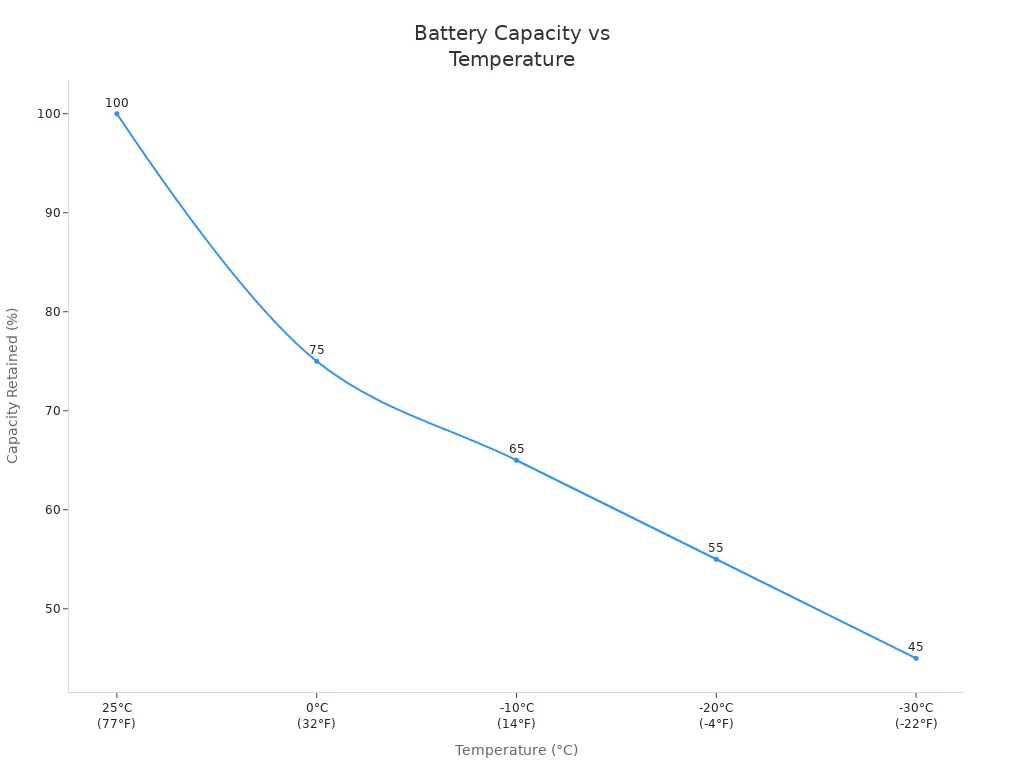
You can see how battery capacity drops as the temperature falls:
Temperature | Approx. Capacity Retained |
|---|---|
25°C (77°F) | ~100% (baseline) |
0°C (32°F) | ~70–80% |
-10°C (14°F) | ~60–70% |
-20°C (-4°F) | ~50–60% |
-30°C (-22°F) | ~40–50% (high risk) |
NMC batteries often perform better than LiFePO4 at low temperatures, but LiFePO4 offers longer cycle life and better safety. Heating systems and advanced battery management can help you maintain performance in cold climate energy storage applications.
1.2 Impact on Solar Street Light Reliability
When you deploy solar street lights in infrastructure, transportation, or industrial sectors, battery performance directly affects reliability. In low temperatures (0-10°C), lithium iron phosphate batteries can lose 30-40% efficiency. Below 0°C, efficiency degradation can exceed 50%, leading to shorter operational hours and reduced brightness. Standard lithium batteries struggle to charge below freezing, which can result in insufficient energy storage and shorter runtimes. These issues highlight the importance of choosing the right battery chemistry and integrating heating systems for cold climate energy storage.
1.3 Photovoltaic Efficiency in Cold Weather
You might expect solar panels to perform worse in cold weather, but the opposite is true. Cold temperatures can enhance solar panel efficiency by 10-13% at 32°F compared to 77°F. This improvement happens because cooler temperatures decrease electrical resistance and increase electron mobility. Solar panels work based on light, not heat, so they often produce more voltage in cold, sunny conditions. Wind chill can further boost performance. Studies show that snow coverage results in only a 3% annual energy loss, much lower than previously thought. These factors make cold climates viable for solar street lighting, especially when paired with the right battery solutions.
Part2: Battery Solutions for Extreme Cold
2.1 NMC vs. LiFePO4 Batteries
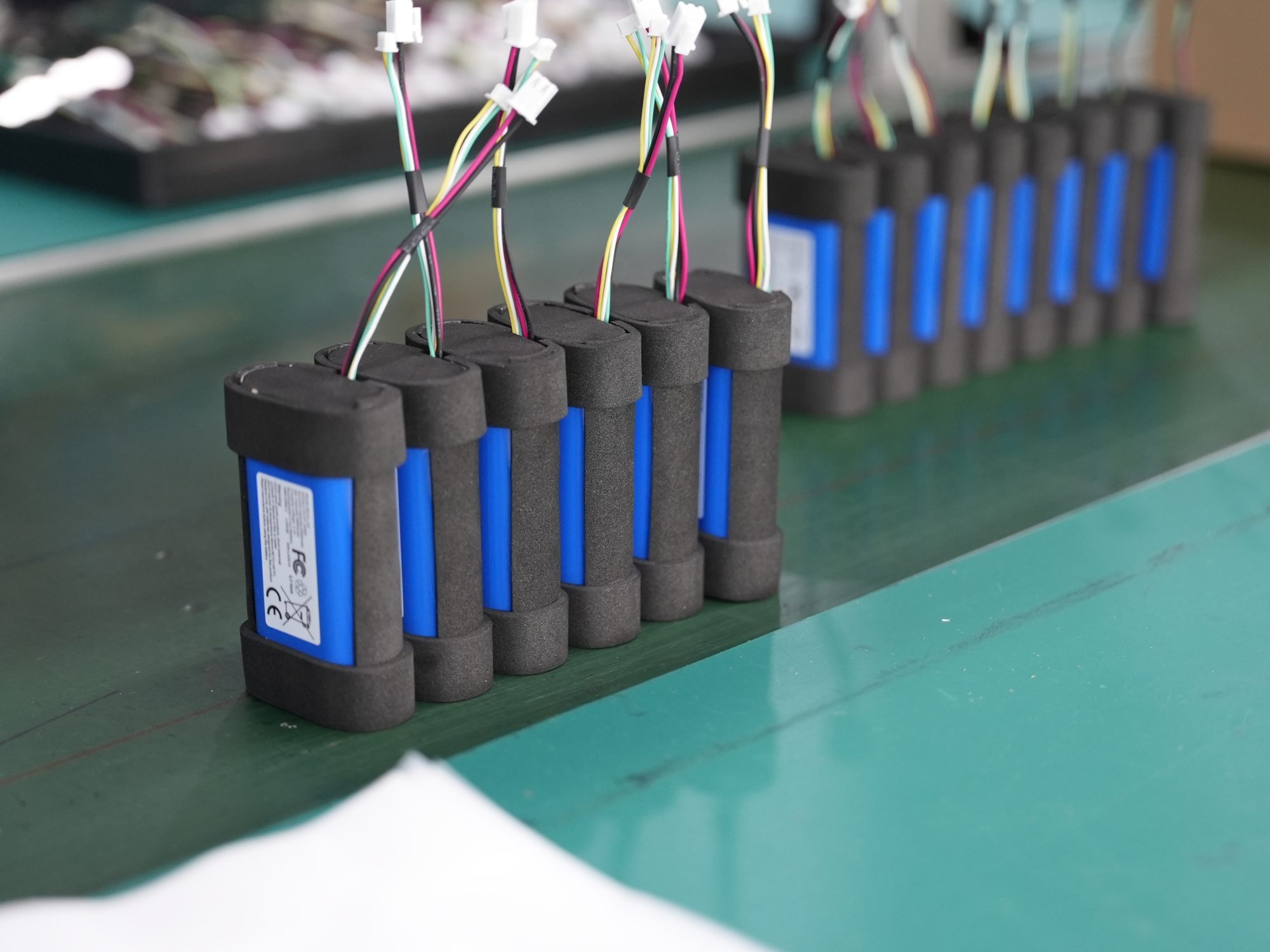
When you select a battery for solar street lights in cold climates, you often compare NMC and LiFePO4 lithium battery packs. Both types have strengths and weaknesses in low temperatures. NMC batteries can deliver better initial performance at sub-zero temperatures. However, you will notice that their cycle life and long-term capacity retention lag behind LiFePO4 batteries.
Battery Type | Cycle Life (Charge Cycles) | Capacity Retention at -20°C |
|---|---|---|
LiFePO4 | 2,000 to 5,000 | Better over time |
NMC | 500 to 1,500 | Lags behind LiFePO4 |
You should also consider safety. NMC batteries face increased internal resistance and capacity loss below 0°C. These issues require extra thermal management, which can add complexity and reduce efficiency. LiFePO4 batteries also lose capacity in extreme cold, sometimes by 30–50% below -10°C, but they offer better safety and longer life. You can use battery heating systems and high-quality LiFePO4 models to reduce these losses.
For a broader view, here is a comparison of common lithium battery chemistries used in solar, medical, robotics, security systems, and consumer electronics:
Battery Type | Platform Voltage (V) | Energy Density (Wh/kg) | Cycle Life (cycles) |
|---|---|---|---|
LiFePO4 | 3.2 | 90–140 | 2,000–5,000 |
NMC | 3.7 | 150–220 | 500–1,500 |
LCO | 3.7 | 150–200 | 300–500 |
LMO | 3.7 | 100–150 | 300–700 |
Solid-State | 3.7–4.2 | 250–400 | 2,000+ |
Lithium Metal | 3.7–4.2 | 350–500 | 500–1,000 |
You will see that LiFePO4 stands out for its long cycle life and stable performance, making it a top choice for Cold Climate Energy Storage. NMC offers higher energy density, but you may need to replace it sooner, especially in harsh environments.
Tip: Choose LiFePO4 for projects that demand long-term reliability and safety in cold climates. Use NMC if you need higher energy density and can manage more frequent replacements.
2.2 Gel Lead-Acid and Other Alternatives
You might consider gel lead-acid batteries for Cold Climate Energy Storage. These batteries perform better than flooded lead-acid types in cold weather. Gel batteries resist freezing and can operate in sub-zero temperatures. However, they still lose capacity and discharge more slowly than lithium-based batteries.
Gel lead-acid batteries work reliably in cold climates but show reduced capacity and slower performance.
Lithium batteries keep a higher discharge capacity in cold weather, but charging them below freezing remains a challenge.
Gel batteries resist freezing, making them more reliable than flooded lead-acid batteries, which lose significant capacity in the cold.
Emerging battery chemistries are also gaining attention. Sodium-ion batteries can keep 70–80% capacity at -40°C and offer strong safety. Solid-state batteries remain stable at -60°C. Vanadium redox flow batteries operate from -40°C to 80°C and are non-flammable. These new options may shape the future of Cold Climate Energy Storage, but most solar street light projects today still rely on lithium battery packs.
Battery Type | Cold Temperature Performance | Capacity Retention at -40°C | Discharge Rate at -20°C | Safety Characteristics |
|---|---|---|---|---|
Sodium-ion | Maintains 70-80% capacity | 70-80% | 6C | No thermal runaway |
Solid-State | Stable at -60°C | N/A | N/A | N/A |
Vanadium Redox Flow | Operates from -40°C to 80°C | N/A | N/A | Non-flammable |
2.3 Heating Systems and Battery Management
You can boost battery performance in extreme cold by using heating systems and advanced battery management. Battery Thermal Management Systems (BTMS) regulate temperature with passive and active methods. Pre-heating systems warm the battery before use, helping it reach the best operating temperature. Smart Battery Management Systems (BMS) monitor battery health, prevent unsafe charging, and optimize performance. These features are vital for reliable operation in low temperatures.
BTMS keeps batteries at the right temperature for Cold Climate Energy Storage.
Pre-heating systems ensure batteries work well even after long exposure to cold.
Smart BMS protects your investment by extending battery life and improving safety.
Note: Proper battery management and heating systems are essential for solar street lights in cold regions. They help you avoid failures and reduce maintenance costs.
Part3: Features and Best Practices
3.1 Thermal Management and Insulation
You must prioritize thermal management to ensure reliable lithium battery performance in cold climates. Active thermal management systems help maintain optimal battery temperatures and prevent accelerated chemical degradation. High temperatures can cause electrolyte decomposition and increase internal resistance, while low temperatures reduce capacity and efficiency. Both extremes threaten battery safety, even for safer chemistries like LiFePO4.
For insulation, you can select from several effective materials:
Neoprene: Offers excellent insulation, resists water, and remains flexible in harsh conditions.
Foam insulation: Lightweight and provides strong thermal protection. It also absorbs vibration, which is important for industrial and infrastructure applications.
Thermal wraps: Deliver active heating and help maintain battery temperature during extreme cold.
These materials protect batteries in solar street lights, security systems, and industrial installations.
3.2 Installation and Enclosure Design
Proper installation and enclosure design maximize battery life and performance. You should use insulated enclosures made from foam board or specialized battery blankets to retain heat. Heated battery enclosures with temperature controllers keep batteries within their optimal range. Store batteries indoors at room temperature before deployment to prevent cold-related performance loss.
A well-designed enclosure offers multiple benefits:
Feature | Description |
|---|---|
Exceptional Heat Blocking | Blocks over 96% of solar heat, preventing external temperature swings from affecting batteries. |
Stable Interior Environment | Maintains consistent temperature for optimal battery function. |
Durability and Longevity | Resists environmental degradation, ensuring long-term protection for lithium battery packs. |
Safety and Fire Resistance | Non-flammable design reduces fire risk, crucial for infrastructure and industrial projects. |
You should also insulate against moisture, which can damage battery electronics in outdoor or security system deployments.
3.3 Monitoring and Maintenance
Regular monitoring and maintenance keep your solar street light batteries reliable in extreme cold. Check battery voltage with a multimeter or smart monitoring software. Inspect battery casings for swelling or leakage. Maintain batteries within their optimal temperature range to prevent capacity fade. Clear snow from solar panels to ensure sunlight access and reduce mounting stress. Program winter energy-saving modes to enhance battery efficiency.
Best practices include:
Test battery capacity and charge cycles before winter.
Inspect wiring for wear and clean terminals to prevent corrosion.
Seal battery compartments against moisture.
Address performance declines immediately to avoid failures.
Annual checks and ongoing monitoring help you extend battery life and maintain system reliability in demanding environments.
Part4: Real-World Applications

4.1 All-in-One Solar Street Lights in Cold Regions
You see all-in-one solar street lights used in infrastructure, security systems, and industrial sites across cold regions. These lights combine LiFePO4 or NMC battery packs with high-efficiency panels. You benefit from advanced thermal insulation and active heating systems that keep batteries reliable during harsh winters. Multiple layers of insulation protect the battery, while heating systems activate when temperatures drop. This design ensures consistent performance for medical facilities, robotics installations, and consumer electronics in extreme cold.
Adaptation Type | Description |
|---|---|
Advanced Thermal Insulation | Multiple layers are used to keep batteries warm in cold conditions. |
Active Heating Systems | These systems activate when battery temperatures drop too low. |
You gain stable illumination and reduced maintenance costs. You also see improved safety and longer battery life, which supports critical operations in challenging environments.
4.2 Case Studies of Successful Projects
You can learn from successful deployments in cities like Syracuse, where solar street lights withstand heavy snowfall and freezing temperatures. You notice significant savings on installation because you avoid extensive infrastructure work. At Onondaga Lake Park, you see 60 solar lighting systems operating reliably, which leads to further installations in industrial and security applications.
Key Feature | Description |
|---|---|
Stable Nighttime Illumination | The ALS system provides sufficient illumination during long nights with energy-saving strategies. |
Extended Battery Life | TCS technology ensures battery performance remains stable in low temperatures, enhancing reliability. |
Solar lights in Syracuse prove reliable during harsh winters.
You save on installation costs by reducing infrastructure needs.
Onondaga Lake Park expands solar lighting after successful operation.
You apply these lessons to medical, robotics, and consumer electronics projects. You select LiFePO4 or NMC battery packs for their proven performance. You ensure your systems deliver reliable energy storage and stable operation in extreme cold.
You gain reliable energy storage in cold climates by choosing advanced battery solutions like LiFePO4 and NMC. These batteries offer long cycle life, high thermal stability, and lower maintenance needs compared to lead-acid options:
Feature | NMC / LiFePO4 | Lead-Acid |
|---|---|---|
Cycle Life | Exceeds 6,000 cycles | 3–5 years |
Operating Temp Range | -20°C to +60°C | Limited range |
Thermal Stability | High | Lower |
Maintenance | Low | High |
You should integrate heating systems, use proper installation, and schedule regular maintenance. For your next steps, select weather-resistant enclosures, apply cold-weather engineering, and ensure controllers protect batteries during low temperatures. This approach ensures your solar street lights deliver reliable performance and long-term savings in extreme cold.
FAQ
What lithium battery chemistry works best for solar street lights in cold climates?
You get the best performance from LiFePO4 batteries. These packs offer long cycle life and stable capacity retention. NMC batteries deliver higher energy density but require more frequent replacement. LCO and LMO chemistries do not suit extreme cold.
How does cold weather affect lithium battery charging?
What features should you look for in battery enclosures?
You need insulated enclosures with foam or neoprene. Heated battery compartments and moisture protection help maintain optimal battery temperature. Fire-resistant materials improve safety for industrial and infrastructure projects.
How do LiFePO4 and NMC batteries compare for cold climate energy storage?
Feature | NMC | |
|---|---|---|
Cycle Life | 2,000–5,000 | 500–1,500 |
90–140 Wh/kg | 150–220 Wh/kg | |
Cold Performance | Stable | Higher initial |
Safety | High | Moderate |
How can you extend battery life in extreme cold?
You monitor battery health with a smart BMS. Schedule regular maintenance and check for swelling or leaks. Use thermal insulation and heating systems. Clear snow from panels to ensure maximum energy input.


