

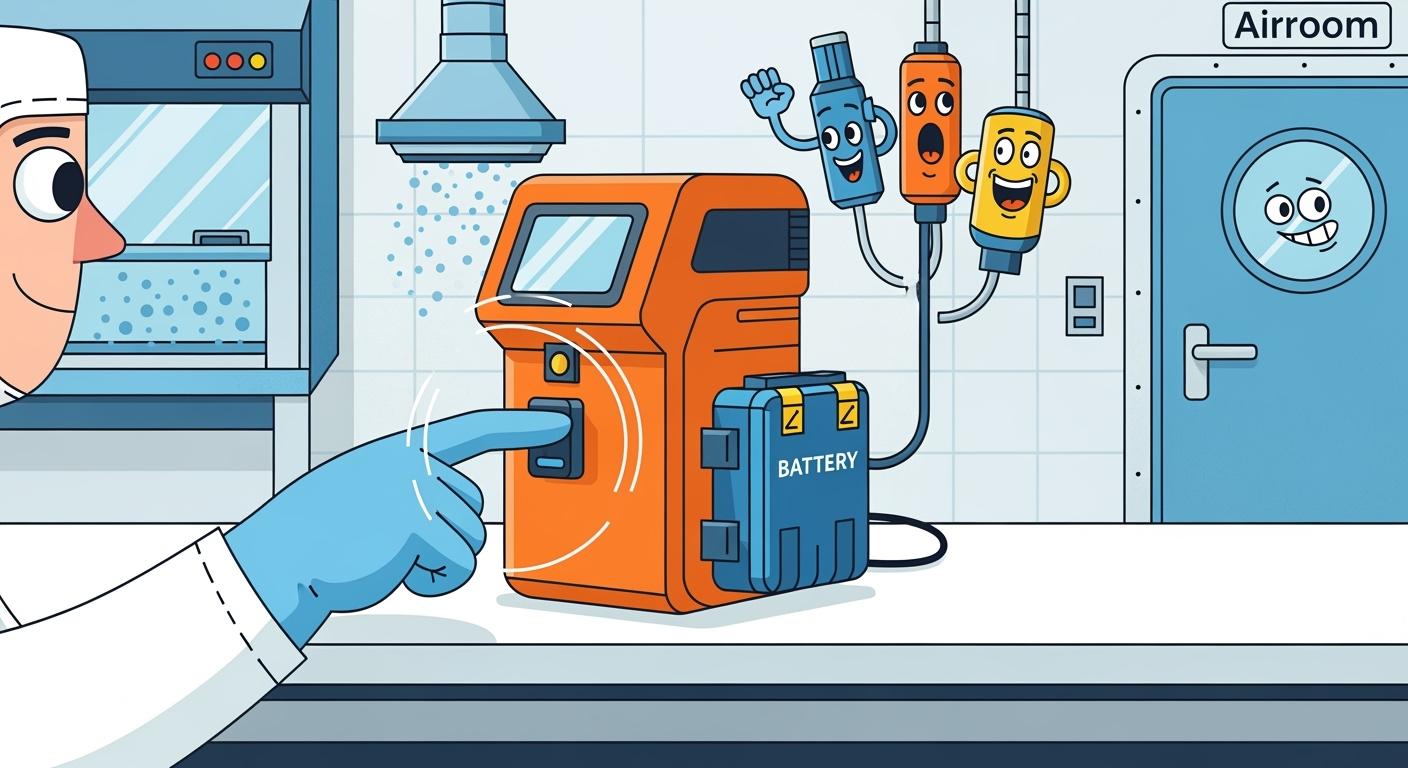
Portable particle counters require stable, uninterrupted power to measure airborne contamination accurately across cleanrooms and environmental monitoring sites. Custom lithium battery packs allow technicians to move between sampling locations without relying on fixed power sources. Application-specific capacity, stable voltage, and intelligent BMS protection support continuous sampling, data logging, wireless communication, and alarm functions. With proper charging and maintenance, these battery systems improve uptime and measurement reliability for particle counters used in ISO 14644-controlled environments and other demanding industrial applications.
Key Takeaways
Battery packs are crucial for portable particle counters, enabling mobility and uninterrupted data collection in cleanrooms and environmental monitoring.
Using reliable battery packs helps maintain compliance with strict industry standards, such as ISO 14644, ensuring product quality and safety.
Regular maintenance of battery packs extends their life and performance, reducing downtime and operational costs for monitoring tasks.
Lithium battery packs, like LiFePO4 and NMC, offer high energy density and long cycle life, making them ideal for demanding cleanroom applications.
Intelligent power management systems in modern particle counters enhance efficiency, allowing for extended monitoring periods without power interruptions.
Part1: Portable Particle Counters in Monitoring
1.1 Air Quality and Compliance
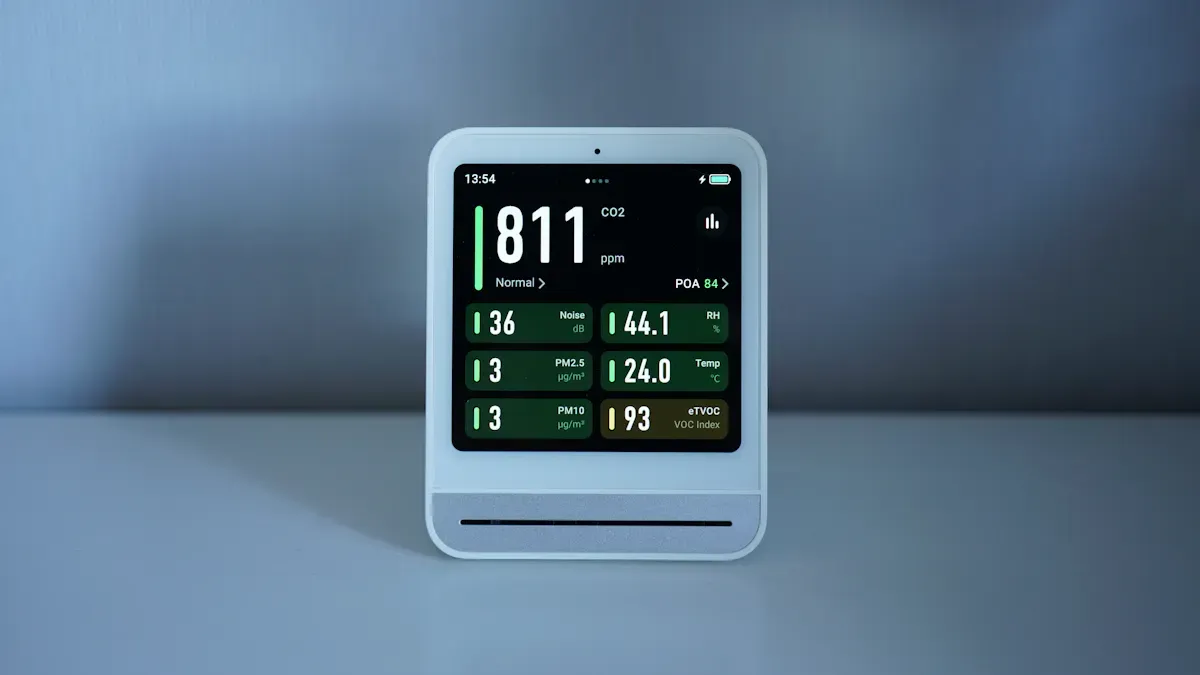
You need to monitor air quality in cleanrooms and controlled environments to meet strict industry standards. Portable particle counters give you the flexibility to check for airborne particles at different locations and times. These devices help you maintain compliance with regulations that protect product quality and safety.
Note: Continuous particle counting helps you spot contamination risks early. You can find problems like door seal gaps or faulty air handling units before they affect your operations.
You must follow several key regulatory standards when you use portable particle counters. The table below summarizes the main requirements:
Regulatory Standard | Description |
|---|---|
ISO 14644-1:2015 | Criteria for cleanroom classification and monitoring. |
ISO 21501-4 | Calibration requirements for particle counters used in cleanrooms. |
EU GMP Annex I | Requirements for the manufacture of sterile medicinal products, including cleanroom standards. |
You rely on these standards to ensure your cleanroom meets global expectations. Battery packs play a vital role by allowing you to perform continuous monitoring without worrying about power interruptions.
1.2 Applications in Cleanrooms and Environment
You use portable particle counters in many ways across cleanrooms and environmental monitoring projects. These applications include:
Monitoring non-viable and viable airborne particulates
Checking for surface contamination
Tracking personnel in aseptic areas
Certifying cleanrooms for operation
Running environmental monitoring programs
Completing routine compliance tasks in industries like pharmaceuticals and electronics
You see the impact of these tools in the pharmaceutical sector. Over 75% of manufacturers have upgraded their cleanroom monitoring systems since 2020 to meet new guidelines. The pharmaceutical industry now holds more than 32% of the particle counter market share, driven by the need for Good Manufacturing Practice (GMP) compliance.
You depend on reliable battery packs to keep your particle counters running during all these tasks. This ensures you never miss critical data and always meet regulatory demands.
Part2: Challenges Without Battery Packs
2.1 Limited Mobility
You face major restrictions when you operate portable particle counters without battery packs. These devices cannot run independently and must stay connected to a constant power source. In cleanroom environments, this setup limits your ability to move freely and monitor air quality in different locations. You lose the flexibility to sample at critical points or respond quickly to contamination risks. This limitation can lead to gaps in your monitoring program and may affect your compliance with industry standards.
2.2 Downtime and Power Issues
You encounter frequent downtime and power issues when your equipment lacks reliable battery packs. Some common problems include:
Unplanned downtime from equipment failure leads to missed monitoring tasks and delays in reporting.
Premature battery failure forces you to replace batteries immediately, disrupting your workflow.
Maintenance teams spend extra hours diagnosing and fixing battery-related issues, which creates a backlog of other important maintenance activities.
These challenges reduce your operational efficiency and can increase costs over time.
2.3 Data Integrity Risks
You risk losing valuable data when your particle counters do not have dependable battery packs. Power interruptions can cause incomplete data sets or gaps in your monitoring records. You may also face difficulties in maintaining continuous monitoring, which is essential for meeting regulatory requirements. Inconsistent data can make it harder to prove compliance during audits and may put your cleanroom certification at risk.
Note: Reliable battery packs help you avoid these risks by supporting uninterrupted operation and secure data collection.
Part3: Benefits of Battery Packs
3.1 Enhanced Flexibility
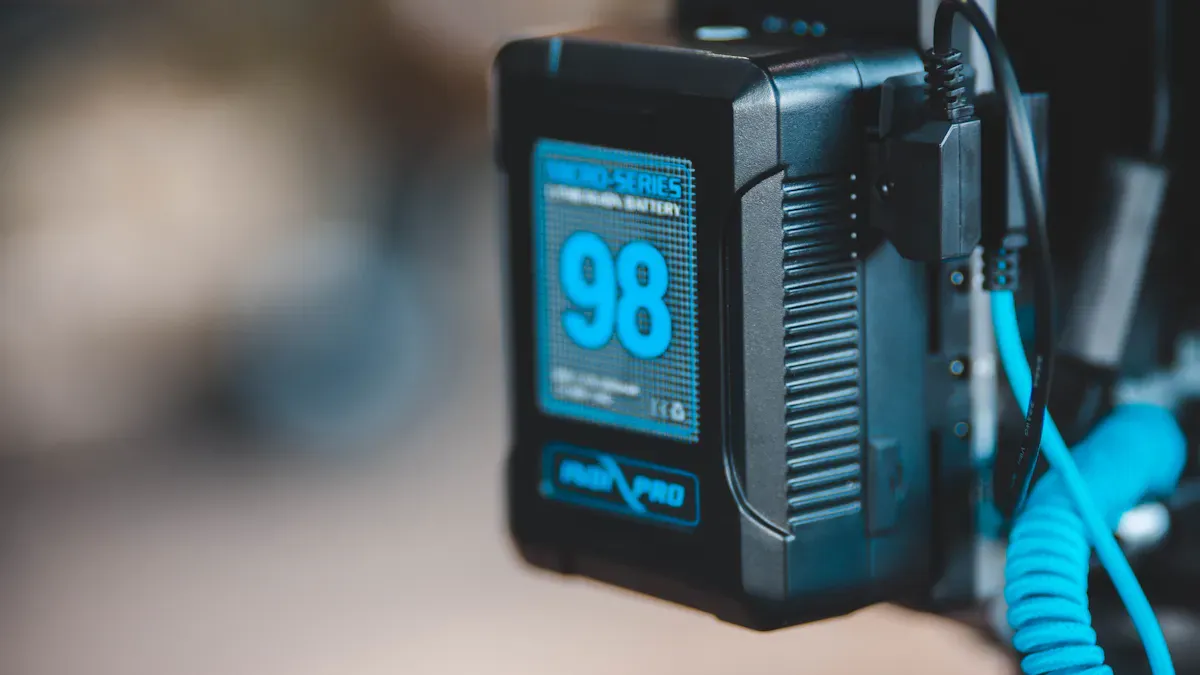
You gain unmatched flexibility when you use battery packs with portable particle counters. These power sources let you move your instruments to any location, whether you work in a cleanroom or in the field. You do not need to rely on fixed power outlets, so you can sample air quality at critical points without delay.
Feature | Description |
|---|---|
Portability | The Model 804 is fully self-contained, allowing for independent operation in various locations. |
Battery Life | The internal battery supports up to 30 hours of intermittent use and 8 hours of continuous use. |
Application | Suitable for both field and cleanroom environments due to its self-contained design. |
You can see how this flexibility improves your workflow. For example, the handheld laser particle counter supports six particle size channels, so you can collect detailed data in one measurement. Its dual-power operation, including USB and Bluetooth, eliminates downtime and adapts to different work environments. You can print or transfer data immediately, which helps you meet cleanliness standards and compliance requirements.
3.2 Continuous Monitoring
You need continuous monitoring to maintain cleanroom certification and meet regulatory standards. Battery packs make this possible by supporting long-duration sampling, even when you cannot access external power.
The Model 8306 handheld particle counter can run for over 10 hours in continuous mode.
If you take samples every 5 minutes, the instrument operates for nearly 18 hours.
Using Sleep mode, you can monitor for 14 days with samples every half hour.
With hourly samples in Sleep mode, the device runs for over 26 days.
You can trust your monitoring program to capture every event, even during long shifts or overnight studies. This reliability helps you avoid data gaps and ensures you always have the records you need for audits.
3.3 Intelligent Power Management
You benefit from advanced power management systems in modern portable particle counters. These systems help you conserve energy and extend battery life, so you can focus on your monitoring tasks.
Feature | Description |
|---|---|
Advanced Power Management | Instruments can sample periodically and power down to conserve energy, allowing for long-term studies. |
Battery Life Optimization | Instruments can operate for extended periods on a single charge, with tests showing up to 23 days. |
Intelligent Battery Packs | Enhanced safety and charge management, with battery life estimation displayed on the instrument. |
You can use intelligent charging and discharging practices, such as opportunity charging, to improve energy efficiency. Reducing the depth of discharge extends battery life. For example, lithium-ion batteries can be discharged to 80% and still achieve more than 3,000 cycles. This performance far exceeds that of lead acid batteries, so you get more value and reliability from your investment.
3.4 Maintenance and Longevity
You must maintain your battery packs to ensure reliable operation and long service life. Good maintenance practices include:
Checking battery condition and replacing it when needed
Disposing of old batteries properly
Keeping device software updated for best performance
Storing the particle counter in a clean, dry place
Using a protective case if available
Maintaining a log of cleaning, maintenance, and calibration activities
Proper maintenance reduces downtime and lowers battery costs. You can count on your particle counter to be ready for critical monitoring tasks at any time. This reliability is essential for continuous operation in regulated environments.
Proper battery maintenance ensures long battery life and efficient power management. You minimize downtime and maintenance costs, so your particle counter is always available for use. This reliability supports uninterrupted monitoring in critical scenarios.
You should choose lithium battery packs for your portable particle counters. Chemistries such as LiFePO4, NMC, LCO, and LMO offer high energy density, long cycle life, and excellent safety. These features make lithium battery packs the preferred choice for demanding cleanroom and environmental monitoring applications.
Part4: Real-World Scenarios
4.1 Cleanroom Sampling
You often work in environments where contamination control is critical, such as pharmaceutical manufacturing or medical device production. In these cleanrooms, you must move quickly between sampling points to monitor air quality and identify contamination sources. Battery packs allow you to operate portable particle counters without searching for power outlets. You can check for airborne particles near sensitive equipment, doorways, or HVAC vents. This mobility helps you maintain compliance with ISO 14644 and GMP standards. In medical and robotics assembly areas, you rely on lithium battery chemistries like LiFePO4 and NMC for long-lasting, safe operation. You reduce downtime and ensure continuous data collection, which supports your quality assurance processes.
4.2 Field Applications
You face unique challenges when monitoring air quality outside controlled environments. Industrial sites, infrastructure projects, and electronics manufacturing facilities require you to investigate particulate contamination in diverse locations. Battery-powered portable particle counters give you the flexibility to work in areas without reliable power. The table below highlights common field applications:
Application Area | Description |
|---|---|
Cleanroom Environments | Essential for measuring indoor air quality and identifying contamination sources. |
Industrial Settings | Used for air quality compliance, particulate source investigation, and general manufacturing quality control. |
Workspaces | Helps in monitoring air quality in environments with potential particulate matter exposure. |
You can measure air quality in cleanrooms, ensure compliance with ISO standards in industrial settings, and investigate contamination in workspaces. Lithium battery packs, such as LCO and LMO, provide the energy density and reliability you need for extended fieldwork. You maintain productivity and meet regulatory requirements, even in challenging environments.
4.3 Emergency Use Cases
You must prepare for unexpected events like power outages or system failures. In security system monitoring or critical infrastructure, you cannot afford data loss. Battery packs with advanced battery management systems (BMS) keep your particle counters running during emergencies. These systems monitor internal resistance, temperature, and remaining capacity, so you can predict and prevent failures. You avoid gaps in your monitoring records and maintain operational readiness. Traditional methods often fail during outages, but advanced lithium battery packs ensure continuous data collection. You protect your facility’s compliance and reputation by responding quickly to emergencies.
Tip: Regularly test your backup battery systems to ensure they perform during real emergencies.
You depend on Battery Packs to ensure reliable and flexible operation of portable particle counters. Lightweight, high-capacity batteries support extended use and hot swapping, which keeps your monitoring uninterrupted. Intelligent power management and regular maintenance help you maintain compliance with ISO standards. Lithium battery chemistries like LiFePO4, NMC, LCO, and LMO deliver robust performance and long cycle life. You can meet strict requirements for cleanroom and environmental monitoring by adopting lithium battery-powered solutions.
Feature | Description |
|---|---|
Lightweight | Easy to carry for field and cleanroom use |
High Capacity | Extended operational time |
Hot Swappable | No downtime during battery replacement |
Compliance Standard | Requirement | Importance |
|---|---|---|
ISO 14644-1 | ≤ 3,520,000 particles ≥ 0.5 µm/m³ | Essential for performance and warranty |
ISO 21501-4 | Device compliance | Ensures air cleanliness data accuracy |
ISO 14644-3 | Particulate surveys | Necessary for audits and documentation |
Tip: Choose lithium battery packs for maximum reliability and compliance in your monitoring operations.
FAQ
What are the main advantages of lithium battery packs for portable particle counters?
Custom lithium battery packs provide high energy density, low weight, stable voltage, and application-specific runtime. These characteristics support continuous sampling, data logging, wireless communication, and alarm functions in cleanrooms and environmental monitoring operations. The pack can also be customized for the counter’s voltage, dimensions, connector, charging method, and communication requirements.
How does a Battery Management System improve safety and reliability?
A Battery Management System monitors cell voltage, pack current, and temperature. It can provide overcharge, over-discharge, overcurrent, short-circuit, and temperature protection while balancing cells and reporting battery status. These functions reduce unexpected shutdowns and improve battery reliability during critical monitoring tasks.
Which lithium battery chemistry should you choose for cleanroom applications?
LiFePO4 and NMC are common options. LiFePO4 batteries provide strong thermal stability and long cycle life, while NMC cells offer higher energy density for compact and lightweight particle counters. The correct chemistry depends on the required runtime, available space, discharge current, charging time, operating temperature, and expected service life.
How do you maximize the lifespan of a lithium battery pack?
Use the manufacturer-approved charger and avoid unnecessary deep discharges. Store the pack in a cool, dry environment at an appropriate state of charge. Keep the battery away from excessive heat, inspect it regularly for swelling or physical damage, and monitor capacity as the pack ages. Replace the battery when its capacity or safety performance no longer meets the equipment’s operating requirements.
Are lithium battery packs environmentally sustainable?
Lithium battery packs can support sustainability through long service life, repairable or replaceable designs, responsible sourcing, and end-of-life recycling. Organizations should work with qualified recycling providers and verify supplier material policies. Learn more about sustainability at Large Power and review the Conflict Minerals Statement.
Can Large Power customize a battery pack for a portable particle counter?
Yes. Large Power can customize the chemistry, voltage, capacity, enclosure, connector, charging interface, BMS, and communication protocol for particle counters and other industrial monitoring equipment. Contact Large Power to discuss your runtime target, cleanroom requirements, device dimensions, and certification needs.


