

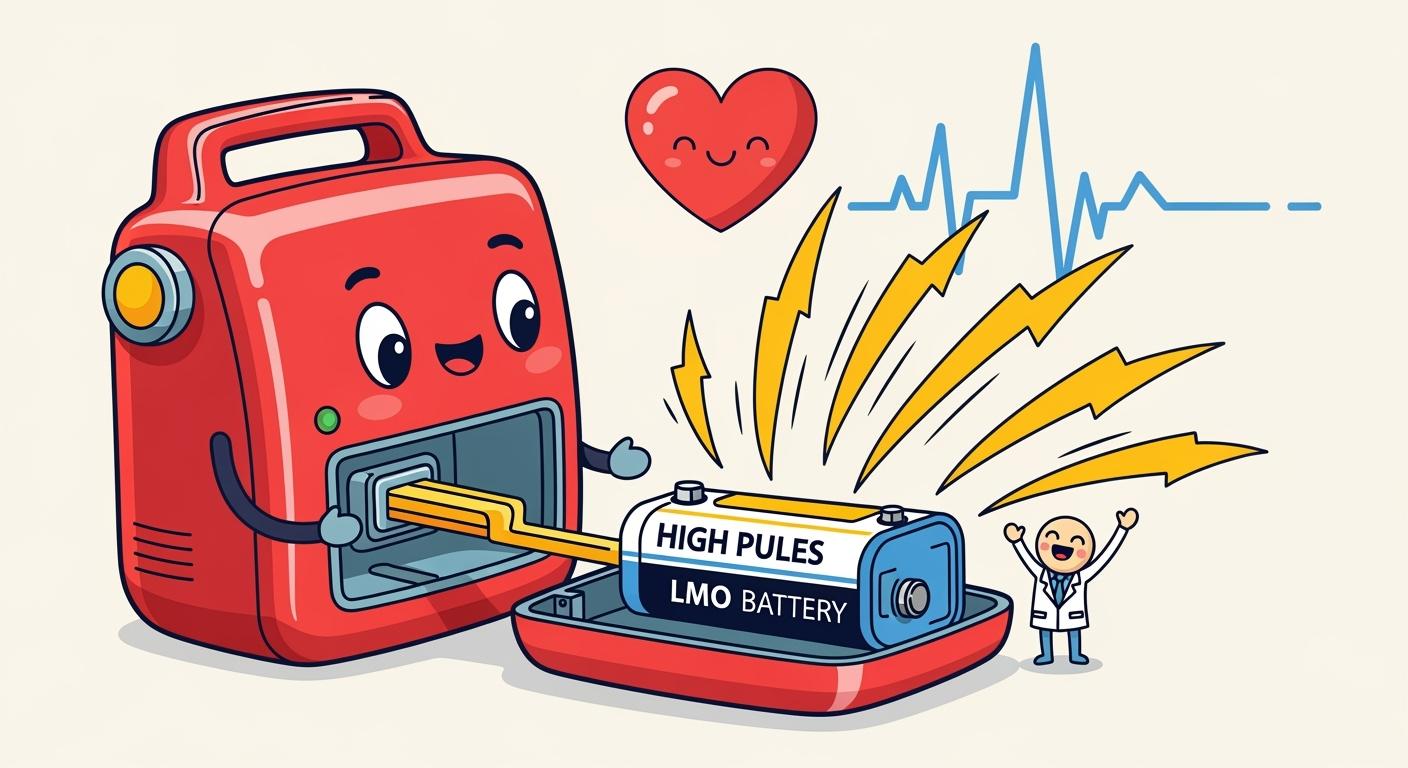
Defibrillators rely on high-pulse LMO batteries because you need instant, reliable power for every AED use. In medical emergencies, a defibrillator must deliver a shock without delay. Over 60% of AED failures come from battery issues, and nearly 28% of aed units fail readiness checks due to expired batteries or electrodes. When you choose lithium batteries for your AEDs, you increase operational readiness and safety. Reliable batteries mean fewer maintenance problems, better device response, and improved outcomes for healthcare providers and device manufacturers.
Key Takeaways
High-pulse LMO batteries provide instant power for AEDs, ensuring they are ready to deliver life-saving shocks without delay.
Choosing high-quality lithium batteries reduces maintenance issues and improves the reliability of AEDs in emergencies.
Regularly check and track battery status to maximize AED readiness and extend battery life.
LMO batteries offer a balance of safety, energy density, and low maintenance, making them ideal for medical devices like AEDs.
Understanding battery types helps you select the best option for AEDs, enhancing patient outcomes and device performance.
Part1: Why Defibrillators Rely on High-Pulse LMO Batteries
1.1 AED Power Demands
You depend on automated external defibrillators to deliver life-saving therapy in critical moments. AEDs must respond instantly when a patient experiences cardiac arrest. The device needs a battery with high-pulse discharge capability to provide rapid, powerful energy. Defibrillators rely on batteries that can supply a sudden burst of electricity, which is essential for restoring a normal heartbeat. If you use batteries with low capacity or poor quality, the AED may fail during standby or in an emergency.
Medical professionals and device manufacturers choose the right AED battery to ensure operational readiness. High-pulse discharge lithium packs, especially disposable lithium-manganese batteries, offer high energy density and reliable performance. These batteries support AEDs in hospitals, ambulances, and public spaces. You also see lithium battery packs in robotics, security systems, infrastructure, consumer electronics, and industrial sectors, where instant power delivery is crucial.
AEDs require batteries that can deliver a high-pulse discharge without delay. This ensures the device is always ready to respond to malignant arrhythmias and other life-threatening emergencies.
You must consider battery quality and capacity when selecting batteries for AEDs. High-pulse discharge lithium batteries provide consistent energy output, long shelf life, and low maintenance. These features reduce the risk of device failure and improve patient outcomes.
1.2 Instant Energy Delivery for Defibrillation
When you use an AED, every second counts. Rapid defibrillation increases the chances of survival for patients experiencing cardiac arrest. Delays in delivering a shock can decrease the likelihood of successful resuscitation. The heart may remain in a chaotic rhythm, which cannot sustain life. Defibrillators rely on batteries that deliver instant energy to restore a normal heartbeat.
Every minute a person is in cardiac arrest, their chances of survival decrease rapidly.
AEDs are designed to provide timely defibrillation, which is essential for improving survival rates.
You need batteries with high discharge capability to ensure the AED delivers a shock immediately. Lithium batteries, especially those with high-pulse discharge, meet these demands. Medical device manufacturers rely on these batteries to maintain device readiness and safety. High-pulse discharge lithium packs support AEDs in emergency medical scenarios, where instant energy delivery can mean the difference between life and death.
Application Scenario | Battery Requirement | Benefit of High-Pulse LMO Batteries |
|---|---|---|
Medical (AEDs) | Instant high-pulse discharge | Reliable shock delivery, improved survival |
Robotics | Rapid power for motors | Consistent performance, quick response |
Security Systems | Immediate activation | Enhanced reliability, fast deployment |
Infrastructure | Emergency backup | Stable power, long shelf life |
Consumer Electronics | Burst energy for features | Efficient operation, longer runtime |
Industrial | High current for tools | Durable, safe, low maintenance |
You see that high-pulse discharge lithium batteries are essential not only for AEDs but also for other sectors where instant power delivery is critical. In medical emergencies, battery quality directly impacts patient outcomes. When you choose high-pulse discharge lithium batteries, you ensure your AED is ready to save lives.
Part2: LMO Battery Advantages for AEDs
2.1 High Energy Density & Portability
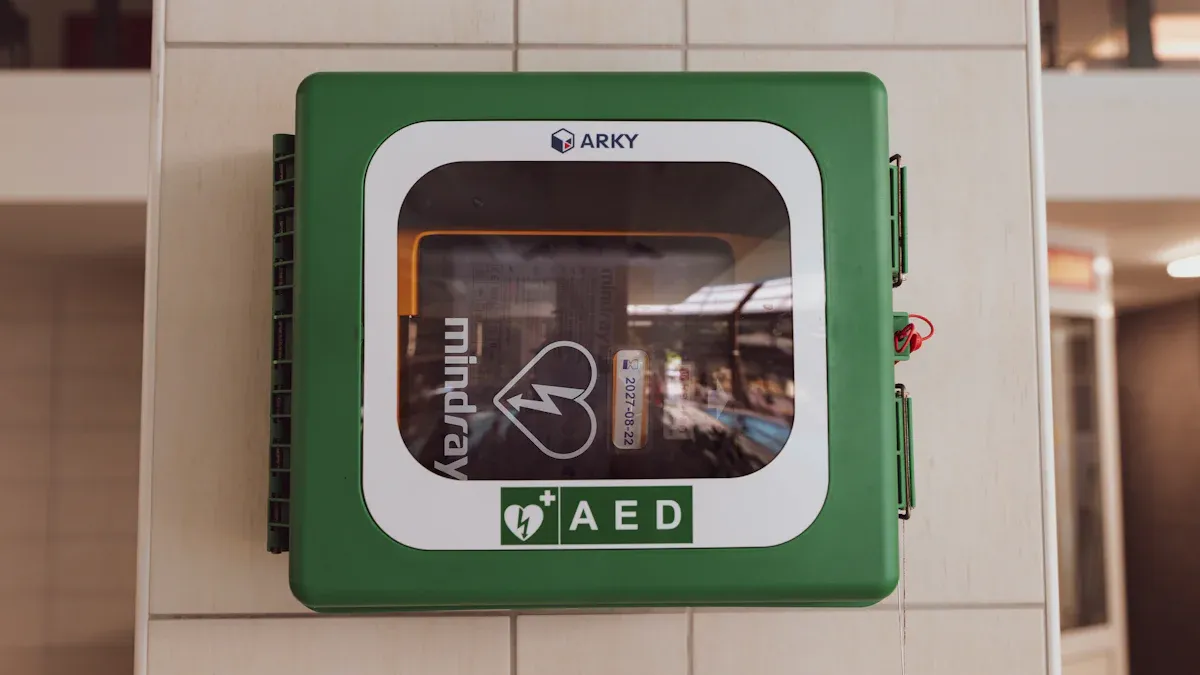
You need AEDs that are easy to carry and always ready for action. LMO batteries offer high energy density, which means you get more power in a smaller, lighter package. This feature allows you to design compact AEDs that fit into tight spaces, making them ideal for hospitals, ambulances, and public locations. You can also see this advantage in robotics, security systems, and consumer electronics, where devices must remain portable and efficient.
LMO batteries provide an energy density between 100–150 Wh/kg.
This is lower than lithium cobalt oxide batteries, but LMO batteries focus on safety and high-pulse discharge instead of just maximum capacity.
You benefit from a battery that balances energy storage with the ability to deliver a rapid shock during cardiac arrest.
When you choose LMO batteries for your AEDs, you ensure the device remains lightweight and easy to transport. This portability is essential for emergency responders who must move quickly. High energy density also means longer standby times, so your AED stays ready for use even after months in storage.
2.2 Long Shelf Life & Low Maintenance
You want your AEDs to work every time, even after long periods without use. LMO batteries deliver a long shelf life and require little maintenance. This reliability reduces the risk of device failure during emergencies and lowers your operational costs.
LMO batteries typically last for 300–700 cycles under normal conditions.
This cycle life ensures your AED can handle repeated use and long standby periods without frequent battery changes.
You spend less time and money on maintenance, which improves your overall efficiency.
In the medical field, you cannot afford to compromise on battery quality. LMO batteries maintain their performance over time, so you can trust your AED to deliver a life-saving shock when needed. You also see similar benefits in industrial and infrastructure applications, where long-lasting batteries reduce downtime and maintenance costs.
Tip: Regularly check your AED battery status to maximize device readiness and extend battery life.
2.3 Safety & Stability in Medical Use
You need batteries that meet strict safety standards, especially in medical devices like AEDs. LMO batteries excel in safety and stability, making them a top choice for critical applications. Their thermal stability allows them to operate reliably in extreme conditions, reducing the risk of failure during a cardiac arrest emergency.
LMO batteries hold certifications that prove their safety for medical use:
Standard | Description |
|---|---|
ANSI/AAMI ES 60601-1 | Medical electrical equipment safety and risk management |
IEC 60086-4 | Safety of lithium batteries for primary batteries |
IEC 62133 | Safety for secondary cells and batteries with alkaline or non-acid electrolytes |
UL 1642 | Lithium battery guidelines for medical devices |
UL 2054 | Household and commercial battery standards |
ISO 7176-25 | Batteries and chargers for powered wheelchairs |
ISO 15004-1 | General requirements for ophthalmic instruments |
ISO 20127 | General requirements for powered toothbrushes |
You can trust LMO batteries to perform safely in AEDs and other medical devices. Their thermal stability means they keep working even in high temperatures or during intense use. This reliability is critical when you need to deliver a shock to save a life.
You also find LMO batteries in robotics, security systems, and industrial tools, where safety and stability are just as important. When you prioritize battery quality, you protect both your equipment and the people who rely on it.
If you want to learn more about sustainability in battery technology, you can read about our approach to sustainability.
Part3: LMO vs. Other AED Battery Types

3.1 Li-ion, NiMH, and Alkaline Comparison
When you compare batteries for AEDs, you see clear differences in chemistry, cycle life, energy density, and maintenance. You need to understand these differences to choose the right AED battery for your medical device. The table below shows how LMO, Li-ion (NMC), NiMH, and Alkaline batteries perform in AED applications:
Battery Chemistry | Cycle Life (cycles) | Energy Density (Wh/kg) | Shock Capacity | Maintenance | Long Standby Life | Cost | Safety | Application Scenario |
|---|---|---|---|---|---|---|---|---|
LMO (Lithium Manganese Oxide) | 300–700 | 100–150 | High-pulse discharge | Low | Yes | Moderate | High | AED, medical, industrial |
Li-ion (NMC) | 500–1000 | 150–220 | High | Moderate | Yes | High | Moderate | AED, robotics, consumer electronics |
NiMH | 300–500 | 60–120 | Moderate | Moderate | No | Low | Moderate | Security systems, infrastructure |
Alkaline | 50–100 | 80–100 | Low | High | No | Low | Low | Backup, low-power devices |
Tip: You should always check how long do AED batteries last before deploying your device in an emergency setting.
You notice that LMO batteries offer high-pulse discharge and strong safety, which are critical for AEDs. Li-ion (NMC) batteries provide higher energy density and longer cycle life, but they may cost more and require more maintenance. NiMH and Alkaline batteries have lower shock capacity and shorter life, making them less suitable for AEDs that demand instant power and reliability.
3.2 Why LMO Is Preferred for AEDs
You want your AED to deliver a shock instantly and reliably. LMO batteries excel in high-pulse discharge, safety, and long standby life. These features make them the top choice for AEDs in medical and industrial settings. You benefit from a battery that balances capacity, cost, and quality, ensuring your device is always ready for an emergency.
LMO batteries have moderate cycle life, which fits the typical usage pattern of AEDs.
You get lower energy density compared to NMC, but you gain superior safety and stability.
LMO batteries require less maintenance, reducing downtime and operational costs.
You achieve long-life battery performance, which answers the question of how long do AED batteries last in real-world scenarios.
When you choose the right AED battery, you protect patient life and improve device readiness. LMO batteries support AEDs in hospitals, ambulances, and public spaces, where instant power and reliability matter most. You also see LMO batteries used in lithium battery packs for robotics and industrial tools, where high-pulse discharge and safety are essential.
Note: If you want to learn about conflict minerals in battery manufacturing, you can read our conflict minerals statement.
You should prioritize battery quality and application fit when selecting batteries for AEDs. LMO batteries deliver the performance and safety you need to save lives.
Part4: How Long Do AED Batteries Last & Maintenance
4.1 Battery Lifespan in AEDs
You rely on the battery to keep your AED ready for emergencies. The lifespan of batteries in AEDs plays a key role in operational reliability. If you use expired batteries or neglect maintenance, you risk device failure when you need it most. About 23% of AED failures happen because batteries expire or receive inadequate care. You must choose lithium batteries with high quality and capacity to maximize life and minimize risk.
You should check the battery status often. Regular checks help you catch problems before they affect standby readiness. You can log installation and expiration dates to track battery life. When you use lithium batteries with strong cycle life, you reduce the chance of sudden failure. This approach supports medical teams and public safety by keeping the defibrillator ready for action.
Tip: Store spare batteries in a climate-controlled environment to extend their life and maintain quality.
4.2 Readiness, Cost, and Replacement
You want your AED to work every time. To achieve this, you must follow a clear maintenance schedule for batteries. Manufacturers recommend tracking three dates for each battery:
Maintenance Step | Description |
|---|---|
Manufacturer date | When the battery was produced |
Install-by date | The latest date to install the battery in the AED |
Expiration date | The date after which the battery should not be used |
You should set reminders for battery replacement six months and one month before expiration. Address any alerts from the device right away. Regularly check battery health to avoid costly downtime and emergency failures. When you plan ahead, you control replacement costs and keep your AED in standby mode.
You see that lithium batteries offer long life and low maintenance. This reduces the total cost of ownership for your medical device. High-quality batteries also support readiness in hospitals, ambulances, and industrial settings.
Note: Reliable batteries protect your investment and ensure your AED delivers life-saving power when needed.
You see why defibrillators rely on high-pulse LMO batteries. These batteries give you instant power, strong reliability, and safe operation for AEDs. When you choose the right battery technology, you improve device readiness and protect lives in medical and industrial settings. Defibrillators rely on advanced lithium battery packs for consistent performance. Looking ahead, you will notice new trends shaping AED battery technology:
Rechargeable batteries offer more sustainability and lower costs.
Smart battery systems provide real-time health data.
Safety and reliability remain top priorities.
Battery designs focus on environmental impact.
FAQ
What makes high-rate lithium batteries essential for AEDs?
You need high-rate lithium batteries because AEDs demand instant, powerful energy. These batteries deliver rapid discharge, which ensures your device can provide a life-saving shock without delay. You improve reliability and readiness in medical and industrial environments.
How do LMO batteries meet medical device standards?
You benefit from LMO batteries because they comply with strict medical device standards. These standards guarantee safety, stability, and performance. You can trust your AEDs to operate reliably in hospitals, ambulances, and public spaces.
How often should you replace AED batteries?
You should replace AED batteries every two to five years, depending on manufacturer guidelines and usage. Regular checks help you maintain device readiness and avoid unexpected failures during emergencies.
What are the main advantages of LMO batteries in B2B applications?
You gain high energy density, long shelf life, and low maintenance with LMO batteries. These features support AEDs, robotics, and industrial tools, making your operations more efficient and reliable.
Can you use other battery chemistries in AEDs?
You can use other chemistries, but LMO batteries offer superior safety and instant power delivery. The table below compares common options for AEDs:
Chemistry | Energy Density (Wh/kg) | Cycle Life | Shock Capacity | Maintenance |
|---|---|---|---|---|
LMO | 100–150 | 300–700 | High | Low |
NMC | 150–220 | 500–1000 | High | Moderate |
NiMH | 60–120 | 300–500 | Moderate | Moderate |
Alkaline | 80–100 | 50–100 | Low | High |


